
Nov 3, 2026
Aluminum Edge Trim: Essential Guide for Lasting Style
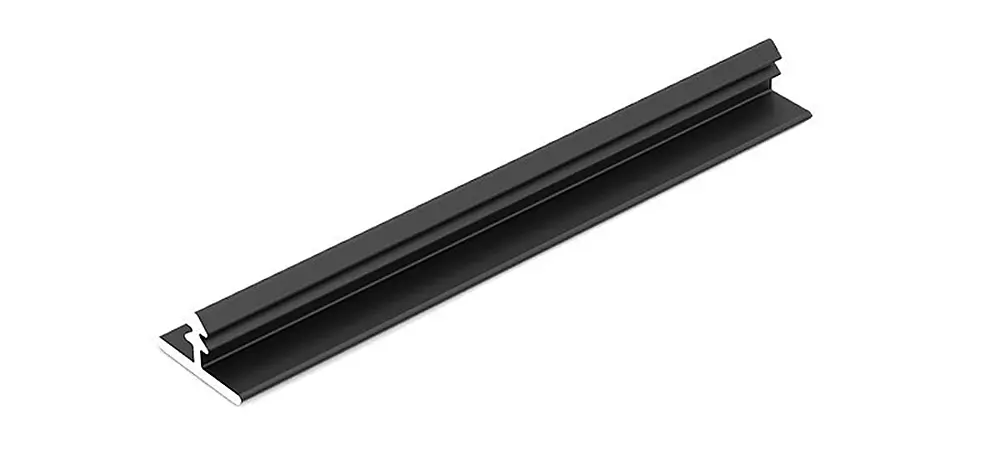
Lasting style comes from matching the right profile, thickness, and finish to the surface you protect. Minimalist aluminum edge trim does this well. A slim 6063-T5 extrusion covers raw wall panel edges, resists daily wear, and leaves a clean line. Choose 0.5mm, 0.8mm, or 1.0mm thickness, pick the 3000mm standard length or a custom cut, and select an anodized gold, black, or silver finish of at least 10μm. Then confirm samples, test reports, and packing before you order. I walk you through each step below.
Minimalist Aluminum Edge Trim: What It Is and Why It Matters
What Is a Minimalist Edge Trim Profile?
A wall panel's exposed edge is covered by a thin strip of minimalist aluminum edge trim. Because you can still see the face, the trim looks like a thin line instead of a thick shape. No changes were made to the edge; the eye stays on the wall. It reminds me of a picture frame without the heavy frame. Cuts that are still open are hidden by the strip. Chips, swollen spots, and dirt show up first where the cuts are open. People like this style in shops, homes, and hotels because it keeps the panel safe without being too much like it.
Common Profile Shapes
There are different kinds of edge trims, and each one is good for a certain job. Profiles in the shape of an L-shape go around simple corners on the outside. Curves in the shape of a U-shape cover both sides of a panel and make it look better. Surface-mounted designs are put on top of a wall that is already finished. T-shaped and flat shapes are used to connect two surfaces. ZX sells I-trims that join panels together and finishing strips that cover the edges of panels, so you can use the same order for both jobs. Step 1: Check to see how thick the panel is. Step 2: Write down where the edge meets the floor, ceiling, or next wall. Most fitting mistakes can't happen because of that one check.
Why Aluminum Is a Practical Choice
Aluminum has a mass of 2.7 g/cm³, which is only a third of steel's mass. This means that a 3000mm length can be carried and cut by one person. The metal already has a layer of oxide on it, and anodizing makes that layer thicker, which makes the surface hard. Aluminum models made from extrusion are covered by ASTM B221, and the 6063 alloy is often used for ornamental extrusion. It is easy to cut with standard carbide blades, and it anodizes well. It takes less time to set up these features, which is helpful for wholesalers who ship a lot of different types of goods in one container.
Aluminum Edge Trim Materials, Sizes, and Anodized Finishes
6063-T5 Alloy and Mechanical Properties
Our fittings are made of aluminum alloy 6063-T5. As high as 185 MPa, it can be pulled apart, and it can be used in temperatures from -20°C to +80°C. For the T5 temper, the profile is cooled down after it is pushed out and then aged in a lab. It is strong and has a smooth surface for anodizing because of this. In thin parts, strength is important because a wall will show a wavy line if the profile is bent. The difference in straightness can't be more than 0.5mm per meter. Aside from that, aluminum grows by 23 micrometers per meter for every degree Celsius. In a range of 30°C, this means that a 3000mm length grows by about 2mm. Leave a little space if the design lets you.
Thickness and Length Options
Our minimalist aluminum edge trim comes in thicknesses of 0.5mm, 0.8mm, and 1.0mm, and we can also make thicknesses that are just right for some panels. Walls that aren't very thick look good with light decorative panels. Each corner is stronger because of the 1.0mm wall, so they can take a beating. The usual length is 3000mm, which is long enough to cover a wall run with only a few joints. We can cut lengths to fit for certain projects as well. How thick is your panel? Tell us where you want to put it, and we'll make sure the shape works. If you have more than one kind of panel in stock, send us all of the widths at once. We can then find a style that works for all of them.
Anodized Gold, Black, and Silver Finishes
When aluminum is anodized, a hard oxide layer forms on top of it. This layer keeps the aluminum from peeling like paint does. This finish can be at least 10 µm thick and comes in black, gold, or silver. When it's hot, the strong sun is the big test. How well the color stays depends on both the quality of the coating and how thick the film is. This is the test result for the anodized film corrosion that meets ASTM standards. Please also note that our anodized coatings meet the needs of Qualanod. The ASTM B117 salt spray test is mostly used to see how resistant different things are to rust. Make sure that a sample works well in the same light as the job site before you send out a big order.

Applications, Installation, and Material Comparison for Minimalist Aluminum Edge Trim
Where Edge Trim Works Best
Minimalist aluminum edge trim can be found on feature walls in bathrooms, kitchens, living rooms, hotels, offices, shopping malls, restaurants, and exhibition halls. Anodized aluminum doesn't soak up water, and the trim helps keep water from getting to the edge of a wet room panel base that is left open. Along busy business streets, it stops corners from getting pushed up every day. Your room can also look like it has shadow lines if you don't use a wide transition strip. Because both home builders and commercial fit-out crews can use the same profile family, it's easier for wholesalers to keep stock.
Installation and Maintenance Steps
Find out how thick the real panel is and compare it to the trim channel. Make sure the surface is dry and clean. Cut the shape with an 80- to 100-tooth carbide blade and clamp it down tight. The cut edge will get chipped if you move it. You don't need any extra screws or nails for most wall panel systems because the trim sticks to the glue as you put up the panel. For tile work, make a mechanical bond by pressing the supporting leg with the holes all the way into the thin-set mortar. Get rid of any grout or alkaline residue quickly with an acid-free cleaner. If you don't, it can damage the surface and leave water spots.
Aluminum vs. Stainless Steel and PVC
Aluminum is light, easy to cut, and comes in many finishes, so it works well with modern wall systems. Stainless steel can handle hits better and is better for clean or industrial areas. However, it weighs about three times as much and is harder to cut. PVC is cheap and good for jobs that won't damage it, but it doesn't look like metal and isn't as strong. Anodizing gives a metallic architectural appearance, while powder coating gives a wider color choice. Pick the material by the job conditions, not by price alone. Think about how it will be used.
How to Choose and Order Minimalist Aluminum Edge Trim
Match the Trim to the Project
Pick whether the trim is for looks, safety, or both. Then, write down how thick the panels are, how much moisture and traffic there is in the room, and how much sun it gets. After that, you can pick the profile's shape, thickness, length, and finish. If you hit a corner, the 1.0mm wall works well. For light cover panels, the 0.5mm and 0.8mm walls work well. There are times when wholesalers need to handle more than one order. This is needed so that every batch has the same color and finish. First, give your OK to a sample. When you place another order, use this one as a guide.
Pricing, Customization, and Mixed Orders
Cost per meter depends on the alloy, the weight of the profile, the thickness, the finish, the quantity, the packaging, and the freight. Don't compare quotes by a single number; instead, compare them line by line. Get separate lists of the goods, the finishing, the tools, the packing, the freight, and so on. ZX can make trims in any length, width, color, or request from an OEM. Along with wall panels, skirting boards, and grilles, we can also quote trims. Each order is sent out within 7 to 10 days, and orders with special directions take between 10 and 15 days. We also provide paperwork for packages going abroad. Before you book, let us know what paperwork your port or customs dealer needs, like a proof of origin. That way, we can make sure we have it before you book.
Pre-Order Checklist
A short list keeps things in order. These are the three kinds of problems I want buyers to solve first.
- Product details: Write down the panel thickness, profile shape, visible width, minimalist aluminum edge trim thickness (0.5mm, 0.8mm, 1.0mm, or custom), length, finish, and color. Give a drawing or picture of a model along with your request so the company can fully understand it. This avoids wrong-size cartons and returns after the cargo arrives.
- Commercial terms: Note your forecast quantity, target landed cost, sample approval steps, lead time, payment terms, and replacement procedure. The sales team can match production times to your stock cycle if you have a clear plan. This also keeps things clear for you both in case you need to ask something later.
- Quality and shipping: List the inspection standards, scratch protection, batch signs, pallet type, and container loading plan. Ask for the anodized film weathering test report and packing photos before the cargo leaves the factory. This way, you can compare what you get with what you asked for.
Quality Control and Working with a Specialized Manufacturer
Two-Stage Inspection
At our partner plant, they use two steps. During production, workers check the raw materials to see what they are made of, laser tools make sure the measurements are correct, and surface inspectors look at each batch to make sure the finish and coating thickness are always the same. Before it ships, we test a 5% sample from each batch in a way that looks like it will be installed to make sure it is straight, the covering sticks well, and it works with common wall panel systems. ISO 9001:2015 certifies the factory, and our team checks the quality of every shipment six times. People who want to buy can ask for these records and agree on what it means to "accept" before the first container comes.
Packing for Sea Freight
It is important to pack aluminum profiles well because they can bend when you put pressure on them. We use wood crates, edge guards, and stretch wrap made for shipping by sea when we pack. Clearing export customs, booking sea freight, disinfection, and packing are all things that our operations expert takes care of. If you have a mixed load, ask for a packing plan with pictures of the packed boxes and long trims that go all the way along their length. You can use those pictures to check against the record when you get there, which is useful if there is a claim.
Factory-Direct Support from ZX
ZX is an export trading company in Zhengzhou. Our partner, Zhengzhou Keyi Aluminum Decorative Materials Company, makes the profiles on a 132 mu site with more than 300 sets of molds. To price, sample, and print custom profiles, OEM work, and project orders of that size, one team is in charge. We answer in 24 hours and let you try trials for free or for a fee. For a job, the trims, wall panels, skirting boards, and grilles look the same if you buy them all from the same place. Having fewer sellers makes it easier for a wholesaler to manage their inventory.
Conclusion
While protecting the sides of exposed wall panels, minimalist aluminum edge trim keeps the finished surface clean and thin. It's important to use the right metal, thickness, length, and finish for the job. As an example, 6063-T5 aluminum can be 0.5mm, 0.8mm, or 1.0mm thick. It usually comes in 3000mm lengths and has an anodized film of at least 10μm to protect it from weather and wear. A cleaner with no pH and the right way to install it will protect the surface over time. Because it is lighter and easier to work with, aluminum is better than stainless steel for most indoor uses. On the other hand, PVC is only good for work that doesn't hit anything hard. Approval of samples, detailed prices, clear paperwork, records of inspections, and safe packaging are all important parts of smart buying. By taking these steps, mistakes in fitting, complaints about the finish, and shipping damage are less likely to happen.
FAQ
1. What thickness should I choose?
Use 0.5mm or 0.8mm to make light panels that look good. You should use 1.0mm for corners that will take a beating. You can also ask for the thickness to be changed. We'll make sure the shape fits if you tell us how wide the panel is.
2. Will anodized trim fade in strong sun?
How well the film seals and how thick it is affect how long the color stays. We have an anodized finish that is at least 10µm thick, and we can give you an ASTM-compliant anodized film weathering test report. First, give your OK to a model that will be lit up on the job site.
3. Can I combine trims with wall panels in one order?
For sure, ZX gives prices for trims like grilles, wall panels, and skirting boards. Each order is sent out between 7 and 10 days, and orders with special directions take between 10 and 15 days. Talk about the goods you have and where you want to go so you can make a plan.
CTA
Looking for a minimalist aluminum edge trim supplier? ZX offers 6063-T5 trims in 0.5mm, 0.8mm, 1.0mm, and custom sizes, with anodized gold, black, or silver finishes, OEM support, and a reply within 24 hours. Send your drawings, quantity, and destination to info@kangdishi.com for product details. Ask our team about samples and mixed orders with wall panels, skirting boards, and grilles.
References
1. ASTM International, ASTM B221 Standard Specification for Aluminum and Aluminum-Alloy Extruded Bars, Rods, Wire, Profiles, and Tubes, 2021
2. ASTM International, ASTM B117 Standard Practice for Operating Salt Spray (Fog) Apparatus, 2019
3. International Organization for Standardization, ISO 7599 Anodizing of Aluminium and Its Alloys: General Specifications for Anodic Oxidation Coatings on Aluminium, 2018
4. International Organization for Standardization, ISO 9001 Quality Management Systems: Requirements, 2015
5. Tile Council of North America, TCNA Handbook for Ceramic, Glass, and Stone Tile Installation, 2024
6. ASM International, ASM Handbook, Volume 2: Properties and Selection: Nonferrous Alloys and Special-Purpose Materials, 1990
Online Message