
Nov 17, 2026
Aluminum Flush Skirting vs. LED Skirting: Key Differences
Aluminum flush skirting and LED skirting address various issues. Aluminum flush skirting is a recessed baseboard that is flush with the wall, gives protection to the wall base and does not leave a ledge for dust. LED skirting offers low-level light for navigation or mood and includes drivers, wiring, and diffusers. The two may also be combined, since an LED strip can be laid in a sleek aluminum profile with a concealed cable groove. I evaluate the two alternatives below, offer sizing and installation methods, and show how wholesale purchasers may order with fewer color, fit, and delivery concerns.
Aluminum Flush Skirting and LED Skirting: What Is the Difference?
Let me start with the basics, because buyers often use these two terms as if they mean the same thing.
What Aluminum Flush Skirting Is
Aluminum Flush Skirting - This is a baseboard that is recessed and sits flush with the wall. After rough-in is done, the baseboard is pressed into the wall. Once the wall is completed, the cover plate clips on for elegance. Complete the run with matching end caps, inner corners, and outside corners. There are many baseboards that come out from the wall. The top edge picks up dust, making it difficult to lay furniture flat. When you have a flush form, you don't have that edge. The "floating wall" design is good for minimalist interiors since it keeps water and bumps away from the wall foundation. You can also clean it better, since dust cannot attach to a smooth face.
What LED Skirting Is
The thing with LED skirting is that it lights up. A light source at floor level helps you see your way at night or just makes the space seem warmer. It may be recessed, wall-mounted, or run down the floor. An LED strip, a diffuser, a driver, and cables are all you need to bring it all together. Most LED strips need low-voltage DC, and that’s what the driver converts the mains electricity into. Usually this is 12V or 24V. These components improve the system. These are components that will need to be maintained at some time. LED skirting is lighting, so my first thought isn’t trim.
Where the Two Systems Overlap
They don't always contradict each other. Some aluminum flush skirting designs feature a space for an LED wire, but not always visible. If you put in a strip, add a filter, or leave a shadow line, the wall will receive soft illumination that doesn't expose any obvious wiring. Similarly, aluminum is a far better conductor of heat away from the strip than PVC. It's vital to keep the heat under control; LEDs do not have as long of a lifespan when they are heated. People ask me which one to purchase, and I first ask them whether the space requires light at the border or just a neat edge.
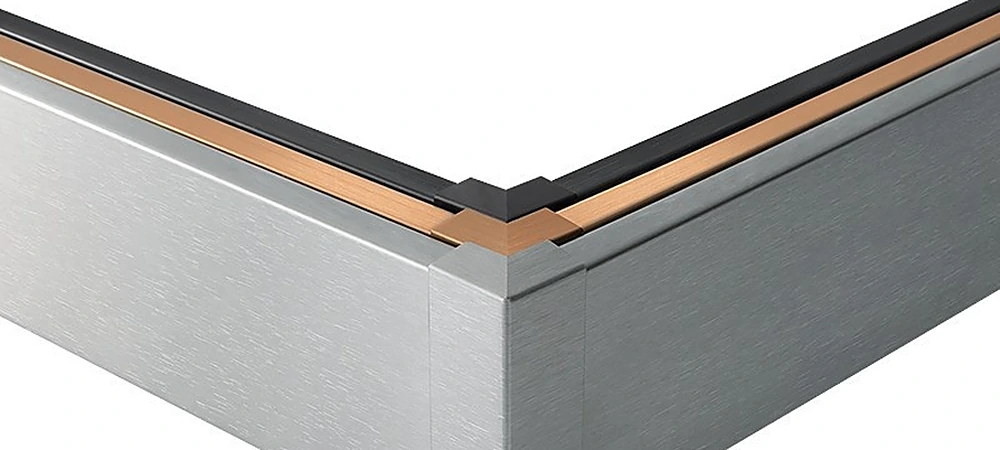
Aluminum Flush Skirting vs. LED Skirting: Key Differences and How to Choose
Once the definitions are clear, the differences come down to how the building is used, how often it needs to be maintained, and what kind of building it is.
Function and Appearance
Aluminum flush skirting runs down the bottom of the wall and provides the area with a clean architectural feel. LED skirting boards may be used to identify zones, communicate navigation, or embellish with low-level lights. SPC flooring and wall panels in a living room appear neat since all panels are flush with each other. This is ideal for folks who have minimalist tastes. A light down the floor in a hotel corridor helps customers find their way and establishes the atmosphere. A flush design with a space for the LED satisfies both. First, sketch the detail of the wall to the floor, and then determine if the space requires a bright, warm edge, or both.
Maintenance and Installation Effort
Aluminum flush skirting does not need much cleaning since there are no electrical parts. You need a base track, screws, and a cover that snaps on to assemble it. LED skirting comprises drivers, wiring, diffusers, and controls. All these elements may have to be changed at some time. More work and time for coordination are needed for wiring, drivers, and service access. The wall has to be closed before the work can be started. Look at the overall cost of ownership, not just the purchase price. A decent quotation will break the price of the profile down per meter into individual items for electrical installation, accessories, LED parts, and maintenance.
Choosing by Building Type
Plain aluminum flush skirting is a popular choice for hospitals, clinics and offices since it is easy to clean and requires no maintenance. Integrated lighting may be advantageous for upscale houses, showrooms, restaurants, and hotels. Before you decide on the LED version, make sure you know the size of the strip, the voltage, the brightness, the IP rating, driver access, and dimming mechanism. Look at the completed floor height and how the walls are made, and where the electricity is. In the US, low-voltage lighting is wired to the National Electrical Code (NFPA 70), and UL-listed LED equipment is required for many tasks. For work requiring tough protection and simple cleaning, I suggest the basic flush profile. If you want protection and you want hidden light, choose the one that gives you both.
Aluminum Flush Skirting Materials, Sizes, and Installation
A clear product spec is what turns a good idea into a smooth order. This is what we offer and how it works.
Materials and Surface Finishes
We have 3 distinct materials for aluminum flush skirting: aluminum alloy, stainless steel, and PVC polymer. We utilize 6063-T5 for our aluminum alloy profiles. We use a Webster tester to verify the temper is correct. Stainless steel adds a durable touch, while PVC makes it easier to handle. The surface has over 100 color and texture possibilities to choose from, including wood grain, marble grain, brushed metal, matte finish, and solid colors. The anodized layers are at least 10μm thick, which gives a stronger resistance to oxidation and scratches than a basic finish. These options allow dealers to coordinate skirting with wall panels and flooring.
Standard Sizes and Recess Depth
Whether you have the proportions perfect, you can know whether the system will fit on the wall. Standard lengths of drywall and wall panels are 2440, 2500 and 3000mm. Standard heights are 30mm, 40mm, 50 mm, and 60 mm. Standard depths for recessing holes are 10, 12, and 15 mm. Make sure you know the exposed height, overall depth, recess depth, wall thickness, finished-floor height, and corner type before ordering. A drawing of the cross-section with the floor connection, the shadow gap, and the detachable cover should be included. The CNC profiling keeps the straightness to 0.5mm per meter, so it sits snug to the floor. We may also alter the base height, the recess depth, and the finish to suit your wall build-up.
Installation Steps for Flush and LED Versions
The initial stages in the installation process include getting the plans authorized, setting the completed floor levels, and checking the wall foundation. The foundation track is installed during rough-in, screwed into place,e and the straight runs are straightened during installation. The next segment has connections, corners, and endcaps. The cover plate clips on once the wall is built, meaning less damage during construction, and the groove mounting technique does not need any sophisticated equipment. If you are using LED versions, you need to prepare for wire runs, driver capacity, voltage loss, diffuser alignment, and servicing access. Tell your supplier what kind of wall you have, as each kind of wall—drywall, tile, concrete, or renovation—requires a different form of repair. Corners match, alignment is constant.
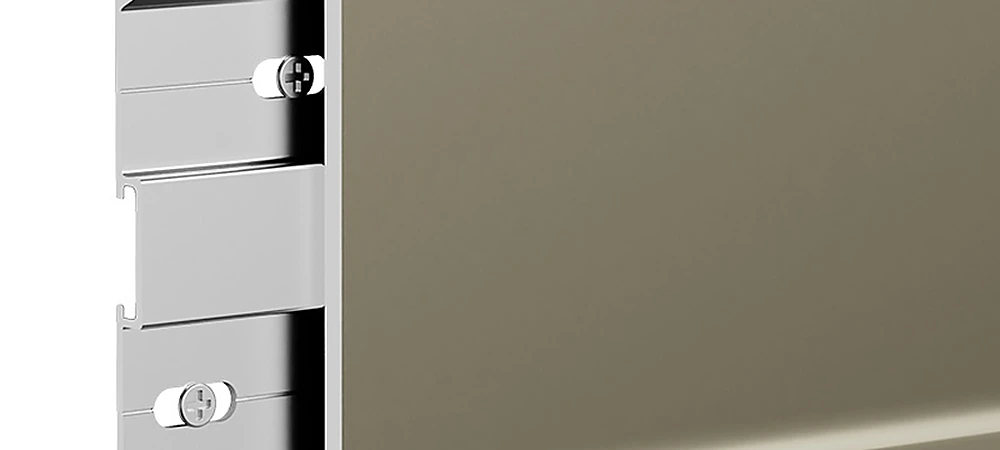
Performance, Maintenance, and Durability Comparison
Hesitation usually comes from one question: will it still look good in five years? These points answer it.
Moisture, Fire, and Corrosion Resistance
Aluminum flush skirting is moisture-, mold-, warp-, and corrosion-resistant, making it suitable for kitchens, baths, workplaces, hospitals, and hotels. Aluminum maintains its form whereas wood-based baseboards might bulge with water. Our profiles are rated Class A non-combustible (GB 8624) and are free of formaldehyde. We also do 96-hour neutral salt spray testing under ASTM B117 and ISO 2409 cross-cut tests for coating adherence. Before ordering, ask each provider what reports they can supply. US projects typically need ASTM E84 surface burning data.
Expansion Gaps and Dimensional Stability
Floors move. Tiles and flooring may expand and contract with variations in temperature, and a tight edge might buckle. We designed the flooring and tiles to provide an expansion space in the floor so it may move without deforming the skirting line. Aluminum also has a lower coefficient of thermal expansion than PVC; thus, it holds its size better. Performance still relies upon the metal, thickness, coating, and quality of installation. We take random samples from each shipment and execute a mock install to verify that the base track and cover plate fit properly and that the interlock remains rattle-free when installed on site.
Maintenance and Lifecycle for LED Systems
A smooth flush face wipes clean in seconds, and the closed top offers no ledge for dust, so daily cleaning decreases. LED skirting calls for further examination of strips, diffusers, drivers, connections, and controllers. Choose modular designs that have detachable coverings and accessible drivers, allowing a technician to replace a component without having to open the wall. Never trap a motorist behind a fixed panel. For hospitals, evaluate joint sealing and resistance to disinfectants. Write down the profile and component codes so you may reorder the same parts years later.
Procurement Guide: Quality Checks and Common Mistakes
Trust grows when a supplier shows its checks, and your order details are clear. This section covers both.
What to Include in an RFQ
A specific request will save you a few emails back and forth. State the application, drawings, construction of walls and floors, height of profiles, depth of recesses, quantity in linear meters, finish, color, accessories, packing, and place of delivery. For LED projects, provide color temperature, brightness, voltage, IP rating, driver, and control mechanism. Require the supplier to itemize profile costs for covers, corners, connections, diffusers, drivers, and shipping. Also ask about actual samples, cross sections, lead times, MOQ, and warranty conditions. Distributors should match samples with their top-selling wall panels and flooring. We may deliver the wall panels, trimmings, and skirting boards together to make matching simpler.
Quality Checks That Protect Your Reputation
It’s important to note that the dealers incur the risk of a batch failing. Our partner manufacturer, Zhengzhou Keyi Aluminum, is ISO 9001:2015 certified and evaluates every batch of aluminum for its chemical makeup. Inspectors test straightness, hardness, coating adherence, salt spray resistance, and anodized film thickness. They also carry out installation tests on 5% random samples of every batch. Pallets are equipped with edge guards and stretch wrap for maritime freight. Standard orders ship in 7-10 days, while special orders arrive in 10-15 days. We have more than 300 molds and can produce over 15,000 meters every day, so we can plan to resupply around your busiest season.
Common Mistakes to Avoid
Most issues begin with lacking information. Buyers purchase a profile without verifying wall thickness, recess depth, floor height, or corner form. Some people merely look at price/meter, without looking at accessories, labor, packing, and eventual replacements. Mixing corner, cover, or finish types from various manufacturers will result in noticeable gaps in color and alignment. Seem-alike PVC profiles in images might seem like metal; therefore, ask for material specifics and coating test results. Don’t install LED projects without accessible drivers. Keep ornamental lighting apart from any essential emergency lights.
Conclusion
Aluminum flush skirting and LED skirting are different in purpose, mostly. The flush profile protects the wall foundation, eliminates the dust ledge, and provides a clean wall-to-floor line with less maintenance. LED skirting provides low-level light but also introduces drivers, wiring, diffusers, and servicing requirements. Total ownership cost is more important than the initial price. When a flush profile contains a concealed cable groove with suitable room, heat control and access, the two may be integrated. The material, the height, the depth of the recess, the finish, and the corner features define the fit. Moisture, fire, and corrosion tests reveal how long a profile will endure. A detailed request with illustrations and individual line items avoids the most frequent purchase mistakes.
FAQ
1. Is aluminum flush skirting the same as LED skirting?
No. Aluminum flush skirting describes the installation position and profile structure, while LED skirting describes integrated lighting. A flush profile with an LED groove can do both.
2. Does aluminum flush skirting work on drywall and wall panels?
Yes. Standard lengths are 2440, 2500, and 3000mm, and recess depths are 10, 12, and 15mm. Drywall and wall panels suit these sizes. Tell us your wall type so we can match the fixing method.
3. Can I install an LED strip in the profile?
Yes. Profiles with a hidden LED cable groove hold a strip. Plan the driver location and service access first.
4. What should I confirm before ordering?
Confirm visible height, recess depth, wall thickness, finished-floor height, corner type, finish, and LED dimensions if you need lighting.
5. How long does delivery take?
Standard orders ship within 7–10 days. Customized orders take 10–15 days.
Request Aluminum Flush Skirting Samples from ZX
Aluminum flush skirting from ZX is made of aluminum alloy, stainless steel, and PVC polymer, backed by 300+ molds and 100+ color and texture options. Their partner factory is ISO 9001:2015 certified. Looking for an aluminum flush skirting supplier that matches your wall panels and replies within 24 hours? Send your drawings, sizes, and quantities to info@kangdishi.com, and we will arrange free or cost-price samples.
References
1. National Fire Protection Association, NFPA 70: National Electrical Code, 2023
2. ASTM International, ASTM E84: Standard Test Method for Surface Burning Characteristics of Building Materials, 2023
3. ASTM International, ASTM B117: Standard Practice for Operating Salt Spray (Fog) Apparatus, 2019
4. International Organization for Standardization, ISO 2409: Paints and Varnishes — Cross-Cut Test, 2020
5. UL Standards, UL 8750: Light Emitting Diode (LED) Equipment for Use in Lighting Products, 2015
6. ASM International, ASM Handbook, Volume 2: Properties and Selection: Nonferrous Alloys and Special-Purpose Materials, 1990
Online Message