
Sep 29, 2026
Arc Aluminum Edge Trim vs Traditional Edge Profiles: Which One Is Better?
If you work in building materials procurement, interior design, or furniture manufacturing, you already know that edge profiles are more than just finishing touches — they protect surfaces, define aesthetics, and affect long-term maintenance costs. So which performs better: arc aluminum edge trim or traditional options like plastic, vinyl, or steel? The short answer is that arc aluminum edge trim consistently outperforms traditional profiles across durability, design flexibility, safety, and total lifecycle value. Here is a detailed, evidence-based breakdown to help you make the right call.
Understanding Arc Aluminum Edge Trim and Traditional Edge Profiles
What Is Arc Aluminum Edge Trim?
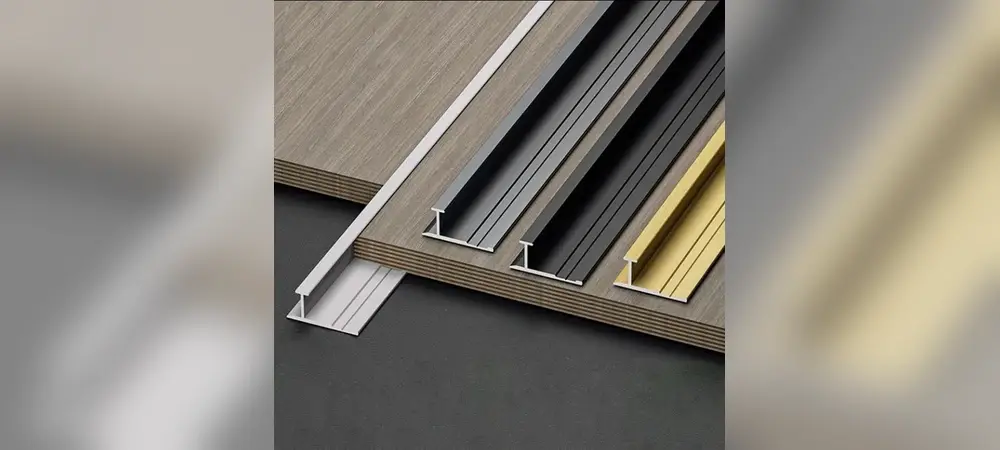
Arc aluminum edge trim is a precisely extruded profile made from a lightweight aluminum alloy that doesn't rust. It has a smooth, rounded arc transition instead of a hard 90-degree corner. Made from 6063-T5 aluminum alloy, it has a clean finish, is structurally sound, and won't rust. It's good for commercial interiors, furniture edges, and flooring transitions.
What Are Traditional Edge Profiles?
Plastic (PVC), steel, and vinyl are all common materials for traditional edge profiles. There are different trade-offs for each medium. PVC trims are cheap, but they tend to crack and turn yellow when heated. It's easy for steel profiles to rust in damp places because they are heavy. Vinyl edges are versatile, but they can't hold a lot of weight, which is needed for high-traffic business settings.
Why the Distinction Matters for B2B Buyers
The choice of material has a direct effect on how long a project lasts and how much it costs to maintain for importers, distributors, and building companies that deal with big orders. A group called the Aluminum Association says that aluminum's natural oxide layer protects against corrosion in a way that plastic and vinyl can't. Being aware of this difference saves money and cuts down on replacement cycles.

Key Differences Between Arc Aluminum Edge Trim and Traditional Edge Profiles
Material Performance and Durability
Arc aluminum edge trim has a finish that won't rust and will stay stable in damp places for 20 to 27 years, which is a lot longer than PVC or vinyl options. It has metal walls that are between 0.5mm and 1mm thick, and the anodized layers on the surface that are 10 microns or more meet ASTM B221 standards for extruded aluminum profiles. Without regular coating maintenance, steel profiles rust, and plastic trims can break down when exposed to UV light.
Design Flexibility and Finish Options
This is a clear way that aluminum is different from other materials. Arc aluminum profiles from ZX come in sizes of 12mm, 15mm, and 20mm, and come in stock lengths of 3,000mm or can be made to order in lengths from 2.4m to 4m. Silver, brass, and black are the colors that are in stock. If you want a different color, you can ask for a custom anodized finish. On the other hand, PVC and vinyl trims don't always have the same surface finish from batch to batch, which can be a problem for big jobs that need everything to look the same.
The rounded arc shape also solves a real safety issue: tile or panel placements with sharp 90-degree ends are known to be dangerous on busy building sites. The curve shape is designed to get rid of that risk.
Installation Efficiency
Because arc aluminum profiles are made of a light alloy, they can be installed by both homeowners and professionals without the need for special tools. Silicone that isn't acidic or thin-set concrete made from cement are both good binders. For long runs, it's best to leave a 1–2 mm expansion gap at the joints to allow for changes in temperature. Steel profiles, on the other hand, usually need to be cut with special tools and are heavier than other profiles, which makes the installation process take longer and cost more.
Cost and Value Comparison
Upfront Cost vs. Total Cost of Ownership
Traditional types, like PVC and vinyl, have lower starting prices, which can look good for people who are on a tight budget. But this advantage doesn't last long. In wet or high-traffic areas, PVC trims usually need to be replaced every 5 to 8 years. Aluminum profiles that meet CE and RoHS standards, like those from ZX, are said to last between 20 and 27 years in normal use.
Bulk Procurement Advantages
Importers and wholesalers of building materials can load containers more quickly when they order aluminum edge profiles in bulk. ZX allows mixed-size loading to make the most of the full container room. This lowers the cost of shipping each unit directly. That practical gain alone makes aluminum a better choice for large-scale use than vinyl and PVC, which are more likely to break when they get wet.
Risk Reduction Through Quality Certifications
Compliance risk is introduced when things are bought without approvals that can be checked. It is safe to say that ZX's arc metal edge profiles are CE certified, RoHS compliant, and EU Indoor Eco Certified. In places like the US and Europe, indoor environmental standards may not be met by traditional profiles, especially lower-grade PVC. This could put distributors and contractors at risk.
How to Choose the Right Edge Trim for Your Project
Match the Profile to the Application Environment
Aluminum is the best choice for places with a lot of wetness, like business kitchens, hotel bathrooms, or healthcare hallways, because it doesn't rust. Vinyl or PVC may still work well for dry residential trim jobs with little foot traffic and a small budget. The length of time the installation needs to keep its look and structure without any changes is what makes the decision.
Evaluate Supplier Reliability Before Committing
Consistency with suppliers is just as important to B2B buyers as product quality. Before full production starts, look for makers who offer pre-production models that let you check the arc radian, dimensions, and surface finish. As a standard step, ZX offers this pre-production prototype process. This lets purchasing managers check specs before placing large orders. With this one step, the most common cause of costly batch failure is taken care of.
Verify Customization Capacity
Not every project fits into a standard catalog size. Custom arc radian choices and anodized color matching are very important for furniture and cabinet makers who need exact arc profiles to match design plans. Make sure that the company you're buying from for Arc aluminum edge trim has dedicated mold sets and can work with non-standard widths and lengths within the lead times you agreed to.
Why Arc Aluminum Edge Trim Is Becoming the Preferred Choice
The move toward aluminum edge profiles in both business and private building is not a coincidence. According to the Global Aluminum Market Report (2023), the demand for ornamental aluminum profiles has been growing steadily. This is because of stricter environmental rules in key markets like the US and Europe, as well as the need for long-term performance.
When it comes to buying things, ZX's arc aluminum profiles cover all of the bases:
- Safety: The round arc design removes the injury risk from sharp exposed edges during both installation and daily use.
- Longevity: The oxidation-resistant finish maintains appearance for 20–27 years, even in humid conditions.
- Slim profile design: Available in 5mm and 8mm thickness options, the profiles wrap cleanly around furniture and floor edges without adding bulk.
- Eco compliance: The aluminum raw material meets CE, RoHS, and EU Indoor Eco standards, satisfying import regulations in North American and European markets.
- Production confidence: Pre-production samples confirm shape, dimension, and surface effect before any full-run commitment.
All of these things explain why more and more importers, interior designers, furniture makers, and OEM brand owners choose aluminum over plastic or steel options. However, traditional profiles can still be used in low-demand situations. For projects that care about quality, compliance, and durability, the metal arc profile is the better choice.

Conclusion
In terms of longevity, safety, design range, and long-term value, Arc aluminum edge trim beats conventional profiles. Plastic and vinyl can still be used in low-demand situations, but metal has a 20–27-year service life and meets international environmental standards, which plastic and vinyl don't. If procurement teams need to buy a lot of something, like for distribution, construction, or furniture production, they should choose a verified Arc aluminum edge trim supplier. This will lower the cost over time and remove any quality concerns.
FAQ
1. Why choose arc aluminum edge trim over standard L-shaped profiles?
The curve shape smooths out sharp edges, making it safer to install and use every day. It also makes it easier to clean corners, which is important in business and hospital settings.
2. Can the anodized finish resist chemical cleaners?
Yes. A high-micron anodized layer makes it resistant to acidic and alkaline detergents that are commonly used in commercial cleaning.
3. What installation adhesive works best?
It is best to use a thin-set mortar made of non-acidic silicone or cement. Adhesives that are acidic can combine with the metal backing and weaken the bond.
4. Does the trim handle thermal expansion?
The anchoring form of the outline allows for some movement. A 1–2 mm expansion gap at each joint keeps runs longer than a single length from breaking in places where the temperature changes.
5. What certifications does ZX's arc aluminum edge trim carry?
Indoor Eco Certification from CE, RoHS, and the EU. These cover both environmental compliance and safety for use in homes and businesses inside.
Get Your Arc Aluminum Edge Trim Sample from ZX Today
With the help of Zhengzhou Keyi Aluminum's production base and more than 300 specialized molds, ZX sells Arc aluminum edge trim to importers, builders, and furniture makers in North America and other places. We offer unique arc radian, anodized color matching, and pre-production samples, and we ship within 7–10 days. Get in touch with us to get a free sample or to talk about your needs for an Arc aluminum edge trim supplier.Email address: info@kangdishi.com zhongxiudecor.com is the website.
References
1. The Aluminum Association. Aluminum: The Element of Sustainability. 2022.
2. ASTM International. ASTM B221: Standard Specification for Aluminum and Aluminum-Alloy Extruded Bars, Rods, Wire, Profiles, and Tubes. 2023.
3. Global Aluminum Market Report: Architectural and Decorative Applications. Technavio Research. 2023.
4. European Commission. RoHS Directive 2011/65/EU: Restriction of Hazardous Substances in Electrical and Electronic Equipment. 2022 Amendment.
5. Construction Specifier Magazine. Edge Profiles in Commercial Interiors: Material Selection and Performance Standards. 2021.
6. Building Design + Construction. Sustainable Material Specifications for Interior Finishing Systems. 2022.
Online Message