
Oct 28, 2026
How Durable Are Aluminum Decorative Mouldings?
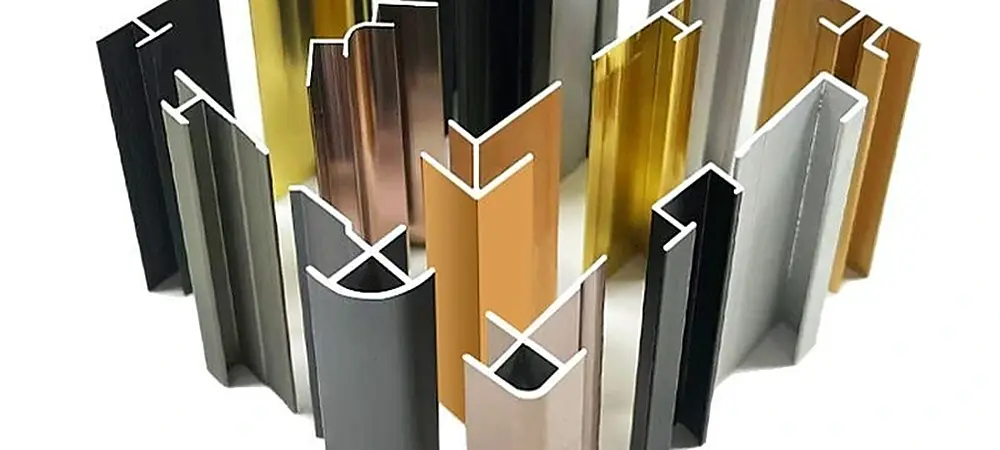
Aluminum decorative mouldings are today among the most durable finishing profiles available for commercial and residential interiors. The profiles are composed of 6063-T5 aluminum alloy, with anodized layer thickness of ≥10 μm, resistant to moisture, corrosion and physical damage, will not distort or break. They are CE & ROHS compliant with a tested lifespan of 12-16 years in regular install situations. This means fewer returns, lower replacement costs and increased downstream credibility for distributors, OEM brand owners and project contractors buying trim profiles in volume.
Understanding Aluminum Decorative Mouldings and Their Durability
Before you compare materials or talk about maintenance, it is vital to know what makes aluminum profiles stand the test of time. Three structural variables explain their lifespan.
Alloy Grade and Tensile Strength
6063-T5 alloy with tensile strength ≥160 MPa for quality extruded trim profiles. This means the shape will endure bending and impact without deformation in high traffic corridors, shop floors and hotel lobbies. It won’t swell up with humidity or shrink with dry winter air like wood does, so it will hold its dimensions year after year.
Anodised Surface Protection
Anodising is not a paint. It's an electro-chemical process that changes the surface of aluminum to aluminum oxide, generating a coating that is molecularly bonded to the metal. With thickness ≥10μm (exceeds China’s national requirement), the finish is scratch, UV-fade and salt-spray resistant. Salt Spray Testing ASTM B117 240-480 hours Demonstrates performance in coastal and high-humidity environments.
Certifications That Back the Claims
Profiles are CE and ROHS certified to meet European safety and environmental standards. ISO 9001:2015 quality management certification is an indication of consistent manufacture control. They are not marketing labels, but third-party verifications that count when you are stocking goods or filling export orders.
Aluminum Decorative Mouldings vs. Alternative Materials: Durability Comparison
As a rule people have to choose between the cost of a thing, how long it will last and how much upkeep it will need. There are two popular materials that are commonly used as a substitute for aluminum.
Wood trim profiles also swell and shrink when wet. Eventually these wet patches will either rot or crack. They also need painting from time to time and can be badly eaten by termites. In business they ought to last 5 to 8 years before they start to fail and need replaced.
The simple PVC and plastic shapes are cheaper and lighter initially, but they tend to break rapidly when exposed to UV light and lose their firmness above 60 degrees Celsius. Anodized aluminum edge trim is much less likely to chip and scratch where lots of people walk.
None of these procedures will break metal forms. Here are some of the best things about it:
- Resists moisture and corrosion: Aluminum does not absorb water. When properly anodised, profiles work in kitchens, baths and wall systems adjoining external areas without degrading the surface.
- Pest and mold resistance: Wood has organic matter that pests and mold feed on, which can cause concealed structural damage, while aluminum does not.
- Weight to Strength Ratio: At about one third the weight of steel and substantially stronger than PVC by cross section, aluminum allows for much simpler site handling and transport while retaining edge rigidity.
- Total cost of ownership: Aluminum trim profiles have a greater initial unit cost than PVC, but the 12–16 year service life saves cumulative replacement and labor expenditures throughout the lifetime of a structure.
These performance differences should be enough to convince manufacturers who have to stand behind the things they sell, and project managers who can't afford warranty calls on final installations, to go with metal.

Maintenance Tips to Maximize the Lifespan of Aluminum Decorative Mouldings
Regular maintenance is good for everything, but in commercial settings, where chemicals are needed to clean and normal wear and tear is part of the job, it is more crucial.
Routine Cleaning
Wipe down the surface of aluminum decorative mouldings using a soft cloth dampened with a pH-neutral cleaner. Avoid cleaners that are overly acidic or basic, as they might eat away the anodised coating over time. Check that its pH is between 6 and 8, before you use the cleaner a lot in places that need disinfectants like hotel or hospital halls.
Inspection for Mechanical Damage
Inspect transition strips and termination points in high traffic areas every six to twelve months. A scratch on anodized aluminum doesn't make it more susceptible to rust like a scratch on painted steel would. Scratches that are deep enough to expose bare metal, in contrast, need to be treated with touch-up paint formulated for aluminum to keep the barrier intact.
Avoiding Incompatible Fasteners
Connect profiles to supports with aluminum or stainless steel screws. Over time, two dissimilar metals touching each other, such as aluminum and carbon steel screws, can cause galvanic corrosion. This means that they spend less time at the meeting locations of the forms.
Installation and Customization: How They Influence Durability
The profile installation and specification directly influences its lifespan. Good material quality is ruined by poor installation.
Dust-Free Cutting for Cleaner Joints
Aluminum trim profiles also offer the practical advantage of dust-free cutting. They cut neatly with a carbide blade with many teeth, unlike gypsum or wood trims which create small particle dust and require masks and cleanup. No sanding or plastering required afterward, reducing site contamination and speeding up installation on both new build and rehabilitation projects.
Adhesive and Fastener Selection
For the bonding of edge trimmings of aluminum decorative mouldings on wall panels, hot-melt adhesive with peel strength of ≥2.5 N/mm is recommended. Mechanical attaching with stainless steel clips is ideal for situations where thermal cycling occurs, such as interior walls exposed to the external, where dimensional flexibility is not available with adhesive-only installation.
Custom Sizing and Profile Fit
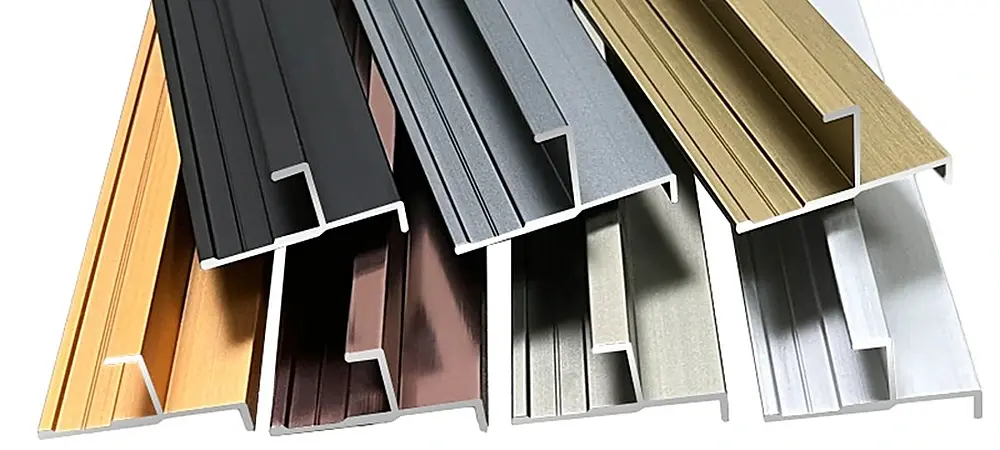
Cross sections from 20mm to 100mm and standard lengths from 2.4m to 4m serve the complete range of residential and commercial finishing needs. Custom profiles and OEM mould development (300+ existing molds, 15-20 days to complete) allow brand owners to define specific dimensions to eliminate on-site cutting, minimise waste and increase joint consistency in large projects.
Procurement Insights: Buying Durable Aluminum Decorative Mouldings for Your Business
Know what to look for in a source before you get the order. This will save you time and money.
Some of the things that are looked at. Suppliers must be able to prove compliance with CE, ROHS and ISO 9001:2015 standards for their products and not just cite those standards in a catalog when asked. If color constancy is critical to your project or brand, request the ASTM B117 salt spray test record and Delta E colorimeter batch records.
Monthly restockers need to ensure sure wholesalers have plenty of product on hand. If a supplier has its own stock and logistics base in central China, such as Zhengzhou, which is a significant rail and road freight hub, it can normally ship regular orders within 7-10 days. This decreases the chances of running out of goods while the renovations are underway.
OEM brand owners need to understand who owns the mold, how long it takes to produce new colors and how the provider deals with patterns that are kept confidential. What's more important is that each batch is good, not the initial sample is good. You should be given a colorimeter and measurement tolerance report on both sample and production runs.
When a business requires trim, it is common for them to request samples before ordering a substantial amount. These people who want to buy from a respectable company will be able to receive examples at little or no cost. You can see and feel the quality of the anodizing, the accuracy of the numbers and how even the finish is.

Conclusion
There is evidence that aluminum decorative mouldings and metal trim forms last from 12 to 16 years. These include salt spray and anodizing tests, as well as approvals from other nations. They are superior to wood and PVC in terms of water resistance, shape retention, and total cost of ownership over their lifetime. One simple strategy to maintain the quality of the job and minimize the danger in the future is to find a certified metal decorative molding source that has things in stock and can make revisions. This is critical for those working on projects with short timelines, OEM brand owners developing product lines and dealers tracking their inventory.
FAQ
Are aluminum trim profiles appropriate for outdoor use?
Yes. With the correct surface specification. If the application is outdoors or coastal, provide a 20-25μm anodized layer or PVDF coating to withstand UV exposure and high salinity. Standard interior grade anodizing (10μm) is not approved for direct external weathering.
How does aluminum compare to wood from a sustainability standpoint?
Aluminum is 100% recyclable with no hazardous leftovers in the recycling process at end of life. Wood trim requires periodic chemical treatment to withstand pests and moisture, and lower-grade wood items may contain formaldehyde-based adhesives. ROHS certified aluminum profiles are not containing any restricted hazardous chemicals.
How long can I expect it to last in a business application?
Anodized aluminum trim profiles, properly placed, will endure 12-16 years without any surface degradation in normal indoor business conditions (hotels, offices, retail). This number is based on statistics on anodized film longevity and manufacturer testing criteria.
Can these profiles be utilized for new buildings and renovations?
Yes. The exact dimensional tolerances and gap-covering nature of the profiles make them just as suitable for covering raw edges in new construction as for hiding old surface transitions in renovation work. Their ability to cut without creating dust makes them especially well suited for occupied renovation locations.
How long does it take to receive custom color profiles?
Standard anodized finishes are often available ex stock. Production and color verification of custom RAL powder coat colors typically requires 7-14 days. OEM mold development for new profiles is 15-20 days.
Get a Quote from ZX — Your Trusted Aluminum Decorative Mouldings Supplier
When you buy aluminum decorative mouldings and metal trims for home decor from ZX (Zhengzhou Zhongxiu Building Materials Co., Ltd.), they sell them straight from the factory. They keep things in stock so they can ship quickly and offer more than 200 color options. They also help with OEM production in every way. Our team will get back to you in 24 hours, whether you need a lot of custom profiles made or a mixed-batch wholesale order. To see examples and get prices, email us at info@kangdishi.com or go to zhongxiudecor.com.
References
1. Aluminum Association. Aluminum Alloy Temper Designation System. The Aluminum Association, 2021.
2. ASTM International. ASTM B117: Standard Practice for Operating Salt Spray (Fog) Apparatus. ASTM International, 2019.
3. ISO. ISO 2409: Paints and Varnishes — Cross-Cut Test. International Organization for Standardization, 2020.
4. Mehta, P.K., & Monteiro, P.J.M. Concrete: Microstructure, Properties, and Materials (referenced for comparative material lifecycle methodology). McGraw-Hill Education, 2014.
5. European Aluminium Association. Aluminium in Building and Construction. European Aluminium, 2020.
6. Polmear, I., StJohn, D., Nie, J.F., & Qian, M. Light Alloys: Metallurgy of the Light Metals. Butterworth-Heinemann, 2017.
Online Message