
Nov 13, 2026
How to Choose the Right Aluminum Decorative Trim Strip
Choosing the correct aluminum decorative trim strip starts with its purpose: protecting an edge, closing a gap, or concluding a transition. Then, match the alloy, thickness, breadth, and surface treatment to that work and check the installation technique before you buy. Check anodized film thickness, seek a physical sample, evaluate packing and lead time, since a profile that seems correct might nevertheless fail on site. This guide takes you through each option in turn, so you can evaluate vendors against specific criteria and purchase with confidence.
Define the Project, Material, and Dimensions
Good decisions start with the basics: the job, the material, and the measurements.
Start With the Project Requirements and End-Use Scenario
My first step is usually to ask a question. What issue does the trim solve? An aluminum ornamental trim strip may prevent the edge of a tile from chipping, cover a rough cut in marble, or provide a neat line where two kinds of materials meet. The profile required varies from job to job. In a kitchen or bathroom, the finish has to stand up to water and plenty of cleaning. But in a hotel corridor, it has to be able to tolerate being struck. They should also compile a list of the profiles most requested by installers in their region. Before I inquire for estimates, I jot down the usage, the material, the quantity, the delivery place, and the time period. This little shortcut stops lots of emails and ensures that all of the quotations are consistent.
Understand Aluminum Decorative Trim Strip Materials and Construction
Most construction trim is extruded—that is, hot metal is forced into a mold to create the shape. Other literature such as the aluminum design manual from the aluminum association speak about alloy and temper qualities. ASTM B221 deals with extruded aluminum sections. The aluminum decorative trim strips we use are constructed from 6063-T5, a metal often used for ornamental forms since it is easily extruded and good for anodizing. It is not just the metal, but also the contour of the profile that counts. The techniques to cover edges and joints are different: clip type, U type, flat type, and leaf-like pieces. Profiles that can be bent and perforated may be used to cover curving walls and provide legs. Don't just write "aluminum." Have each supplier put on paper the name of the metal and what temper it is.
Choose the Correct Size, Thickness, and Profile Dimensions
A strip either fits the wall or it doesn't, according to its size. I look at the length. The length of the hole. The length of the flange. The thickness of the wall. The breadth of the visible face. The normal length is 3 m, with widths of 5, 10, 20, 30, 50 and 80 mm. It is 5mm thick and 8mm thick. Thick sections may take greater abuse. Thin parts are good for tight spaces and low duty edges. The fixed length of 3m is handy for distributors to arrange containers. However, for particular purposes, lengths may be created to order. We are just .1 mm away from the project site, which helps the cut ends line up when they arrive. Create a sample and ensure you like it before producing more of them.
Match Finish, Material, and Application
Next, think about how the material, the surface, and the use case all work together.
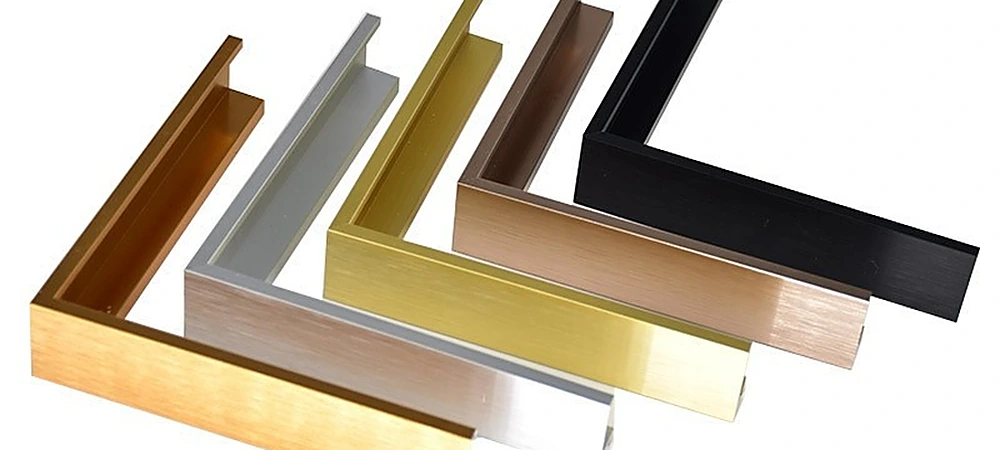
Select the Right Surface Finish, Color, and Appearance
The finish of something changes how it looks and how long it lasts. This process turns the top layer of aluminum into a hard metal film. The general requirements for these coatings are set out in ISO 7599. Bionic wood grain is one of the many choices we have. It comes in more than 100 different colors and sizes. If you want to buy in bulk, I suggest starting with a mix of colors that sell well in your market. You can add unique finishes in smaller amounts once you know there is a need for them. Note how thick the film is. One type of coating is Class I if it is at least 0.7 mil (18 microns) thick, and the other type is Class II if it is less than that. The thickness of our anodized film is at least 10 μm.
Compare Aluminum With Other Decorative Trim Materials
The unit price of materials isn't the only thing you should compare. You should also look at how much you need for the whole project. Cutting stainless steel on-site costs more and takes longer, but it is harder and can be used for big loads. UV light and fire don't hurt aluminum as much as they hurt PVC, even though PVC is cheap and easy to work with. To make things even easier for workers to move, aluminum is lighter than steel. This also lowers the freight rate. Because stainless steel and aluminum can look the same when they're done, you should compare price, weight, and labor costs all at the same time. Around an edge, a U-channel protects it, and an aluminum decorative trim strip draws attention to the finish and transition that can be seen. Look at each profile to see what part it plays in the projects you're making.
Match the Trim Strip to Specific Applications
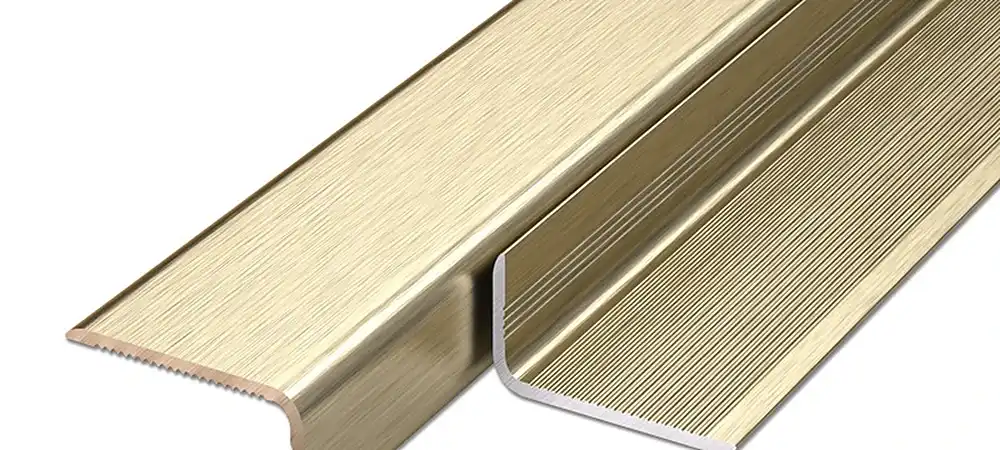
This is the final shortlist, which is based on the applications. When you put the tile where the wall meets the floor in a kitchen or bathroom, this strip keeps water, mildew, and rust from getting in. Surfaces that are tough and easy to clean are very important in places like hotels, businesses, and shopping malls. In cabinet and wardrobe projects, U-shaped and T-shaped profiles are used to add metal on top of wood veneer. The edges need to be cut off and joined with strips to hide the cuts when the wall panels are put together. When homes are being fixed up, a low-odor rule is often added. The material that our eco-friendly strips are made of has no formaldehyde and doesn't smell bad, so rooms can be used right away after they are put up. Before setting how much of each color to use, make sure that each profile is right for the job.
Plan Installation, Supplier Checks, and Costs
Plan the work, look into the service provider, and then compare the total cost once both are clear.
Evaluate Installation, Cutting, and Maintenance Requirements
The people who put things together like materials that are simple to cut and put together. A fine-tooth blade can be used to cut our thin aluminum decorative trim strips right where they are needed. They can be put on in four ways: with brad nails, nail-free glue, silicone structure glue, or hidden clips. You don't have to drill holes when you use nail-free glue or clips, and brad nails work well on wood. Silicone glue sticks things together well for a long time. Stickers with acetic acid can react with aluminum, so pick silicone that cures at room temperature. Remove cement-based glue quickly, and clean finished trim with a soft cloth and mild soap. The surface will get scratched if you use rough brushes.
Assess Supplier Capability, Quality, and Procurement Risk
The supplier makes sure there is less risk before the money moves. Their main plant is 132 mu, and they have three branch plants and more than 300 sets of molds. We work with them because we are an export-focused business. Find out from the supplier where the item is made, what standards they follow, and what checks are done on it before it ships. ISO 9001:2015 has approved the company we work with. To check the quality, cross-cut adhesion tests according to ISO 2409, color measurements (Delta E below 1.0), and salt spray tests according to ASTM B117 are all used. Instead of vows, ask for reports, and make sure that the long profiles won't bend while they're being shipped.
Compare Costs and Build a Practical Buying Decision
It's not enough to just look at the rate given to make a fair comparison. An extra cost is the work your buyers do to put it together, as well as the chance that it will break or need to be wrapped up. Make sure that all of the quotes use the same way to figure out prices, like by the meter, the piece, or the weight. Most of the time, normal accounts get sent out more quickly. Everyday sales go out in 7–10 days, and custom orders are done in 10–15 days. It can be helpful to have a simple scorecard. Fit, quality proof, wait time, paperwork, and customer service after the sale are all things you should look at with each provider. Cheap options in your area might look good at first, but they may cost you more in the long run if test data is missing or colors change between batches.
Follow a Clear Buying Process
It's fair to compare things when you follow a set process, and your first order is safe.
Recommended Selection Process for Global B2B Buyers
There are 5 stages to follow. First, you have to compose the tech brief. This includes the purpose of the items, size, metal, finish, color reference, number, packaging, and where they are going. Second, when you decide to use a service, don’t simply look at their costs online, but also at how much they know and how well they scored on exams. Third, ask to see examples and plans. Fourth, include the specifications that are acceptable in the purchase order. Fifth, before you begin with regular replenishment, place a test order of assorted products. A test order allows you to check how well the colors match, how well the packaging keeps up, and how fast the goods sell before you commit to greater quantities. Start early, as the entire procedure will take a few weeks.
Common Mistakes to Avoid When Buying Aluminum Decorative Trim Strip
Seems like there are four faults being repeated again and over. People purchase products based on what they look like, not the flanges and apertures on them. They treat an interior finish as if it were made for the outdoors or around water. They agree on one example, but they never tell you what an acceptable color variation is across groups. They also don’t consider the damage in transit. The long, thin metal ornamental aluminum decorative trim strips might bend if packed carelessly. For marine freight, the use of boxes, edge guards, and stretch wrap reduces that danger. One other thing: don’t purchase plenty of one color until you see how popular it is. Holding colors that don’t sell costs money and shelf space.
Final Decision Checklist
I create one more list before signing off on a major order. Does the form fit the substrate? How successfully do span, depth, length, and range accomplish their jobs? Can the movie make this work? We need to be at least 10 micrometers. Is the hue, the sheen, and the feel of the sample accepted as correct? How clear are the order's MOQ, lead time, packing, inspection, and paperwork? If you answer "yes" to all of them, the order is set. Sending one extra email now instead of later will save me a lot of money.
Why ZX Aluminum Decorative Trim Strip Suits Wholesale and Project Buyers
Our goods are different from the ones above in these ways.
Product Specifications at a Glance
So that you can compare them to other quotes, here is a list of the main specs.
| Parameter | Specification |
|---|---|
| Alloy | 6063-T5 |
| Standard length | 3 m, custom lengths available |
| Thickness options | 5 mm / 8 mm |
| Width range | 5, 10, 20, 30, 50, 80 mm |
| Anodized film thickness | ≥10 μm |
| Surface treatments | Anodizing, matte wire drawing, vacuum plating, bionic wood grain |
| Installation methods | Nail-free glue, silicone glue, hidden clips, brad nails |
These statistics may be used as a starting point for making trial requests. Order from us and you may obtain all the profiles, fittings, and color matching you want for your personal remodeling projects. We also offer several clip height models, accessories, and custom sizes.
Performance in Daily Use
You may witness the consequences of these standards on the work site. So they may be utilized in bathrooms, kitchens, and where walls meet flooring. The metal ornamental trim strips will not corrode, mildew, or get wet. It is a flexible alloy construction that will not break, fracture, or wear out rapidly in busy homes and workplaces. The alkaline tile glue cannot penetrate this layer and hence cannot be stained by chemicals. Profiles of light can be cut using standard tools to speed up the installation procedure. All these elements work together to remedy the issues that repair personnel face every day, such as broken edges, improper transitions, and obvious cut defects.
Production Capacity, Lead Time, and Quality Control
Every day, the manufacturing lines of Keyi Aluminum create aluminum ornamental trim strips. They create around 25,000 meters of them. Orders are typically sent in 7-10 days. Custom orders take 10-15 days to complete. Our quality expert examines every batch 6 times before it ships, and 5% of each batch is put through a test that looks like it was installed. We will get back to you in 24 hours (48 hours on holidays), and you may try items for free or for a cost. We offer our items in Australia, North America, Europe, the Middle East, Asia, South America, and Africa.
Conclusion
As with any aluminum decorative trim strip, it is crucial that the profile suits the application. The finish impacts how it appears and how long it lasts. Its form is governed by its function. The overall value is not just dependent on the per-unit price, but also on aspects like the weight, ease of cutting, UV resistance, and shipping expenses. If you have supplier verification such as film thickness reports, adhesion and salt spray tests, and safe packaging, you are less likely to have to throw away product. A sample, detailed technical brief, and mixed trial order may all enable customers to determine whether they want to purchase again or not.
FAQ
1. What thickness should I choose?
For shapes that aren't too thick, 5 mm works best. For places where knocks are likely to happen, 8 mm makes them more rigid. Use a test to be sure of your choice.
2. Which surface finishes are available?
There are more than 100 color and texture options, and we can anodize, matte wire draw, vacuum plate, and bionic wood grain.
3. How do I install the strips?
You can use nail-free glue, neutral-cure silicone, secret clips, or brad nails, depending on the condition of the wall.
4. How fast can an order ship?
Usually, orders are shipped in 7–10 days. For custom orders, it takes 10–15 days to finish.
Request Your Aluminum Decorative Trim Strip Samples From ZX
A company called ZX sells aluminum decorative trim strips that are backed by Keyi Aluminum's factory. They come in lengths of 3 m and thicknesses of 5 mm and 8 mm. Standard shipping takes 7–10 days. Please send your pictures, colors, and phone numbers to info@kangdishi.com. We will get back to you in 24 hours. You can pay for samples or get them for free.
References
1. Aluminum Design Manual, The Aluminum Association, 2020
2. Standard Specification for Aluminum and Aluminum-Alloy Extruded Bars, Rods, Wire, Profiles, and Tubes (ASTM B221), ASTM International, 2021
3. Anodizing of Aluminium and Its Alloys: General Specifications for Anodic Oxidation Coatings on Aluminium (ISO 7599), International Organization for Standardization, 2018
4. Voluntary Specification for Anodized Architectural Aluminum (AAMA 611), American Architectural Manufacturers Association, 2014
5. Standard Practice for Operating Salt Spray (Fog) Apparatus (ASTM B117), ASTM International, 2019
6. Paints and Varnishes: Cross-Cut Test (ISO 2409), International Organization for Standardization, 2020
Online Message