
Oct 8, 2026
How to Choose the Right Size Snap-Fit Aluminum Skirting?
Choosing the right size snap-fit aluminum skirting comes down to three core dimensions: height, length, and thickness. Standard options — 40mm, 60mm, and 80mm heights in 2.5m lengths — cover most residential and commercial layouts. Thickness matters too: 0.8mm suits standard interior walls, while 1.5mm handles higher-impact zones. A correctly sized aluminum skirting profile installs cleanly against both wall and floor planes, prevents visible gaps, and holds firm under daily wear. Getting the size right before bulk ordering protects your project timeline and reduces costly on-site adjustments.
Understanding Snap-Fit Aluminum Skirting and Its Importance
What It Is and How It Works
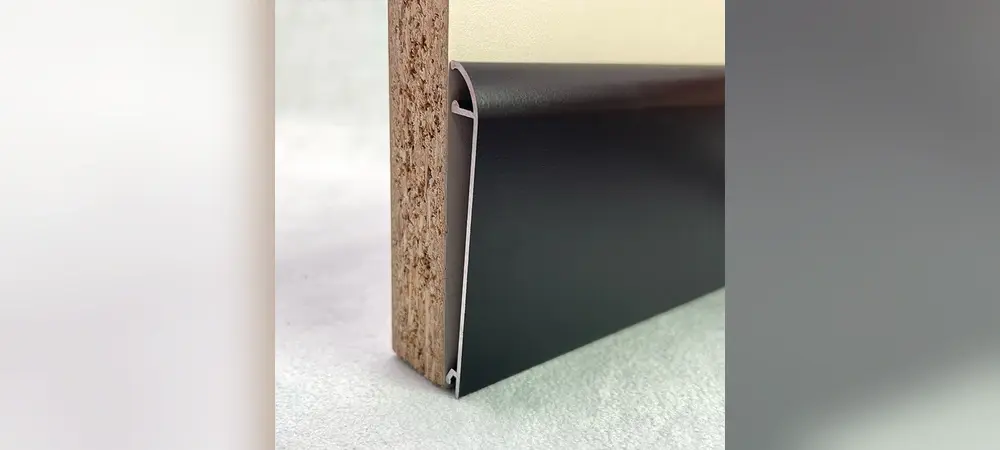
A two-piece shape system made of extruded aluminum alloy is known as snap-fit aluminum skirting. First, a hidden mounting base is nailed to the wall. Then, the decorative cover plate clicks into place without glue or nails. This mechanism clicks into place quickly and keeps the finished surface clean. Low-voltage wires can also fit in the internal cavity, which is a big plus for business fit-outs.
Why Correct Sizing Matters at Scale
On big projects like apartment buildings, hotel hallways, and office blocks, a 2mm height difference in hundreds of rooms is enough to show as a quality problem during the final review. Purchasing managers who are in charge of multi-unit builds know that differences in batch sizes cause extra work, stall release, and can even be against the terms of the contract. That risk is completely eliminated if you choose the right profile height and width from the start.
Common Misconceptions to Avoid
Many buyers think that all aluminum skirting profiles have the same size ranges. They don't. Cross-sectional tolerances are kept within ±0.2mm by a reputable manufacturer to make sure the snap mechanism always clicks securely. When you go outside that range of profiles, you get either loose covers that rattle or bases that won't fit. Before completing a bulk order, you should always ask for 2D drawings and examples that will be used before the order is made.
Key Metrics to Consider When Choosing the Right Size
Height: Matching the Room's Visual Scale
There are three common heights: 40mm, 60mm, and 80mm. Each is used in a different indoor setting. A 40mm profile works well in small bathrooms or apartments because a low visual baseline makes the space look clean and simple. A 60mm profile looks good in most living rooms and office hallways. An 80mm profile holds down bigger areas, like hotel lobbies and open-plan office floors, and protects against furniture and equipment touching it better.
Length and Thickness: Structural and Practical Decisions
Standard 2.5m lengths are the same size as most rooms, so there is less waste when cutting on-site. For normal home use, 0.8mm aluminum gauge is thick enough. At 1.5mm, the shape can handle stronger impacts from things like furniture legs, cleaning tools, and wheeled carts without denting. The 1.5mm choice is best for hotel projects, business areas, and other places with a lot of foot traffic every day.
Expansion Allowances and Fit Tolerances
When the temperature changes, aluminum gets bigger and smaller. A gap range of profile thickness +0.5mm to 1mm between the ends of the profile stops it from buckling in large, open areas. When measuring and placing an order, this allowance must be built in. This is a must for projects in hot climates or places where the temperature changes often, like lobby areas or ground-floor stores.
Comparative Analysis: Snap-Fit Aluminum Skirting Size vs. Alternative Materials
Aluminum vs. Wood and MDF
Wood and MDF border boards soak up water, which makes them grow, warp, and eventually lose their paint. Because their dimensional stability changes with humidity and season, it's not possible to be sure of the same size for a large project. No matter the weather or moisture, aluminum shapes always have the same cross-section. This material advantage is very important in damp places like kitchens, bathrooms, and hallways in basements.
Aluminum vs. PVC and Vinyl
PVC and vinyl borders are flexible, which some builders like on walls that aren't level. But that same flexibility makes the sizes of the pieces not match up perfectly. Over time, the profiles can bow away from the wall, leaving holes that can be seen. When stretched, aluminum can hold its shape and its tensile strength is between 160 and 200 MPa. This means that the 2.5-meter profile length stays straight. What you get is a smoother, more professional finish that will last for years.
Environmental and Certification Factors
Fire certification is needed for many public buildings and businesses in many markets. Snap-fit aluminum skirting from Zhengzhou Zhongxiu Building Materials Co., Ltd. is certified as CE, RoHS, and B1 fire-resistant grade, so it can be used in places like hotel lobbies, school hallways, and healthcare facilities where safety is a must. Most of the time, wood and PVC alternatives don't meet B1 fire standards on their own.
Practical Steps and Guidelines for Selecting and Verifying Size
Conduct a Thorough Site Survey First
Before you place an order, you should measure the edges of each room and write down how the floors and walls meet. Look for uneven floors, skirting recesses, or door frames that need to have their profiles trimmed. Write down the height of the roof as well. Rooms that are higher than 3 meters usually look better with an 80mm shape instead of a 40mm one. The most common mistake in bulk orders is giving the wrong height standard. Accurate field readings can avoid this.
In real life, procurement teams do the following things before confirming a big order:
• Confirm height against room type: Use 40mm for small rooms or bathrooms, 60mm for normal rooms and hallways, and 80mm for lobbies and open business floors.
• Specify thickness by use intensity: Choose 0.8mm for light household use, and for places where rolling equipment or furniture is likely to touch, choose 1.5mm.
• Account for corner fittings: Order matching inside/outside corner connectors and left/right end caps alongside the main profiles to avoid site stoppages.
• Request pre-production samples: Before accepting mass production, ask for pre-production samples to check the color, surface finish, and snap-fit tension.
Interpreting Supplier Dimension Specifications
The nominal dimensions are shown on the supplier's datasheets. Make sure you always get the real tolerance band and that the cross-sectional limits are within ±0.2mm. If the linearity is less than 0.5mm per meter, the profile is straight and will sit flush against the wall without bowing.
Mock-Up Testing Before Bulk Commitment
For projects longer than 500 linear meters, it's worth the time to build a room-sized mock-up with tested samples. Place the base track, click in the cover, and connect the corners. Then, look along the length of a wall to see if there is a gap that can be seen between the profile and the floor. This one step finds fit problems like clip tightness, color consistency, and end-cap alignment before they spread to the whole building.
Maintenance, Durability, and Long-Term Considerations Related to Size
How Correct Sizing Reduces Ongoing Maintenance
It is important that the shape is the right size so that it fits flat against the wall and floor and doesn't have any stress spots. When profiles are put up under tension, they eventually pull away from the wall at the joints, leaving ledges that collect dust and need to be fixed again and again. If the sizes are right from the start, the repair team will only have to wipe down the surface and not reinstall any parts.
Planning for Future Retrofits
The two-piece construction of snap-fit aluminum skirting is useful in the long run. You can take off the cover plate to get to the cables or change the colors without touching the base track. If a section gets damaged years after it was put in, only the cover that is damaged needs to be replaced. This modular approach saves money and time during building renovations, which is important for real estate developers who plan to keep their properties for 15 to 20 years.
Sizing Accuracy as a Sustainability Practice
Ordering the right height and length the first time cuts down on waste from offcuts on site and the number of times that new orders need to be made. A project with less waste means less carbon emissions. For builders who want to get green building approvals, making sure that the specifications for aluminum profiles are correct is a useful and measured way to help them reach their goals.
Conclusion
Choosing the right size for snap-fit aluminum skirting is a purchase decision that has direct effects on how quickly it is installed, how well it looks, and how much it costs to maintain over time. The usual range of 40mm, 60mm, and 80mm heights, along with 0.8mm and 1.5mm thicknesses available in 2.5m lengths, covers most home and business uses. The most common problems on-site can be avoided by making sure that the height is right for the room, the thickness is right for the amount of traffic, and the expansion gaps are right. Pre-production sample testing before committing to a large order is still the best way for buying teams to ensure quality.
FAQ
1. Can installed skirting be resized after fitting?
You can only change the cover plate of a snap-fit profile to one of a different height if the base track dimensions are the same. Most of the time, changing both the base and the cover is needed to change the size after fitting. This is why it's so important to make sure the height is correct before production, especially on big projects with many units.
2. What is the typical lead time for custom-size orders?
Standard sizes ship 7–10 days after an order is confirmed. For custom heights or lengths that aren't normal, you need to talk to the production team first. Zhengzhou Zhongxiu Building Materials Co., Ltd. has more than 300 dedicated molds that can be used for custom sizes. Lead times for custom runs are usually confirmed during the quotation stage.
3. How do I verify a supplier's sizing accuracy before purchase?
Ask for a dimensional drawing with clear tolerances and a sample before it is made. Use calipers to find the sample's cross-section and a wall piece to test the snap-fit contact. Profile uniformity is proven by a straightness check along a 2.5-meter length that shows less than a 0.5-mm variation. These checks don't take long and keep big orders from having batch inconsistencies.
Get the Right Aluminum Skirting Profile for Your Next Project — Contact ZX Today
ZX (Zhengzhou Zhongxiu Building Materials Co., Ltd.) makes snap-fit aluminum skirting that is 40mm, 60mm, and 80mm high and is certified by CE, RoHS, and B1 for fire safety. Standard orders are sent out by our plant in 7–10 days, and pre-production samples can be sent out before a large order is made. If you need snap-fit aluminum skirting for a single building or a pipeline for multiple projects, please email our team at info@kangdishi.com or visit zhongxiudecor.com to get samples and direct factory prices from a trusted manufacturer.
References
1. Aluminum Standards and Data — The Aluminum Association, 2022.
2. ASTM B221: Standard Specification for Aluminum and Aluminum-Alloy Extruded Bars, Rods, Wire, Profiles, and Tubes — ASTM International, 2021.
3. Interior Finishes and Trim: Design and Application — Architectural Record, 2020.
4. GB/T 5237: Aluminum Alloy Extruded Profiles for Architecture — Standardization Administration of China, 2017.
5. Fire Performance of Interior Finish Materials in Buildings — National Fire Protection Association (NFPA) Journal, 2021.
6. Sustainable Building Materials: Life Cycle Assessment and Procurement Practices — Journal of Cleaner Production, 2023.
Online Message