
Oct 27, 2026
How to Choose the Right Wall Trim Lines for Your Interior Project
Choosing the right wall trim lines can make or break how a room looks in the end. The choice affects cost, installation time, and durability over time, no matter if you're a building materials distributor with dozens of SKUs to keep on hand or a procurement manager looking for materials for a hotel fit-out. Wall trim lines are architectural transition profiles that are put on door frames, feature wall borders, and wall joints to fill in gaps, smooth out edges, and give the wall a polished look. This guide tells you everything you need to know before you place an order.
Understanding Wall Trim Lines and Their Key Benefits
What are these profiles for, and why are they important for different kinds of projects? That's what you need to know before you compare products or sources.
What Are Decorative Trim Profiles?
You put wall trim lines where two surfaces meet or where the edge of a wall needs to be smoothed out. They are thin, long curves. They're not the same height as crown molding or baseboards. Crown molding is at the ceiling and baseboards are at the floor. In some places in the middle of the wall, trim lines are used to hide holes or the edges of the substrate. This can be seen in door frames, panel gaps, accent wall borders, and the ends of beadboard.
Functional Role Beyond Aesthetics
These shapes fix real problems with the structure as well as making it look good. Some of the surface moves and holes appear when a building settles. It will fill in those gaps and deal with small changes if you give it the right profile. The profile itself keeps water from getting to the wall behind it since it is waterproof. This is helpful in damp places like bathrooms and hotel hallways.
Current Design Trends Worth Noting
In 2024, designers in North America and Europe like warm wood-grain PVC profiles for feature walls in homes and soft black metal trims for modern business spaces. Some people still like brushed metal finishes for restaurant projects and clean white PU moldings for classic home projects.
Core Criteria to Evaluate When Choosing Wall Trim Lines
Material selection is where most procurement decisions get complicated. Each option carries different trade-offs in performance, weight, and cost.
Here are the main material categories worth comparing:
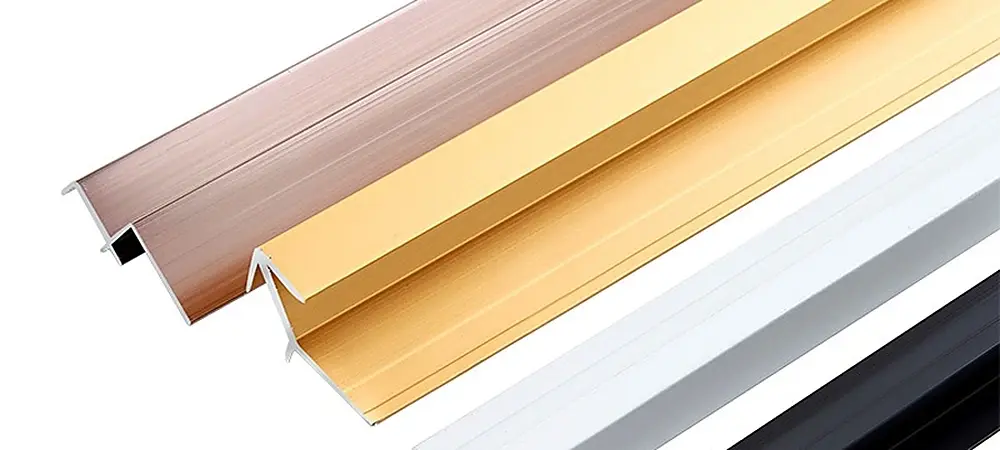
- Aluminum alloy profiles offer the longest service life and the strongest resistance to impact and oxidation. An anodized film of at least 10µm—the standard used by ZX's manufacturing partner—protects against UV degradation and surface scratching. Aluminum profiles work well in commercial corridors, hotel lobbies, and exterior-adjacent walls. Standard lengths run at 3 meters, with cross-sections from 20mm to 120mm.
- PVC and WPC profiles are lighter and easier to cut on-site. They resist moisture without warping, which makes them a practical choice for residential bathrooms and kitchens. Both materials bond securely with structural adhesive, so installation requires no carpentry expertise and no post-installation painting or sanding.
- PU profiles offer the closest visual match to traditional plaster molding. They are lightweight, paintable, and highly pressure-resistant despite their low density. For distributors supplying to the residential renovation market, PU trim lines tend to move quickly because they appeal to customers seeking a classic look at a moderate price point.
All four materials—PU, PVC, WPC, and aluminum—can carry CE and RoHS certifications, which are mandatory for distribution into European and many Middle Eastern markets.
When comparing prefabricated stock profiles and wall trim lines against custom solutions, prefabricated options reduce lead time significantly. Custom profiles, however, let distributors and OEM buyers create proprietary SKUs with unique cross-sections and colors that competitors cannot easily replicate.
Matching Wall Trim Lines to Project Requirements and Design Goals
It's not enough to just get the things right. It is also important that the profile style fits with the design and what the end user wants.
Residential Applications
The most common profiles asked for in living rooms and bedrooms are T-shaped joining strips and flat edge trims. They make smooth changes between wall panels and give accent walls more shape without making the room look too heavy. When using wood-grain WPC wall panels in a project, matching wood-grain trim lines in the same color family make the wall look like a whole.
Commercial and Hospitality Settings
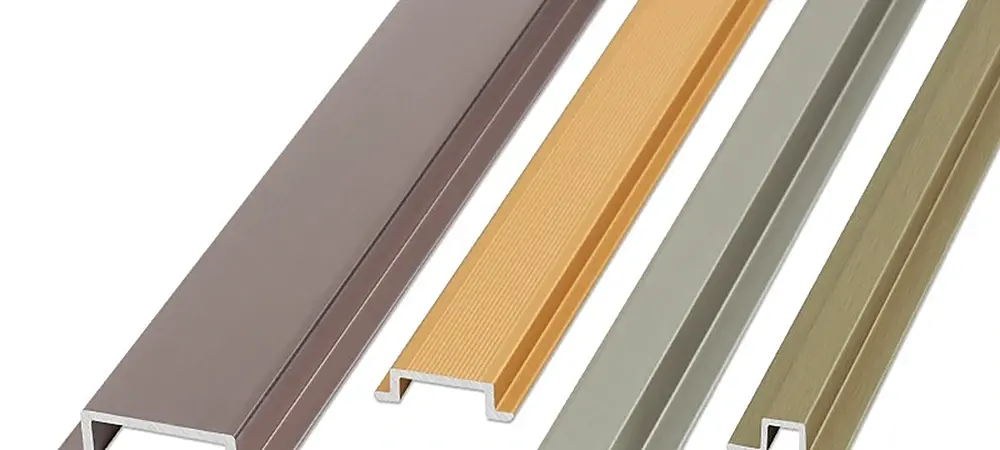
Hotels and companies need profiles that don't show signs of wear after daily use. Heavy-duty metal U-channel trims look good along the walls of hallways where cleaning tools and luggage carts hit them over and over again. Because you can choose between a brushed metal or matte finish, the trim can match branded interior designs without having to be painted by hand on-site.
Exhibition and Showroom Environments
Exhibition designers often have to work quickly to get things set up. It takes a lot less time to set up profiles that stick together with glue and don't need any finishing work after they're put in place. Profiles that are easy to put up and clean to take down are helpful for showrooms that need to change their plan between trade shows.
Procurement Insights: Where and How to Source Quality Wall Trim Lines?
What you buy affects your landed cost, how quickly you can restock, and how well you can protect against changes in quality between runs of production.
Before you buy wall trim lines from a company, make sure they have these credentials:
- Certifications: CE and RoHS are baseline requirements for export markets. ISO 9001:2015 quality management certification confirms that the factory operates with documented processes rather than informal practices.
- Mold inventory: A supplier with over 300 active molds can fill most standard profile requests from stock tooling, which avoids the 15–20 day delay of new mold development for common shapes.
- Batch color consistency: Request a spectrophotometer report showing Delta E values below 1.0 between production batches. Color drift between restocking orders is one of the most common complaints among distributors who sell to design-conscious buyers.
- Mixed-batch ordering: For distributors managing dozens of SKUs, the ability to combine different profile styles in a single shipment reduces per-unit freight cost and lowers inventory pressure.
ZX ships most orders within 7-10 days through its primary manufacturing partner Zhengzhou Keyi Aluminum. It also keeps high speed profiles handy. It is possible to do OEM packing and private labeling for those who want to create their own lines of goods.
Decision-Making Framework for Selecting the Right Wall Trim Lines
If customers don’t have a plan, they may buy products quickly, which may look nice on paper, but it might pose problems when they get to the store or at the point of sale.
Step 1 — Define Project Parameters
First think about where the trim will be, and what it will be attached to. How much water will it be exposed to? Already these three things can help you to restrict the materials down to a small group.
Step 2 — Evaluate Profile Range and Customization Depth
If you check at their mold count, you may get a sense of how many molds a company has. Suppliers have a huge library of molds thus there is no reason to charge clients for new equipment. They can fulfilll both ordinary and one-of-a-kind orders. Verify that the materials you require are available in cross sections from 20mm to 120mm and if the length can be adapted from 2.4m to 4m for large projects.
Step 3 — Assess Supply Chain Reliability
See how long it will take for both regular and unusual patterns to appear. Ask if the vendor has extras of colors that run out fast and can obtain fresh ones in 7-10 days. If you’re buying to send abroad, be careful to know the packing rules. Trim lines are lengthy and thin and can get damaged in transportation if they are not properly wrapped and edge protected.
Conclusion
You need to do more than just choose a color when choosing interior trim profiles and wall trim lines. The success of the product in the field and the sales performance across your network hinge on the profile's design, the reliability of the provider and the necessity for approval. PU, PVC, WPC and aluminum are all good possibilities at different prices and areas. The greatest technique to shop is to decide what they are good at, and what the work requires. They can avoid many of the supply chain risks by partnering with a manufacturer who has significant mold inventory, will accept mixed batch orders, and deliveries in 7 to 10 days.
FAQ
What is the difference between wall trim lines and standard molding?
They come in flat or slightly curved profiles and are made for modern rooms. Wall trim lines are types of transition profiles. Since molding used to be made from real wood or clay, it tends to be more detailed and have more texture. These days, PU, PVC, WPC, and aluminum are used to make trim lines. They are lighter, better at keeping water out, and easier to put together than older molding options because of this.
Which material is best for commercial projects?
A lot of people walk on aluminum, so it's the best material for businesses. It doesn't break easily, stays the same size, and lasts 12 to 18 years. If you need to save money but still need something that won't get wet, PVC is a good choice.
Are custom colors available for bulk orders?
Yes, OEMs and people who order a lot of things can get color matching that works perfectly for them. You can buy standard production colors right away, but custom tones need to be agreed upon with a sample before they can be made in large numbers.
How difficult is installation?
You don't have to paint or sand most profiles after they're in place because they stick together with structural adhesive. There is a miter saw with a carbide tip that you need to cut metal shapes. A fine-tooth saw can be used to cut polymer tracks. For neither job, you need to be very good at woodworking.
Request a Quote from ZX — Your Trusted Wall Trim Lines Manufacturer
The 132-mu production base of Zhengzhou Keyi Aluminum is where ZX gets all of its shapes, wall trim lines and finishes. They offer over 300 shape molds, more than 200 surface finishes, and free shipping on all orders within 7–10 days. Our team will get back to you in 24 hours, no matter if you need a full OEM program or just mixed-batch restocking. You can get samples or a quote for your project right away by emailing info@kangdishi.com or visiting zhongxiudecor.com.
References
1. Architectural Record — Building Products & Materials Review, 2023.
2. Construction Specifier — Interior Finishing Materials Specification Guide, 2022.
3. Journal of Building Engineering — Durability of Polymer Composite Profiles in Interior Environments, 2021.
4. Building Design + Construction — 2024 Trends in Commercial Interior Finishes, 2024.
5. ASTM International — Standard Specification for Aluminum Alloy Extruded Bars, Rods, Wire, Profiles, and Tubes (ASTM B221), 2022.
6. International Journal of Construction Management — Procurement Efficiency in Interior Fit-Out Projects, 2023.
Online Message