
Oct 21, 2026
Is WPC Slat Grille Waterproof?
A WPC slat grille is highly water-resistant. Engineered from a blend of recycled wood fibers and thermoplastic polymers, it achieves a water absorption rate below 0.5% after a 24-hour immersion test. Unlike raw timber, the composite matrix seals out moisture at the cellular level, preventing the swelling, warping, and rot that plague untreated wood. For landscape contractors and outdoor project procurement teams, this translates directly into lower lifecycle costs, predictable performance across wet seasons, and materials that hold up through years of coastal, poolside, or garden-partition exposure without demanding constant upkeep.
Understanding WPC Slat Grille and Its Waterproof Properties
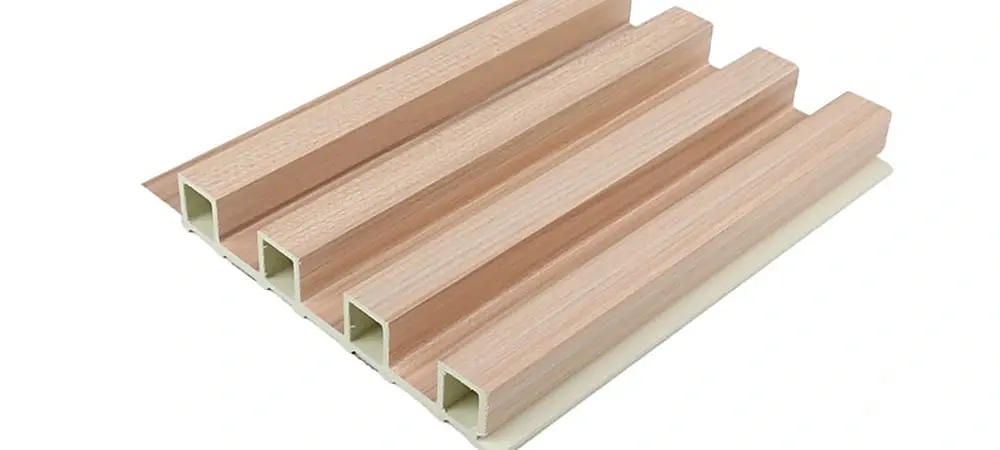
To make Wood-Plastic Composite, or WPC, thermoplastics like HDPE are heated and pressed together with recycled wood fiber. The end result is a thick, non-porous board that looks warm like wood but doesn't have any of its biological weaknesses. A good WPC slat grille has a density of about 1 gram per cubic centimeter and a Shore D hardness of more than 70. This means that water can't get through the surface in normal outdoor conditions.
How WPC Compares to Wood, Aluminum, and PVC
Natural hardwood can soak up anywhere from 8% to 25% of its weight in water, which means that it can be damaged by fungi and termites in just a few seasons when left outside. Aluminum doesn't rust easily, but its industrial look doesn't usually go well with home gardens, and it moves heat around very quickly in hot places. Even though pure PVC walls are formally waterproof, they are not very rigid and lose their color after being exposed to UV light for a long time. WPC is in the middle because it has a water absorption rate of less than 0.5%, a UV grayscale protection rating of 4–5, and a wood-grain finish that works for design-led projects. All of these features are found in a single shape.
Because of this balance, landscape design companies that work in humid seaside areas, areas with a lot of rain, and dry climates with big changes in temperature choose wood-plastic composite cladding and private screens.

Key Benefits of Waterproof WPC Slat Grilles for Commercial and Industrial Use
When purchasing managers look at a lot of outdoor decorations, waterproof WPC slat grilles make a lot of sense for more reasons than just being resistant to water. Here are the main performance benefits of this combination that make it the best choice for big building and landscaping projects:
- Zero biological degradation: The termite-proof composite recipe gets rid of the need for expensive bug control and the damage they do to buildings. No rot, mold, or bug problems, even after years of being close to the ground or the coast.
- Thermal stability across climate extremes: The anti-crack material keeps its shape from -20°C to 60°C, even when the temperature outside is very high or very low. Thermal cycling tests show that there is no buckling or gapping across the whole range. This is very important for projects that need to be approved in California, Florida, Dubai, and Australia all at the same time.
- E0 zero-formaldehyde compliance: To meet EU EN15534 green building standards, WPC grille panels give off no harmful gasses when they're installed in a garden that people are using. Class B1 fire-retardant certification under EN 13501-1 also meets the needs of most Western markets for building permits.
- 18–25 year outdoor service life: Independent xenon arc lamp aging tests model UV exposure over many years and prove color-fastness within an acceptable Delta E range. This lasts a lot longer than pressure-treated wood, which cuts down on replacements and project delays.
When compared to hardwood options, these qualities add up to a much lower total cost of ownership. When landscaping companies price a patio privacy screen over the course of three years, they can see that using WPC instead of hardwood will save them a lot of time and money on materials [1].
How to Install and Maintain WPC Slat Grilles for Optimal Waterproof Performance
The right way to install something is important for even the most durable materials. The low water absorption of WPC is a feature of the material itself. However, how the panels are mounted and handled on-site determines how long they will stay waterproof (18–25 years). A WPC slat grille provides long-term reliability when these specific installation and maintenance protocols are followed.
Installation Practices That Protect Waterproof Integrity
Give each slat next to it a 3–5 mm widening gap. When temperatures rise in the summer, stress cracks are less likely to happen because WPC reacts to temperature instead of wetness. When you can, use clip-fixing systems to mount panels instead of direct face-screwing. Clip systems keep the spacing even, let water drain behind the panel face, and lower the risk of surface cracking at the fastener points. Make sure that the foundation has enough air flow so that any mist that forms behind the panels can evaporate on its own.
Maintenance Protocols That Preserve Long-Term Performance
It's true that WPC outdoor grills don't need much upkeep, but "low" does not mean "none." Surface grime and organic film can be removed with water and light soap once a year. If you wash with high pressure up close, the water can get into the cut-end grain on custom-length profiles. Check the cut ends of custom-sized panels and use a suitable sealer to cover the exposed composite core. Standard 3m profiles come with ends that have already been finished at the factory, but field-cut lengths need this extra step. With these simple rules, the artistic performance will always be good for the full rated service life.
Comparing WPC Slat Grilles with Alternatives: Focus on Waterproof and Durability Factors
When buying materials for outdoor screens and wall projects, buyers usually choose between four groups. The important success factors [2, 3] are shown in the table below:
| Material | Water Absorption | Typical Lifespan | Maintenance Level | Fire Rating |
|---|---|---|---|---|
| WPC Slat Grille | < 0.5% | 18–25 years | Very low | Class B1 |
| Solid Hardwood | 8–25% | 5–12 years | High | Variable |
| Aluminum | Negligible | 20–30 years | Low | Non-combustible |
| Standard PVC | < 0.1% | 10–15 years | Low | Variable |
Aluminum lasts about as long, but it costs a lot more per unit, looks cold and industrial, and is a good conductor of heat, which can make installations in the sun too hot to be comfortable. PVC panels are waterproof, but they can break easily in cold places, turn yellow from UV light, and don't have the structural density needed for big private screens. Wood that looks natural looks the best, but it costs the most to maintain because it needs to be sanded, sealed, and treated for pests [4].
All of these problems can be solved at the same time with wood-plastic composite outdoor slat panels: they offer the warmth of wood grain, are structurally strong, are waterproof, and have a service life that makes them worth specifying for high-value landscaping projects.
Procurement Considerations for Waterproof WPC Slat Grilles
It takes more than comparing unit costs to find outdoor composite panels for a large job. The following things show if a supplier can reliably deliver over the course of a full construction timeline. Ensuring you receive a high-quality WPC slat grille shipment requires attention to certifications and production capacity.
Certifications That Protect Your Project Approval
Before you choose a seller, make sure they have paperwork for CE, RoHS, EN15534, and E0 zero-formaldehyde. Building inspectors are asking for these test results more and more at the permit stage in California, Florida, and the Gulf Coast. A B1 fire-retardant rating according to EN 13501-1 is very important for garden buildings that are attached to or next to main homes. When suppliers offer full test packages during the question stage instead of after an order has been placed, it means that the export operation is mature [5].
Customization and Lead Time Alignment
Most garden dividers and privacy screens can be made from standard 3m lengths that are 140–150mm wide. When a project needs non-standard sizes between 2.4m and 4m or gap spacing that is tailored to the design, the production lead time goes up to 10–15 days. Making sure that a manufacturer has more than 300 active molds is important because it means that custom profiles can be made without having to wait for new tools to arrive, which could throw off the schedule of a project.
Color Consistency Across Batches
Batch color variation is the most common cause of site complaints for projects with more than one phase or for large orders that are filled over several production runs. In the contract you sign, say that the Delta E margin must be less than 1.0, and ask for a COA with colorimetric data for every package. A wooden pallet, edge guards, and stretch wrap should also be guaranteed in writing for export to make sure that the boards arrive undamaged after 25 to 40 days of ocean freight [6].
Conclusion
With sub-0.5% water absorption, UV grayscale protection at 4–5, and an outdoor service life of 18–25 years proven by independent thermal cycling and xenon arc tests, WPC slat grilles really do keep out water. They last as long as aluminum and are better than oak in every way that depends on moisture. Plus, they're cheaper than aluminum. Wood-plastic composite panels are a well-known and certified material that landscape contractors and procurement managers can use to make garden walls, courtyard privacy screens, and outdoor wall coverings. These panels can withstand inspections, extreme weather, and keep their look for the whole project's lifecycle.
FAQ
1. Is a WPC slat grille fully waterproof or just water-resistant?
Some water will get through, but not all of it. A sealed PVC sheet is totally waterproof. It works reliably in rain, humidity, and poolside settings because it absorbs less than 0.5% of its weight in water after 24 hours of immersion. On the other hand, sealer should be put on the uncovered cut ends of field-trimmed panels.
2. Can WPC outdoor panels be used in direct salt-spray environments?
Yes. The composite matrix doesn't rust, and the co-extruded surfaces that are resistant to UV light don't break down when salt spray hits them. Some of the most popular uses are in coastal villas and as privacy screens for pool decks.
3. How does thermal expansion affect installation in hot climates?
WPC grows when it gets hot, not when it gets wet. A 3–5 mm gap exists between profiles next to each other, and a clip-fixing system allows for this movement without any gapping or buckling that can be seen.
4. What certifications should I request before purchasing at scale?
Ask for proof that the product is CE, RoHS, EN15534, E0 zero-formaldehyde grade, and Class B1 fire-resistant. For big sales with multiple shipments, it is best to use batch-level COA with Delta E colorimetric data.
5. What is the standard lead time for custom-length profiles?
It takes 7–10 work days to ship standard 3m profiles. Custom lengths between 2.4m and 4m usually take 10–15 days to make.
Request a Sample from ZX — Trusted WPC Slat Grille Manufacturer
ZX (Zhengzhou Zhongxiu Building Materials Co., Ltd.) ships approved WPC slat grille panels from a 132-mu factory with more than 300 specialized molds. These molds can make panels in any length, color, or gap spacing that you need based on your project plans. Every order comes with certifications for CE, RoHS, EN15534, and E0. To get a free sample and project quote, email our team at info@kangdishi.com or visit zhongxiudecor.com.
References
1. Forest Products Laboratory, USDA. (2021). Wood Handbook: Wood as an Engineering Material (General Technical Report FPL-GTR-282). U.S. Department of Agriculture. https://www.fpl.fs.usda.gov/documnts/fplgtr/fpl_gtr282.pdf
2. European Committee for Standardization. (2013). EN 15534-1: Composites Made from Cellulose-Based Materials and Thermoplastics. CEN. https://www.cen.eu/work/areas/construction/pages/en-15534.aspx
3. American Society for Testing and Materials. (2019). ASTM D7031: Standard Guide for Evaluating Mechanical and Physical Properties of Wood-Plastic Composite Products. ASTM International. https://www.astm.org/d7031-11r19.html
4. Stark, N. M., Rowlands, R. E., & Clemons, C. M. (2004). Wood-fiber reinforced polypropylene composites: Effects of fiber geometry. Journal of Reinforced Plastics and Composites, 23(13), 1307–1323. https://journals.sagepub.com/doi/10.1177/0731684404035729
5. European Commission. (2011). Regulation (EU) No 305/2011: Construction Products Regulation — Declaration of Performance and CE Marking. Official Journal of the European Union. https://eur-lex.europa.eu/legal-content/EN/TXT/?uri=CELEX:32011R0305
6. Building Research Establishment (BRE). (2020). Durability of Wood-Plastic Composites in External Applications. BRE Press. https://www.bregroup.com/products/bre-digest/bre-digest-387-durability-of-wood-plastic-composites/
Online Message