
Nov 24, 2026
Office Feature Wall Panels for Modern Commercial Interiors
Office feature wall panels give modern commercial interiors a finished focal point while handling practical jobs such as noise control, surface protection, and branding. An office decorative feature wall panel works best when it pairs a refined look with documented fire and emission data, stable dimensions, and a fast installation method. At ZX, we supply 1.22 m-wide panels in 5–10 mm thicknesses, standard lengths from 2.44 m, custom colors, and E0 and ENF emission grades. In this guide, I explain where these panels fit, how to compare materials, how to specify them, and how to buy them in volume.
What an Office Decorative Feature Wall Panel Is and Where It Works
What an Office Feature Wall Panel Does
If you want to cover only some of the walls in your office, you can use an office decorative feature wall panel. It makes something stand out, promotes a brand, cuts down on echo, or keeps areas safe that are used every day. A panel, not a coat of paint, gives it shape and keeps it from getting damaged. Not like a soundboard that stands alone, it looks finished from the start. Most of the time, you can find them at front desks, lobbies, meeting rooms, senior offices, hallways, and open-plan spaces. You should know what the wall is supposed to do, how good the substrate is, what certifications are needed, how much you need to order, how long it will take to get it, and how much money you have. With those six answers, you can quickly narrow down the options, and you won't have to spend a lot of money redesigning later.
Design Ideas for Reception, Boardrooms, and Open-Plan Areas
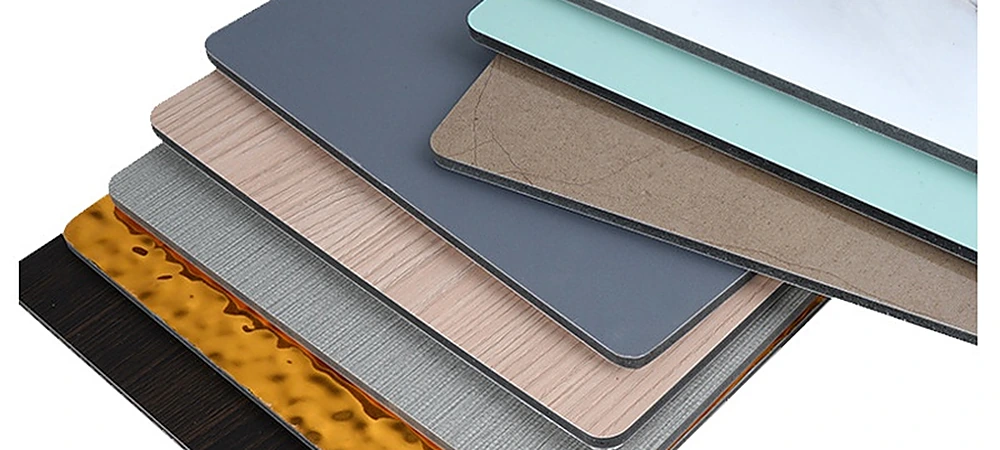
You should build each room in a unique way. You can set the mood for people in the hallway or welcome area with surfaces that look like wood, marble, or fabric behind a name or sign. Rooms with a quiet and neutral finish look good on video calls and work better in meeting rooms. A lot of the time, boardrooms and executive offices need darker wood tones or metal effects that look like they've been brushed. Places for teams to work can be set up with modular panels in open-plan areas, and noise will be less likely to bounce around. Narrow planks leave more gaps between boards than a 1.22 m panel face, which is another reason why designers like wide boards. We can match colors to your design plan and swatches, and we have more than 100 different colors and textures to choose from.
Panels Versus Paint, Wallpaper, and Traditional Cladding
Paint quickly fills in a lot of space, but it doesn't protect or add any texture. Wallpaper quickly makes pictures that are more detailed, but they don't have as much depth and is easier to scratch. Traditional wood covering, on the other hand, often weighs more and takes more work to install. In the middle of these choices is a pretty screen. It gives it texture, makes it stronger, and lets you brand something. Some systems can also block out noise. It would be better to compare whole systems that are already in place instead of just sheet surfaces. Trims, backing, glue, work, freight, upkeep, and the expected length of time it will last should all be added up. It's better to use our panels because they are made to last longer than 15 years. The structure is also light, which makes the work that needs to be done on-site bigger.
Materials, Specifications, and Acoustic Performance
Material Options and Their Trade-Offs
Metal, cloth, wood veneer, engineered wood, laminate, PVC, polymer composites, PET felt, and laminate are just some of the things that you can get for your office walls. Each one chooses between price, soundproofing, weight, style, and water resistance in different ways. Warm boards made of wood are good for walls that need to be light and easy to clean. PET felt is often used for decoration and to block out noise. Our panels are made of eco-bamboo fiber with a PVC composite, high-density polyester fiber, or composite acoustic cotton. Choose any material you want, but make sure you get proof that it is safe for fire, doesn't pollute with formaldehyde or VOC, and can be recycled. Title VI of the TSCA says that the U.S. The Environmental Protection Agency controls the amount of methane that composite wood products give off. So, if someone says something about emissions, they should back it up with a test report, not just a phrase.
ZX Panel Specifications at a Glance
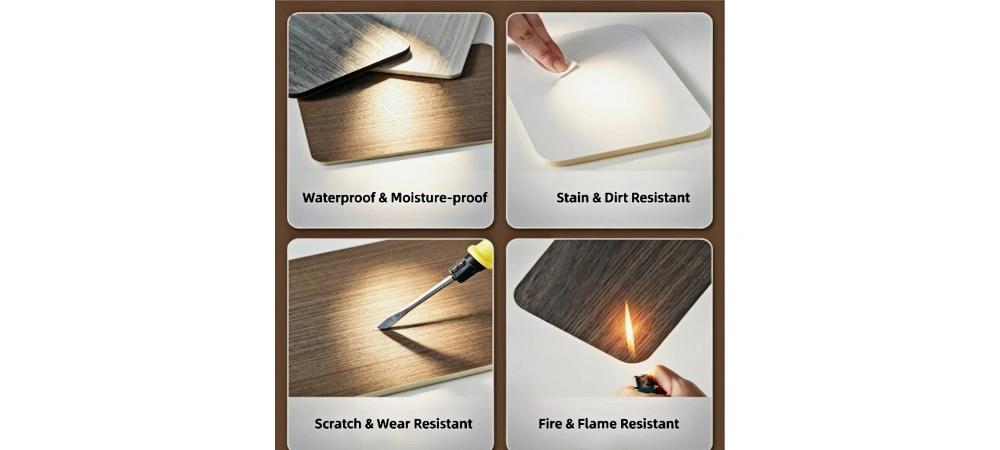
The following is a list of the office decorative feature wall panels that are available. The piece is the same size as a 4x8-foot sheet and has a thickness of 1.22 m. We stock lengths of 2.44 m, 2.5 m, and 2.7 m, and we can also make lengths to order up to 3 m long. The thickness can be between 5 and 10 mm, and there are different densities to choose from. Please include the exact thickness for each finish in your RFQ when you send it. These are good for long-term use inside because they are smooth and won't stain, and they won't get wet or develop mildew. We list Class A ratings for things that won't catch fire and Class B1 ratings for things that won't let flames spread. It has an impact strength of more than 15 J and a service life of more than 15 years. It also has E0 and ENF emission grades. Sizes can vary by ±0.5 mm, which helps joints line up on long walls.
Acoustic Performance: Absorption Is Not Insulation
Everybody knows that noise in open plans is a bad thing. The study by Kim and de Dear, which came out in the Journal of Environmental Psychology in 2013, found that the cons of open-plan offices (noise and lack of sound privacy) were worse than the pros (being able to talk to more people). Mirrored sound is cut down by acoustic panels, which makes it easier to understand what is being said. But they don't keep sound from passing through. It is the Noise Reduction Coefficient (NRC) that tells us how well noise is stopped. It's usually between 0 and 1, and it comes from lab tests that follow ASTM C423 or ISO 354. What happens is based on the air space, holes, thickness, density, and backing. Our cotton and polyester fiber walls are good for executive suites, meeting rooms, and shared offices because they don't block sound. Where there is a lot of noise, I think you should put wall panels with sound ceilings, screens, and rugs.
How to Choose the Right Office Decorative Feature Wall Panel
Start With the Wall, the Traffic, and the Design Goal
The room is the first thing you need to do to make a good choice. Remember why the wall is there, how many people walk on it, what the base is, and the design goal. At desk height, the finish on a welcome wall needs to last. A meeting room should be able to handle music and have a color that goes well with video. A corridor needs to be strong enough to handle hits. To fix things up quickly, you need a light, flexible device. Make a simple table of these needs before you ask for examples so you can compare them. Then, add up all the project's costs, such as waste, repair, installation, extra stock, and trimmings and cuts. You should approve a physical sample and a small mock-up before going into mass production. This is because screens don't always show gloss, grain, and color accurately, and when clients hand over a job, they often look closely at the color.
Check Fire, Emissions, and Documents
Safety from fire and clean air inside should be at the top of your list. In the US, ASTM E84 is used to check how surface burning works. If the flame spread number is between 0 and 25, the test was successful. Our panels have Class A ratings for not starting a fire and B1 ratings for not letting flames spread. I think you should get the full test report and make sure it meets the requirements of your project. We can also give you CE and RoHS papers if you ask for them. The wall panel substrate has an E0-level test record. As a credit in LEED v4.1, Low-Emitting Materials are often asked for early on by owners who want to get certified. It's faster to hand over these papers if they are ready before the design is accepted.
Common Mistakes to Avoid
It's a bad sign when people only care about how something looks or how much it costs per unit. It's possible that a panel that looks good might not meet the standards for air quality, fire, wetness, or impact. Backing, trims, glue, freight, waste, and work might not be part of a cheap sheet rate. The sound claims of the wall need to be checked against more than just its style. You might also end up with color disputes at handover if you don't approve the production sample. Teams also forget to agree on who will fix broken boards, keep them safe during delivery, and cut holes for outlets. I think you should write down your plans before the order. When changes to the design come in late, this habit will keep your schedule and your relationship with the client safe.
Installation and Maintenance for Tight Office Schedules
Site Assessment and Weekend-Window Planning
When windows are tight, you should be ready. Before the delivery, make sure to check the walls for flatness, moisture, structural damage, electrical points, doors, windows, lighting, HVAC parts, and limits on who can get in and out. Check a small area next for plans that are hard to understand. A lot of fit-out teams work on the weekends or after hours to keep renters going, so I think you should write on each panel pack which wall it goes on and what order it should go in. It's easier for workers to move and set up panels that aren't too heavy. Tell us what you want to do when you ask, and we'll talk about when to bring. It takes 7–10 days to make standard items, and 10–15 days to make big special orders. Plus, shipping by sea takes a few more days, so make sure you agree on the design right away.
Installation Methods and Trim Details
Our panels can be joined with flexible modular splicing or no-nail glue. Because you don't have to drill into the wall for this system, it makes buildings quieter when people are inside. The direction of the grain, the color batch, the corners, the cut-outs, and the direction of the wood should all be checked by the crews as they work. Along with the panels, we sell metal skirting boards, grilles, and decorative trims that look like the panels to make sure the edges and transitions are smooth. Edge trims hide rough cuts and finish off the look of the wall. I-trims, on the other hand, connect boards and make the change from one to the next smooth. Office decorative feature wall panels and finished parts will match in color and shape if you order them together. This will also make it easier for your buying team to handle fewer sources.
Cleaning, Protection, and Spare Stock
It only takes a wipe every day to clean our smooth surface, which doesn't show stains well. Faces for sound are not all the same. If you don't want to damage the fibers or clog the holes, vacuum or dry-wipe them instead. Before you turn the walls over, keep them safe from dust and damage. Our boxes don't get scratched while they're being shipped, so we use wood boards, edge guards, and stretch wrap that is safe for sea freight. Write down the batch numbers and keep some extra panels on hand. This is because the color will look better on a new panel from the same batch. Don't put extra stock in direct sunlight. Instead, keep it flat and dry so it's always ready to be fixed when a tenant leaves.
Buying Office Wall Panels in Bulk From a Specialized Supplier
Standard, Custom, and OEM Programs
Items that are standard ship faster, but goods can be made in custom lengths, colors, patterns, and finishes with custom programs. For large project orders, we have more than 300 molds that we can use to change the color and size. A clear RFQ speeds up everything. There should be drawings, wall areas, quantities, thickness, finish, performance goals, a schedule, certifications, delivery location, and a list of what needs to be packed. You should also ask about these things along with MOQ, price tiers, extra stock, load on a container, and Incoterms such as EXW, FOB, CIF, or DAP. Each one changes the price and risk for both the buyer and the seller. That way, if the creator changes a color at the last minute, your delivery won't be turned down because of a bad sample.
What to Look for in a Specialized Supplier
The point of the design, the material choice, the technical data, and the delivery are all linked by an expert. Check the quality control, the export packing, the inspection records, the reaction time, and the warranty terms to make sure that the raw materials are always the same. Zhengzhou Keyi Aluminum, which has three factories spread out over 132 mu, is one of Zhengzhou Zhongxiu Building Materials Co., Ltd.'s most important partner factories. Every day, the business makes over 10,000 naira. Before every shipment, there are six quality checks. As part of our quality system, 5% of each batch is picked at random to be used in installation simulations. Also, the factory checks everything over before every shipment. The factory is also ISO 9001:2015 certified. It would be better if we were clear about test results and limits instead of making broad claims like "fireproof" or "non-toxic."
A Five-Phase Procurement Workflow
For buyers around the world, having a clear order lowers the risk. First, make a project brief that describes the goal, the wall's size, the design direction, the technical goals, the end goal, and the amount. Second, make a short list of suppliers. Then, compare samples, certificates, quotes, and how quickly the suppliers respond. Third, agree on the technical details, like the size, material, details, packaging, warranty, payment terms, and inspection. Fourth, keep an eye on when the production is supposed to end, check the color and quantity, and pack it twice before sending it. Fifth, make sure to write down what people said about the installation and make sure that the best standard is used in all future projects or branches. Start the brief early to protect your handover date. Many fit-out teams need two to four weeks to make changes to the plan and make samples.
Conclusion
Office decorative feature wall panels in the office are more than just pretty. They show off a brand, protect walls that get a lot of use, draw attention to a wall, and block out sound. Before you choose an office decorative feature wall panel, you should think about what the wall is used for. Then you should look at the material, thickness, finish, and how well it blocks noise. Panels are not the same as paint or wallpaper because they add depth, protect against damage, and sometimes even soak up sound. Insulation does not block noise; what blocks noise is absorption. It's important to look at the fire ratings, emission grades, and test results. The total cost of installation should include trims, freight, labor, and extra parts. It's easier and faster to install lightweight systems that fit together, and color disputes are kept to a minimum by using approved samples. They always work because of a five-step process, clear RFQs, and mutually agreed-upon trade terms. Bulk orders can be used over and over again in different projects.
FAQ
1. What fire documents should I request?
Make sure the test results meet the requirements for your project, such as ASTM E84 in the US. The Class A rating means that our panels won't catch fire, and the Class B1 rating means that they won't let flames spread. For proof, we can give them to you if you ask.
2. Can I install the panels over existing walls?
Yes, as long as the base is strong, flat, and dry. They use interlocked splicing or no-nail glue, so we don't have to drill as much. First, check out a small area to see how wet and flat it is.
3. Do you offer custom colors and lengths?
Yes. It's possible for us to make lengths longer than 2.44 m, 2.5 m, and 2.7 m (up to 3 m), and we can change the size and color of large OEM orders. Swatches and pictures should be sent with your question.
4. How long do the panels last?
You can use our panels inside for more than 15 years because they are made to last. They won't get moldy or wet, so you can use them for a long time. Anyway, how well it was put together and how well it works still depends on how it was placed.
Request Samples and a Quote for Office Feature Wall Panels from ZX
Please let ZX know about your wall's size, finish, thickness, number of panels, location, and schedule. We'll then send you samples, technical information, and panel ideas that will work. We sell office decorative feature wall panels and can make panels in any color or length. We also take bulk orders from OEMs. You can email info@kangdishi.com to find out more. Within 24 hours, our team will get back to you, and all you need is a short brief to begin.
References
1. ASTM E84-23: Standard Test Method for Surface Burning Characteristics of Building Materials, ASTM International, 2023
2. ASTM C423-23: Standard Test Method for Sound Absorption and Sound Absorption Coefficients by the Reverberation Room Method, ASTM International, 2023
3. ISO 354:2003: Acoustics — Measurement of Sound Absorption in a Reverberation Room, International Organization for Standardization, 2003
4. Formaldehyde Emission Standards for Composite Wood Products (TSCA Title VI), U.S. Environmental Protection Agency, 2016
5. LEED v4.1 Building Design and Construction, U.S. Green Building Council, 2019
6. Workspace Satisfaction: The Privacy-Communication Trade-Off in Open-Plan Offices, Journal of Environmental Psychology, 2013
Online Message