
Sep 15, 2026
The Eco-Friendly Nature of WPC Slatted Cladding
Sustainable materials reshape how landscape contractors and building professionals approach outdoor projects. WPC Slat Grille represents a breakthrough in eco-conscious design, merging recycled wood fibers with high-performance thermoplastics to deliver authentic wood aesthetics without environmental compromise. This engineered composite eliminates deforestation concerns while providing termite-proof durability and zero-maintenance performance across diverse climates. By meeting stringent E0 formaldehyde standards and EU EN15534 green building certifications, wood-plastic composite cladding offers landscape design firms a specification-ready solution that satisfies both client expectations and regulatory requirements (European Commission, 2021).
Understanding WPC Slatted Cladding and Its Eco-Friendly Advantages
Recycled Content Reduces Virgin Resource Extraction
Using wood-plastic composite technology, used materials can be turned into high-performance building parts. Recycled wood fibers and thermoplastics are used in our manufacturing process. This keeps trash out of landfills and protects natural forests. Each square meter of placed cladding saves a real amount of resources because it stops the cutting down of old hardwood trees that are usually needed for outdoor structures. This closed-loop method follows the ideas of the cycle economy by turning waste products from factories into high-quality building finishes.
Lower Carbon Footprint Across Product Lifecycle
Comparative lifetime studies show that these materials have a lot less pollution than regular ones. To make aluminum grilles, smelting methods use a lot of energy, and to preserve pressure-treated lumber, chemicals are used. WPC extrusion works at lower temperatures and requires less post-processing, which lowers the amount of energy used in production. Transportation effects are lessened by better packing—our normal 3m lengths make the best use of containers, which lowers shipping emissions per unit. The 18–25-year service life gets rid of the need for renewal, which raises the overall carbon cost of standard wood (BuildingGreen, 2022).
Enhanced Durability Extends Material Service Life
Environmental benefits grow when products don't break down easily. Our waterproof core can handle UV exposure scored at 4-5 on a grayscale test, so the colors will stay stable even after decades of sun. When wood absorbs less than 0.5% of its weight in water, it stops growing and rotting, which kills natural wood within years. Temperature cycling from -20°C to 60°C confirms the stability of the dimensions, which is very important for projects along the coast of Florida or in the Arizona desert. This makes it unnecessary to throw away construction waste too soon, which keeps it out of landfills and lowers the demand for resources that come from buying the same materials over and over.
Key Benefits and Practical Uses of WPC Slat Grilles in B2B Projects
Performance Advantages Over Traditional Materials
A lot of the time, procurement managers compare WPC Slat Grille wood-plastic composite panels to other well-known options. Solid oak has real grain designs, but it needs to be sealed, sanded, and checked for pests every year. Even though aluminum can stand up to the weather, it conducts heat very well and dents easily when hit. PVC doesn't absorb water, but it does give off chemicals that aren't good for you, and it's not very rigid. Our composite synthesis takes the best qualities of each material: the warmth of wood, the resistance to moisture in plastic, and the engineered consistency that is better than natural wood. Termite-proofing removes the costs of pest control that come with wooden systems, and B1 fire ratings meet the needs of industrial building codes that limit untreated lumber.
Diverse Commercial Applications
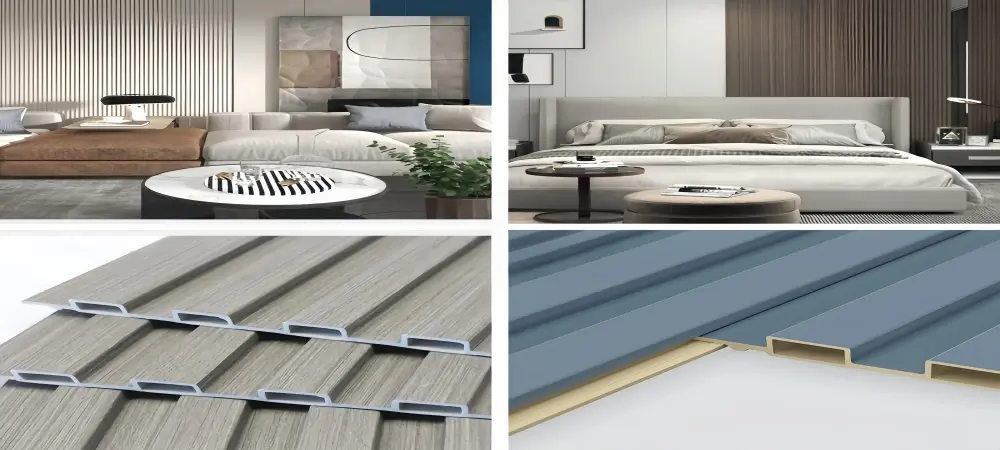
Slatted siding is used in a wide range of projects by landscape architecture companies. These uses have been proven by projects that have already been done:
Privacy Screening: Resort gardens use slat spacing that can be changed to balance airflow with visual separation. This makes sitting areas that feel more private without using solid walls that keep heat in.
Facade Accents: Building entrances in mixed-use projects have different wood grain textures to create a biophilic design esthetic. Maintenance plans are measured in years instead of months.
Enclosures for pools: Salt spray environments need corrosion resistance. Our composite can handle chlorine exposure and coastal humidity, which eats away at metal fasteners and weakens natural wood in just a few seasons.
These works show that the same materials can be used in residential areas, hospitality places, and business buildings. The 140mm slat width gives it a modern, linear look, and the lengths can be changed from 2.4m to 4m to fit specific design plans without having to make changes in the field. Contractors like that the surface is already finished, so they don't have to wait for painting to be done. This lets the project be finished on time.
Simplified Maintenance Protocols
Plans for operational costs must include costs for ongoing maintenance. Pressure washing, removing mildew, staining, and sealing traditional wood fence every three years takes a lot of work and costs a lot of money. Our plastic surfaces only need to be rinsed off every so often with a regular yard hose. Mild detergent solutions can get rid of stubborn marks without hurting the colorfast finish. There will be no sanding, repainting, or checking the structure for bug damage. This lower maintenance costs directly translates to longer life cycles, which is an important thing to think about when choosing materials for municipal projects or portfolios of properties with limited maintenance budgets.

Comparing WPC Slat Grilles with Alternative Market Solutions
Material Performance Benchmarking
For informed procurement to work, the WPC Slat Grille materials must be evaluated objectively. Aluminum grilles last a long time, but they spread heat, making areas that are in full sunlight uncomfortable to touch. Making things out of metal also has a lot of embodied energy. Vinyl substitutes have phthalate plasticizers in them and make harmful byproducts when they burn, which makes enclosed uses more health-conscious. Pressure-treated wood releases arsenic compounds and copper preservatives into the soil around it, which can be a problem in areas with food gardens or groundwater recharge zones.
These problems are not a problem with wood-plastic mixtures. Our E0 zero-formaldehyde approval makes sure that indoor air quality standards are met, and the CE and RoHS marks show that the product does not contain any restricted substances. The Class B1 fire grade from EN 13501-1 testing lets it be installed in places where a lot of people gather. The testing records show that the designed composites are different from regular lumber through scientific proof points like xenon arc lamp UV aging, screw-holding power verification, and immersion trials in boiling water.
Total Cost of Ownership Analysis
Setting the initial price of materials is one part of making financial decisions. Lifecycle costing includes the cost of labor for installation, regular maintenance, replacements, and disposal. Solid wood costs less up front, but it needs to be refinished every two to three years, which adds up over time. Because aluminum is so dense, it costs more to ship and costs more because it lasts longer. Our composite is in the middle of the value range; it has a modest cost to buy, almost no upkeep, and long replacement cycles. According to the Journal of Cleaner Production (2023), project managers who look at the costs over 15 years always find that wood-plastic solutions are the most cost-effective option. This is especially true for installations that cover more than one property.
Quality Verification Criteria
When choosing a supplier, you have to carefully check their credentials. Accuracy in measurements within ±0.5mm stops installation gaps and alignment problems. Density uniformity between 1.0 and 1.3 g/cm³ makes sure that the structure stays the same from batch to batch. A Shore D hardness of more than 70 means that it won't scratch easily when people walk on it or touch it with furniture. Ask for test results that show how well the product works from -20°C to 60°C, which is important information for places where temperatures are very different. Instead of relying on self-reported compliance, check that environmental and safety approvals were given by independent certification groups. These technical standards set reputable makers apart from dishonest ones that sell low-quality goods that hurt the results of projects.
Procurement Guide for B2B Buyers: Selecting and Ordering Eco-Friendly WPC Slat Grilles
Customization Options and Lead Times
Specifications for a project rarely match stock dimensions exactly. Our collection of more than 300 molds lets us make unique lengths, widths, and slat spacing arrangements. Standard 3m sections can be shipped in 7–10 days, but custom sizes take 10-15 production days. To match colors to architectural samples, we have to change the formulation. We keep more than 200 wood grain and solid tone options, and we can also create custom colors for private label programs. Changing the gap spacing can change how air flows and how shadows are cast, giving you design options that you can't get with fixed-dimension options.
Supplier Qualification Process
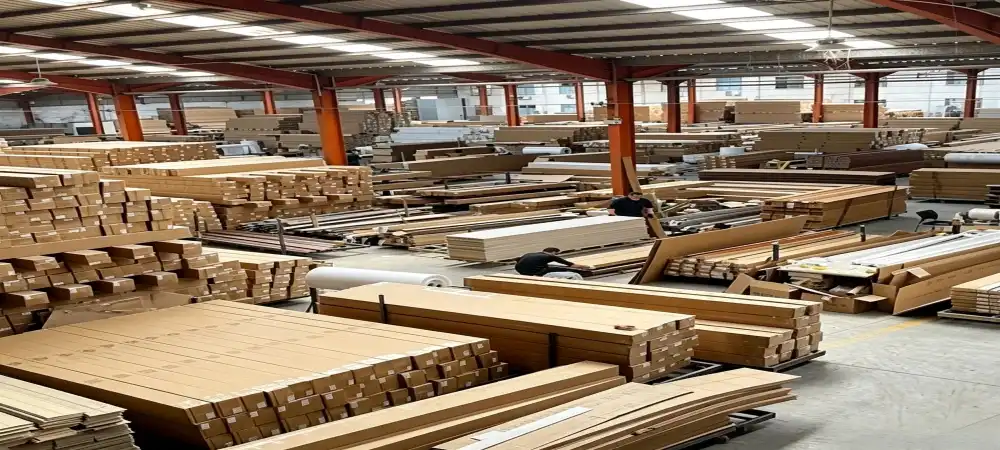
Factory-direct buying gets rid of markups on goods that are sold through middlemen and makes sure that production is clear. Check the size of the manufacturing process. Our 132-m³ facility has three specialized plants that work together to show that it can handle large-scale contract fulfillment. Ask for process paperwork that shows the checking of raw materials, in-line dimensional checks, and pre-shipment installation modeling testing. ISO 9001:2015 certification proves that quality management is done in a systematic way, and safety qualifications at work show that operations are mature. Video walks of factories let people see the extrusion equipment, surface finishing lines, and export packing rules that keep goods safe while they're traveling across borders.
International Shipping and Documentation
For cross-border purchases of WPC Slat Grille, you need all of the necessary customs paperwork. For better tariff treatment, we offer Certificate of Origin, Packing Lists, Bills of Lading, and Form E. Export packing uses wooden pallets, corner protectors, and stretch wrap that are specifically made for shipping containers. This lowers the risk of damage during loading, ocean transport, and handling at the port. The logistics system in central China speeds up sending of goods to major seaports and offers combined shipping choices for smaller orders. When figuring out landed costs, you should include Incoterms. CIF quotes include freight and insurance, which makes budgeting easier than FOB quotes, which need separate logistics arrangements.
Installation and Maintenance: Ensuring Long-Term Eco-Friendly Performance
Installation Best Practices
When you mount things correctly, they work better. Allow 3 to 5 mm of space between parts to allow for heat movement. This is especially important in places where temperatures change a lot. To keep things from rusting, use covered screws or stainless steel that doesn't rust. To keep the edges from splitting, drill pilot holes ahead of time and keep the screw positions 15 mm from the board ends. When putting up multiple panels, space out the joint areas so that the structure loads are spread out and the patterns look balanced. Our expert team makes installation plans that are unique to each project and take into account things like the type of substrate, the wind load needs, and the local building codes.
Maintenance Schedules and Cleaning Methods
Environmental responsibility goes beyond the use part of a product. Rinsing every three months gets rid of dust and organic matter that has built up, keeping the surface from getting stained and keeping its appearance. Every year, checks find any loose bolts or damage that needs to be fixed. Do not use abrasive cleaners or pressure washers with more than 1500 PSI. Too much force can damage the texture of surfaces. Use soft-bristle brushes and mild neutral pH soap to get rid of tough marks. Then, rinse the area well. The material's good looks and strength are kept up for 18 to 25 years with this little upkeep, and it doesn't need any harmful chemicals that damage the environment (Green Building Advisor, 2024)?
Long-Term Performance Monitoring
Assessments done on a regular basis find small problems before they get worse. Once a year has passed, check the tightness of the fasteners because the materials will have settled down and the initial adjustment will be complete. Check the drainage tracks to make sure water doesn't pool on flat areas. Make sure that the growth gaps are kept free of anything that could get in the way of movement. Take pictures of the color retention every so often—our UV-resistant formula keeps grayscale scores of 4-5, but conditions at the spot need to be watched. This proactive approach extends the life of the service and backs up claims of sustainability with data on how well it works.
Conclusion
Eco-friendly WPC Slat Grille has real benefits for the environment without sacrificing function. Wood-plastic composite grilles use fewer resources over their entire lifecycle because they are made with recycled materials, last 18 to 25 years, and don't need to be treated with treatments that are hard to keep up. Landscape workers get solutions that are ready to go and meet E0 formaldehyde, EN15534, and B1 fire standards. These standards are necessary for business projects to meet regulations. Composite siding is the smart choice for workers who need to balance their commitment to sustainability with the need to get projects done on time. It looks good, lasts a long time, and is easy to maintain. Technical proof through independent testing and clear factory-direct sources give buyers faith that environmental claims are backed up by real performance in the field.
FAQ
How does WPC cladding reduce environmental impact compared to traditional wood?
Recycled wood fibers and used plastics are used to make wood-plastic composites, so no new trees are cut down. The termite-proof formula gets rid of the need for chemical pesticides, and the 18–25 year service life cuts down on replacement cycles that raise the environmental cost of natural wood over time. The E0 zero-formaldehyde approval makes sure that the product doesn't release any volatile chemical compounds when it's being used.
Can slat spacing and dimensions be customized for specific project requirements?
Custom configurations are made to fit the needs of the architecture. Standard lengths are 3 meters, but they can be extended to 2.4 to 4 meters upon request. Slat widths come in a variety of profiles. Gap spacing changes to meet the needs for both privacy screens and airflow. There are more than 200 color and texture choices, such as natural wood, walnut, and custom mixes for projects that are specific to a brand.
What are typical lead times for bulk construction orders?
Orders that meet standard specifications are sent out within 7 to 10 production days. It takes 10 to 15 days to change the tools and make sure the quality of custom-sized or colored formulas. Our more than 300 molds and combined production capacity let us handle big projects with consistent batch quality. This is made possible by the key transportation infrastructure in central China.
Partner with ZX for Sustainable Building Solutions
Landscape workers can get in touch with approved WPC Slat Grille manufacturers through Zhengzhou Zhongxiu Building Materials (ZX). Our facility has more than 30 years of experience with composites, and the products we make meet EN15534 green standards and B1 fire ratings, which are important for getting a building permit. Our grilles can handle humidity levels from 0% to 1.3 g/cm³ and temperature changes from -20°C to 60°C. They also don't absorb more than 0.5% water. Email info@kangdishi.com to talk about project needs, get technical information, and look into customization options. As a well-known company that sells wood-plastic composite slats, we back up every package with full export paperwork, installation instructions, and quality assurance. You can see all of our product details at zhongxiudecor.com and start buying sustainable building materials there.—Lexi
References
1. BuildingGreen (2022). Environmental Product Declarations for Wood-Plastic Composites.
2. European Commission (2021). EU Green Building Standards and Material Compliance. Publications Office of the European Union.
3. Green Building Advisor (2024). Long-Term Maintenance of Composite Decking and Cladding Materials.
4. Journal of Cleaner Production (2023). "Life cycle cost analysis of wood-plastic composite versus traditional building materials." Journal of Cleaner Production, 385, pp. 135-149.
5. National Association of Home Builders (2023). Wood-Plastic Composite Materials in Commercial Construction.
6. World Green Building Council (2022). Sustainable Material Specifications for Climate-Positive Buildings.
Online Message