
Sep 28, 2026
Wall Trim Lines Guide: How to Create Stylish Modern Wall Designs
Wall trim lines are architectural transition profiles that define the visual boundaries between walls, ceilings, and floors. They cover gaps at door frames, feature wall borders, and panel junctions — turning raw edges into finished, intentional details. Whether you are outfitting a hotel corridor or a residential living room, the right decorative trim profile determines how polished the final result looks. This guide walks through material types, installation steps, maintenance practices, and supplier selection — everything you need to specify and source trim lines with confidence.
Understanding Wall Trim Lines: Types, Materials, and Design Ideas
What Sets Trim Lines Apart from Baseboards and Moldings
Baseboards go around the outside of the floor and protect the wall base from furniture and foot traffic. Crown moldings connect the ceiling to the wall. On the other hand, trim lines can be used at many points, such as door frames, panel seams, accent wall edges, and interior corners. This makes them a much more useful finishing touch.
Material Options and Their Trade-Offs
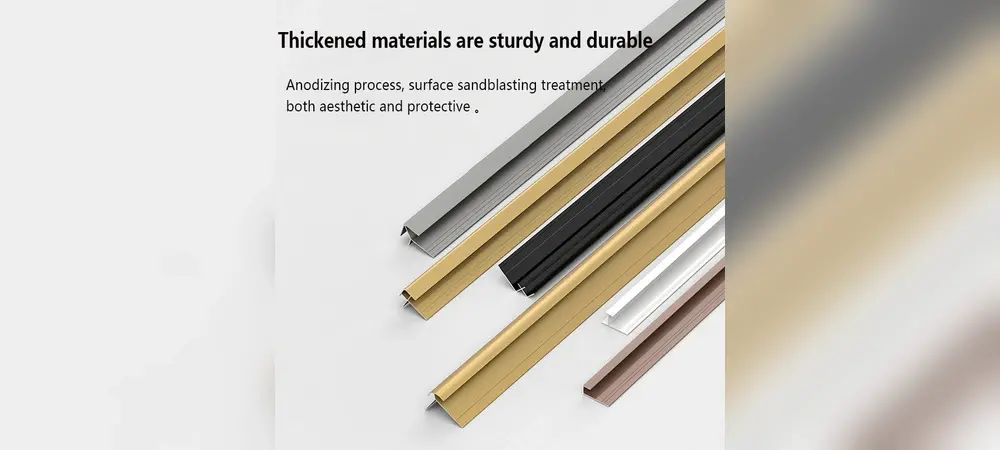
Each of the four most common wall trim lines materials is used for a different thing. PVC profiles are popular in kitchens and bathrooms because they don't get damaged by water and are cheap. Polyurethane (PU) is great for artistic ceiling and wall lines because it is both light and strong against impact. A material called WPC (wood-plastic composite) looks like real wood but doesn't bend like solid wood does in damp places. The surface of aluminum profiles is either anodized or fluorocarbon, and the anodized film is at least 10 µm thick. This protects against UV light and gives the profiles a service life of 12 to 18 years. You can get all four of these materials with CE and RoHS certifications, which are important for commercial export projects.
Design Ideas for Modern Interiors
The clean, straight look that is popular in modern home and hotel design is made possible by flat panel trim. T-strips and U-channels are good ways to connect panels with different types of surfaces. Putting together brushed-metal aluminum trim and matte panel infill on accent walls in showrooms or hotel lobbies makes a frame with a lot of contrast without a lot of architectural detail. Cross-section widths from 20 mm to 120 mm give artists a lot of freedom to change how heavy each shape looks.
How to Install Wall Trim Lines: A Step-by-Step Guide
Preparation and Surface Assessment
Check to see if the wall substrate is flat before cutting a single profile. If the difference is more than 3 mm per linear meter, there will be a space behind the trim. Fill in and sand any holes in the wall, and make sure it's dry. Moisture levels above 12% can weaken the bond between the materials over time. Before putting any glue on, lay out all the profiles and do a dry fit.
Cutting and Fixing Techniques
To get smooth cuts on metal shapes, use a high-speed miter saw with a carbide-tipped blade that has at least 100 teeth. For PVC and WPC shapes, clean lines can be made with a handsaw or a circular saw with a fine-tooth blade. Put a zigzag bead of structural adhesive on the back of the profile, press it firmly into place, and hold it there for 30 to 60 seconds. For most interior uses, there is no need for drilling or visible fasteners. This keeps the wall surface in place and the finish clean.
Handling Corners and Complex Junctions
The most common place for fitting mistakes to happen with wall trim lines is in the internal or external sides. Use a 45-degree miter cut on the outside corners and a matching corner connector accessory to keep the seams from being seen. If you shape one profile to overlap the other, you can use cope-cutting to make an internal corner that fits better than two mitered pieces. The profile system comes with matching angle pieces that take away all the guessing and save time on big jobs.
Benefits and Maintenance of Wall Trim Lines
Structural and Aesthetic Value
These trim shapes are useful in more ways than one. They keep corner edges from getting chipped in areas with a lot of foot traffic, hide settlement cracks that show up where walls meet ceilings, and make a clean visual end where two different surface materials meet. In business settings like hotels and show rooms, a uniform trim system makes the design language of different wall finishes work together.
These profiles are a good long-term investment because they have these main performance benefits:
- Waterproof and crack-proof construction: PU, PVC, WPC, and aluminum profiles resist moisture penetration, making them suitable for bathrooms, kitchens, and basement installations without risk of warping or surface delamination.
- No post-installation finishing required: Because the surface treatment — wood grain, brushed metal, solid matte — is factory-applied, installers skip sanding and painting entirely, cutting finishing labor by a measurable margin on large projects.
- Extended service life: With a rated service life of 12 to 18 years, these profiles outlast painted wood trim in most interior environments, reducing the frequency of replacement and the associated material costs.
Because of these qualities, artistic trim shapes are a good choice for building projects in homes, hotels, and businesses.
Cleaning and Repair Practices
A damp cloth and mild soap can be used to clean aluminum profiles. Do not use rough pads on the anodized surface because they can scratch it. The same method works well for both PVC and WPC profiles. Cleaners with alcohol should not be used because they can dull the surface over time. If an impact damages a section, individual profile lengths can be replaced without affecting the installation around it. This makes maintenance cheaper for large-area uses.
Choosing the Right Wall Trim Lines: Materials, Styles, and Suppliers
Matching Material to Project Requirements
Use of space determines the choice of material. Aluminum is the best choice for places with a lot of foot traffic, closeness to the outside, and big changes in temperature. PVC and WPC are good for home interiors and store fit-outs where weight and ease of handling are important. PU profiles are good for accent wall framing and decorative ceiling borders where fine detail is more important than impact resistance.
Style and Finish Selection
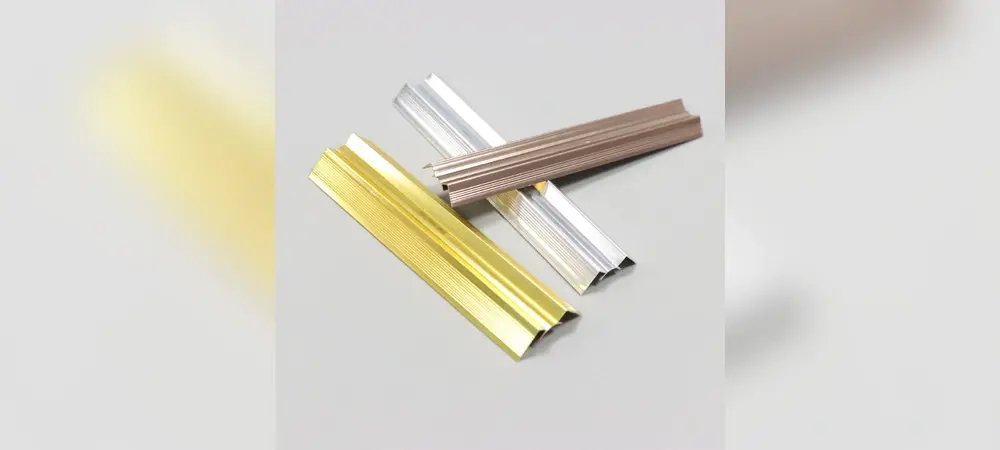
With more than 200 surface finish choices, such as wood grain, marble grain, brushed metal, and solid matte colors, trim shapes can be made to match almost any paint, tile, or panel finish. For OEM projects that need brand unity across the whole interior package, custom color matching is possible. The standard lengths are 2.4 m to 4 m, with 3 m being the standard for metal profiles. The cross-section sizes range from 20 mm to 120 mm.
Evaluating Suppliers
There are four main things that you should look for in a wall trim lines supplier: how accurate the measurements are (cross-sectional tolerance within ±0.1 mm), how consistent the surface is across production batches (Delta E < 1.0 for color), how fast the shipping is (7 to 10 days for production plus logistics), and the certification paperwork (CE, RoHS, ISO 9001:2015). Distributors and project buyers can stock standard SKUs and make custom orders without having to switch vendors when the supplier has in-house mold workshops and OEM/ODM capabilities.
Conclusion
To pick the correct wall trim lines for a project, you need to think about how long the materials will last, how well they will work with the design, and how reliable the supply chain is. PU, PVC, WPC, and aluminum all have their own benefits that depend on where they are installed and how well they are supposed to work. A well-chosen trim system will add long-lasting value to any interior project. It can have cross-sections from 20 mm to 120 mm, a service life of 12 to 18 years, and full OEM customization support. Before agreeing to a full order, make sure you have a clear material brief, check out your supplier's quality controls, and ask for approved samples.
FAQ
1. Are wall trim lines suitable for uneven or textured walls?
Yes. Most profiles are installed with structural adhesive, which compensates for minor surface irregularities. For deviations greater than 3 mm per linear meter, a skim coat of filler before installation is recommended to ensure consistent contact along the full length of the profile.
2. What is the difference between a wall trim line and a baseboard?
A baseboard is specifically placed at the floor-wall junction to protect the wall base. A wall trim line is a broader category of transition profile used at any junction — door frames, panel seams, ceiling borders, and corner transitions — to conceal gaps and refine the finished appearance.
3. How do I maintain aluminum trim profiles in coastal environments?
Standard anodized aluminum performs well in most interior environments. For coastal or high-humidity exterior applications, specify marine-grade anodized aluminum with a film thickness of at least 15 µm, and avoid prolonged contact with chloride-based cleaning agents.
4. Can I order custom colors for a large hospitality project?
Yes. OEM color matching is available for bulk orders, allowing project-specific color coordination across all profile types. Lead time for custom color samples is typically 7 to 10 days.
5. Do these profiles require any special tools for cutting?
Aluminum profiles require a high-speed miter saw with a carbide-tipped blade. PVC and WPC profiles cut cleanly with a fine-tooth saw. No specialized equipment beyond standard carpentry tools is needed for installation.
Get Your Wall Trim Lines Quote from ZX Today
ZX, or Zhengzhou Zhongxiu Building Materials Co., Ltd., helps with every order by having more than 300 active molds, more than 200 surface finish choices, and a shipping window of 7 to 10 days. Our team gets back to you within 24 hours, whether you need normal stock profiles or a full unique OEM package. Get in touch with a company that makes wall trim lines and ships to North America, the Middle East, and Southeast Asia. You can email us at info@kangdishi.com or go to zhongxiudecor.com to get samples and a list of our products.
References
1. Architectural Record — Building Materials & Products Section, 2022.
2. Construction Specifier — Interior Finish Systems and Material Performance, 2021.
3. Journal of Building Engineering — Durability of Polymer-Based Architectural Profiles in Humid Environments, 2020.
4. Interior Design Magazine — Trends in Commercial Wall Finishing Systems, 2023.
5. ASTM International Standards — Standard Test Methods for Anodic Coatings on Aluminum, ASTM B137, 2019.
6. EN 13501-1: Fire Classification of Construction Products and Building Elements — European Standards, 2018.
Online Message