
Sep 18, 2026
What Aluminum Decorative Moulding Is Best for Wall Panels?
When it comes to wall panel finishing, aluminum decorative mouldings consistently outperform alternatives in durability, dimensional stability, and design flexibility. Engineered from 6063-T5 alloy with an anodised film thickness ≥10 μm, these profiles deliver a verified 12–16 year service life — backed by CE and RoHS certifications. Whether you manage a decorative materials distribution business, run an OEM brand, or oversee commercial fit-out projects, selecting the right aluminum trim profile determines both the quality of the finished surface and the efficiency of your procurement cycle.
Understanding Aluminum Decorative Mouldings for Wall Panels
What These Profiles Actually Do
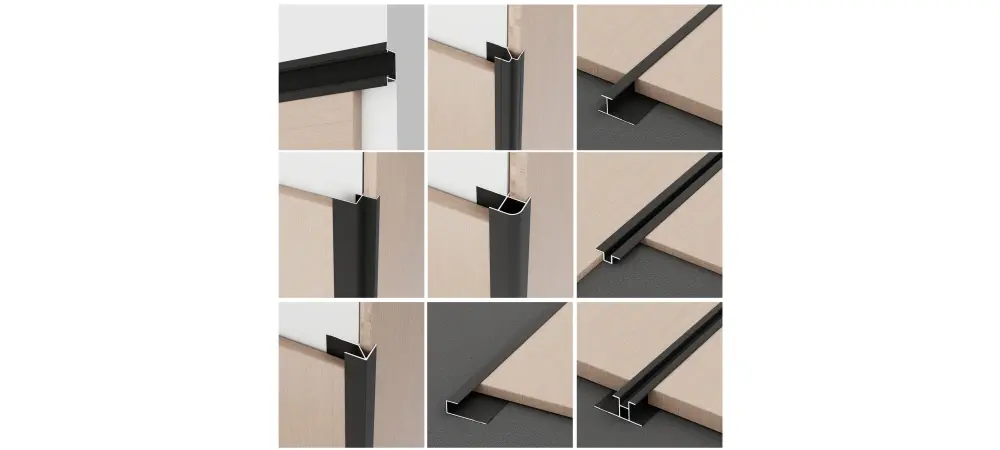
Aside from looking good, aluminum decorative mouldings are also good for the structure. They hide gaps in the corners, protect the sides of panels that aren't covered, and make smooth changes from tile to drywall, panel to ceiling, or floor to baseboard. They come in regular lengths of 2.4m to 4m and cross-sections ranging from 20mm to 100mm, so they can be used in almost any home or business setting.
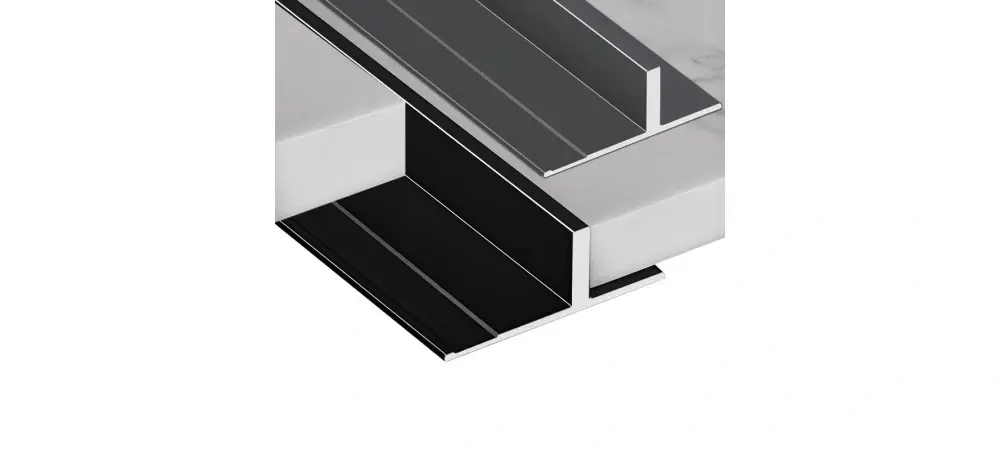
Edge trims (finishing strips that hide raw cuts), I-trims (joining strips that connect panels next to each other), and corner guards made for high-impact areas are the most common profile types. You can anodize or powder-coat each shape in more than 200 different colors and textures, such as wood grain, marble grain, and brushed metal.
Because of how it is made, aluminum is a great material for finishing walls. With a tensile strength of at least 160 MPa and a strength-to-weight ratio that is higher than both steel and PVC, 6000-series alloy profiles keep their sharp edges even when the temperature changes, without warping or cracking, which is a problem that gypsum and wood alternatives have [²].
Comparing Aluminum Decorative Mouldings with Other Materials
Aluminum vs. Wood, Gypsum, and PVC
The choice of material affects how much a wall panel installation will cost over its whole life. Aluminum decorative mouldings perform better than traditional alternatives in a number of measurable ways, and procurement professionals would do well to know exactly what those benefits are.
Wood trim soaks up water, swells with the seasons, and needs to be painted every so often. Gypsum profiles break when they are hit with something hard, and they need to be put up by skilled plasterers. PVC doesn't hold up well against UV light, gets brittle in cold places, and has a lower fire proof grade. All three of these problems can be fixed with aluminum trim profiles.
Here is a straight comparison of the most important measures for B2B buyers:
- Service life: Aluminum profiles with a covering of 10μm or more have a service life of 12 to 16 years in normal indoor settings. When kept in the same conditions, PVC usually breaks down in 5 to 8 years [²].
- Fire classification: According to EN 13501-1, aluminum is rated Class A1 non-combustible, which is a very important rule that all business and public projects must follow.
- Maintenance burden: Anodized aluminum only needs to be cleaned with a pH-neutral cleaner every so often. Wood needs to be refinished every year, and gypsum needs to be patched after any damage.
- Installation labor: Dust-free cutting gets rid of the need for sanding and caulking on-site, which cuts down on both the time and cost of labor for every job.
These differences in performance directly lead to lower total cost of ownership, which is an important measure for distributors giving advice to builders further down the line and for OEM brands building long-term names for their products.
How to Choose the Best Aluminum Decorative Moulding for Your Wall Panels
Matching Profile Specifications to Project Requirements
Setting up the project is the first step in picking the right profile. For residential applications inside, cross-sections should be between 20mm and 50mm. For commercial or hospitality interiors, profiles should be wider, up to 100mm, to cover larger panel gaps or protect corners that get a lot of use. For outdoor or coastal settings, a marine-grade anodized layer of 20–25μm is needed to protect against salt water and UV light [³].
Aside from the physical requirements, choices about buying depend on three factors related to the supplier: the ability to customize, the availability of stock, and confirmed wait times. A seller with more than 300 specialized molds can create a new profile in 15 to 20 days without having to wait for retooling, which is very important for OEM brands that are making their own product lines. Monthly replenishment rounds can be supported by ready stock for standard patterns that doesn't tie up working capital in extra inventory.
Before making a deal with a supplier, procurement managers should also check their certifications. If a company makes aluminum decorative mouldings, they need to show that it meets CE and RoHS standards, has ISO 9001:2015 quality management approval, and has ASTM B117 salt spray test results. Asking for batch-specific Delta E colorimeter reports makes sure that all big orders have the same color.
Installation and Maintenance Guide for Aluminum Decorative Mouldings
Achieving a Clean Finish on Every Project
Preparing the surface is the first step in a proper installation. The base must be dry, clean, and the right size; gaps bigger than the profile's covering width will show through the finished trim. For panel installations, a gap tolerance of +0.5 to +1.0 mm for panel thickness lets the panels expand with the seasons without buckling.
A carbide blade with a lot of teeth is needed to cut aluminum decorative mouldings to length. The fact that these profiles don't create dust means that there are no particles in the air and no sealing work to be done afterward. This directly cuts down on cleaning time on-site and gets rid of dust-related complaints from customers further down the line [⁹]. Miter-cut field joints aren't as sharp for corner joints as prefabricated 90-degree internal and external corner pieces.
It's easy to do ongoing upkeep. Anodized surfaces don't get damaged by most pH-neutral industrial cleaners. Stay away from strong acids and bases. A quick review once a year to check for bonding at panel joints and any spots of coating wear is all that's needed to keep the look and performance in good shape for the whole service life.
Procurement Insights: Where and How to Buy Aluminum Decorative Mouldings in Bulk
Building a Reliable Supply Chain for Wall Trim Profiles
For people who buy in bulk, the structure of the supply chain is just as important as the product itself. With a factory-direct source, you don't have to pay markups to distributors, and lead times are cut down. Because Zhengzhou is in the middle of China's logistics network, most normal orders are shipped within 7–10 days. The export paperwork covers customs processing in Asia, the Middle East, Europe, North America, South America, Africa, and Australia.
The following factors set capable manufacturers apart from commodity traders when choosing a supplier of aluminum decorative mouldings:
- Mold inventory depth: Having more than 300 dedicated molds shows that the company can really make a lot of things and can handle mixed-batch orders for cross-sections ranging from 20mm to 100mm without having to meet minimum number requirements for each shape.
- OEM and private-label options: Suppliers with NDA protocols and exclusive color/section development can keep your intellectual property safe while letting you make your own product lines.
- Quality records: Delta E colorimeter logs, ASTM B117 salt spray test reports, and ISO 2409 paint adhesion records for each production batch show that the bulk goods match the approved samples [⁺].
- Sample access: Samples that are free or cost-priced let you see how something works before you commit to a large order, which is what professionals usually do when they buy something from a business.
Distributors who deal with a wide range of specifications can lower their inventory risk by lowering the minimum order quantities for mixed batches. A supplier that can combine 20 or more profile sizes into a single package makes handling easier and lowers the cost of freight per unit.
Conclusion
Wood, gypsum, and PVC can't compare to aluminum decorative mouldings when it comes to material performance and ease of installation. They are the best choice for wholesalers, OEM brands, and project workers because they last 12 to 16 years, cut without dust, are waterproof, and can have cross-sections ranging from 20 mm to 100 mm. Verifying a supplier's credentials, such as their certifications, mold inventory, batch documentation, and lead time commitments, is the first thing that separates a good purchasing decision from a supply chain risk that can be avoided.
FAQ
1. What cross-section sizes are available for wall panel trim profiles?
From 20 mm to 100 mm is the standard range for cross-sections. Custom sizes can be made, and the process of making a new mold usually takes 15–20 days.
2. Can these profiles be used in renovation projects as well as new construction?
Yes. The profiles are designed to fit both new buildings and places that have already been built. Because they don't make dust, they are especially useful in busy repair areas.
3. What certifications should I request from a supplier?
Ask for proof of CE, RoHS, and ISO 9001:2015 at the very least. Ask for ASTM B117 salt spray test results and anodized film thickness proof for places that get a lot of moisture or are industrial.
4. How do I ensure color consistency across large bulk orders?
Ask your seller to send you Delta E colorimeter reports for every batch of goods they make. In most cases, a ΔE value below 1.0 is fine for architectural uses.
5. What is the minimum order quantity for mixed-batch procurement?
Not all suppliers do this. A company that keeps a lot of molds on hand can usually handle mixed-batch orders with lower per-profile minimums. This frees up capital that would otherwise be stuck on specs that take a long time to meet.
Partner with ZX for Reliable Aluminum Decorative Mouldings Supply
With more than 300 molds, 200+ finish options, and 7–10 day standard shipping, ZX—Zhengzhou Zhongxiu Building Materials Co., Ltd.—connects buyers from all over the world to central China's most capable manufacturer of aluminum decorative mouldings. Our team replies within 24 hours, whether you need ready-to-ship stock to be restocked right away or bulk OEM production based on your unique needs. You can email us at info@kangdishi.com or go to zhongxiudecor.com to get examples or a custom price. Leo
References
1. The Aluminum Association. (2022). Aluminum Alloy Temper Designations and Properties — 6063-T5 Technical Data. The Aluminum Association. https://www.aluminum.org/resources/industry-standards/aluminum-standards-and-data
2. European Aluminium. (2021). Sustainability and Recyclability of Aluminium in Construction. European Aluminium Association. https://www.european-aluminium.eu/resource-hub/sustainability-report/
3. Architectural Aluminum Manufacturers Association (AAMA). (2020). AAMA 2604: Voluntary Specification, Performance Requirements and Test Procedures for High Performance Organic Coatings on Aluminum Extrusions and Panels. AAMA. https://www.aamanet.org/publication/show/1289
4. ASTM International. (2019). ASTM B117: Standard Practice for Operating Salt Spray (Fog) Apparatus. ASTM International. https://www.astm.org/b0117-19.html
5. ISO. (2013). ISO 2409: Paints and Varnishes — Cross-cut Test. International Organization for Standardization. https://www.iso.org/standard/51432.html
6. Construction Specifier. (2023). Specifying Aluminum Trim and Transition Profiles for Commercial Interiors. The Construction Specifier Magazine. https://www.constructionspecifier.com/specifying-aluminum-trim-profiles-for-commercial-interiors/
Online Message