
Sep 4, 2026
What is Snap-fit aluminium skirting?
Over the past decade, I've watched traditional skirting installation methods slow down countless construction timelines. Contractors wrestle with adhesives, installers clean up glue spills, and project managers worry about consistency across multi-building developments. Snap-fit Aluminum Skirting emerged as the solution procurement professionals needed—a glue-free, click-in wall finishing system that transforms how we approach baseboard installation in commercial and residential projects.
This two-component modular system comprises a concealed mounting track fixed to the wall and a visible decorative cover plate that snaps securely into place. Manufactured from 6063-T5 architectural-grade aluminum alloy, the mechanism addresses three persistent industry pain points: difficult access to hidden wiring, extended installation time, and wall surface damage during maintenance. The internal cavity accommodates low-voltage cables while providing thermal expansion compensation, making it ideal for large-scale developments where efficiency and longevity matter most.
Understanding Snap-Fit Aluminium Skirting
How the Mechanical Interlocking System Works
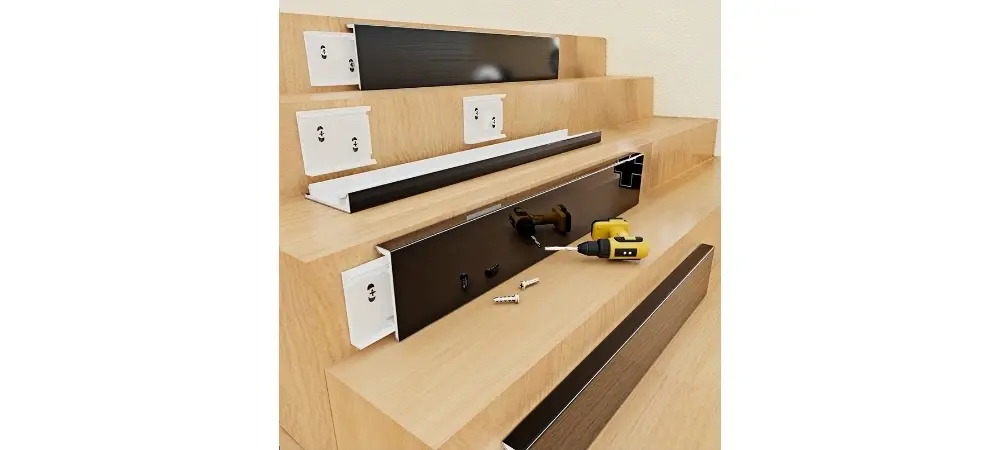
Skirting boards are usually attached using nails or adhesive. Our snap-fit eliminates both. A few screws secure a light metal base track to the wall to begin installation. The ornamental cover's tabs fit neatly into this track's machined holes. A click verifies secure engagement when installers line up the cover plate and press down hard. Mechanical glue can withstand daily cleaning and furniture moves and be removed without tools to access cables or alter finishes.
The 6063-T5 metal has tensile strength of 160-200 MPa, surpassing MDF or PVC choices that degrade in humid conditions. Webster hardness grades 8–12 HW prevent typical use from scratching the surface. When installing thousands of square meters in climate-controlled buildings, project managers must know that the system maintains its proportions regardless of temperature.
Profile Variations and Design Flexibility
Snap-fit Aluminium Skirting profiles come in heights from 40mm to 80mm, with 60mm and 80mm being the most prevalent in commercial situations. Standard 2.5m lengths simplify installation and improve sightlines. With 0.8mm and 1.5mm thicknesses, specifiers may balance cost and impact resistance. 1.5mm profiles perform well in high-traffic areas, whereas 0.8mm profiles function well in privacy.
The surface can be treated with anodised (10-15µm thickness) or electrostatic powder coatings (60-80µm thickness). Choose from silver, champagne, black, wood grain textures, marble patterns, and bespoke RAL matching. This versatility helps maintain design consistency in rooms with hardwood, tile, vinyl, or carpet flooring that must match the skirting. Unlike designs with larger ledges, the 4mm top width prevents dust buildup.
Typical Applications in Commercial and Residential Projects
The snap-fit design is used by hospitals because flush installations prevent dust and facilitate tight cleaning regimes. Hospital corridors and patient rooms are clean and attractive. Aluminium is unaffected by chemical cleaners that destroy wood or PVC. This extends maintenance intervals and lowers lifecycle costs.
Built-in cable routing lets high-end company spaces swiftly reposition workstations without demolishing walls. Facilities staff simply unsnap the covers, feed new cables through the concealed hollow, and reinstall the finish panels as organisations reorganise floor layouts or upgrade their network equipment. This protects tenant improvement dollars while maintaining a Grade A workplace appearance.
Snap-fit Aluminum Skirting handles tropical conditions and underground commercial areas well. Non-rusting aluminium lasts 15 years or more in underground fitness centers, pool changing rooms, and seaside resorts. This differs from wood and PVC that distort and mould when exposed to water.
Benefits of Snap-Fit Aluminium Skirting Compared to Traditional Skirting
Superior Durability and Impact Resistance
Large developers who manage hundreds of units recognise that material selection affects long-term development expenses. Metal construction can withstand impacts that would dent wood. Placing cleaning carts, chairs, and tools correctly prevents daily bumps from leaving marks. The IK08+ impact resistance standard ensures that the skirting will withstand accidental blows that would harm wood or MDF and require replacement.
Dimensional stability remains constant over the 22–30-year household and commercial service life. Humidity variations cause wood skirting to expand and contract, creating joins with holes. MDF absorbs water and crumbles. Since aluminium has tight tolerances (0.2mm per metre), the snap mechanism will remain reliable throughout the building's lifespan. Purchasing managers prefer to buy materials once and avoid costly replacements.
Environmental Impact and Sustainability Advantages
Sustainability reporting influences purchases more. Class A fire-rated aluminium skirting won't catch fire. This is done without chemical flame retardants. Zero formaldehyde emissions improve indoor air quality, helping LEED certification and green construction criteria. Aluminium parts can be fully recycled without losing quality. This prevents landfilling building waste.
Since moulding methods use green energy, manufacturing energy demand has decreased. Anodising and powder coating under RoHS guidelines prevents heavy metals from entering production waste streams. ESG developers find aluminium skirting compatible with their sustainability aims and saves operating resources.
Lifecycle Cost Analysis for Procurement Teams
The total cost of ownership includes upfront material expenses. Glue-free wood skirting installation takes 40% less time than adhesive-fixed. Eliminating adhesive reduces cleanup time and material costs. This helps installation teams finish faster and stay on budget. When making bulk purchases, buying managers should consider how much effort multi-unit complexes will save.
Aluminium doesn't need refinishing, thus maintenance takes longer. Wood skirting needs to be painted or stained often, which is expensive, time-consuming, and disruptive to tenants. Aluminium surfaces can be cleaned with standard cleansers, preserving colour stability (Delta E < 1.5) for decades. Long lifespan, low maintenance, and recycling create compelling value propositions that support specification decisions.
Installation Guide and Best Practices for Snap-Fit Aluminium Skirting
Surface Preparation and Measurement Accuracy
Preparing the wall correctly is the first step to a successful installation. Surfaces must be dry, clean, and free of any loose paint or other junk that could make putting the base track less secure. We suggest using a straightedge to check how flat the wall is—differences greater than 2 mm per meter need to be fixed so the artistic cover sits flush. Minor flaws can be adjusted by the mounting base, but too much waviness makes gaps that are noticeable and look bad.
To avoid loss and delays in fitting, it is important to measure things correctly. Figure out how many square meters you'll need, taking into account door spaces, inside corners, and outside corners. You should add 5% to account for cutting down on waste and future repairs. When placing an order for a multi-phase development, make sure that the delivery times work with the building plans. Our standard production lead time of 7–10 days allows for phased procurement strategies that reduce the need for on-site storage.
Step-by-Step Assembly Process
Before they start, installation teams should make sure they have the following tools: a writing pencil, a tape measure, and a miter saw with a carbide blade for non-ferrous metals. Using 45-degree curves at the sides, cut the base tracks to the lengths you need. Install tracks on walls at times recommended by the maker to make sure they are level. Make sure that the corner joints fit together perfectly. Gaps at the miters will show up as flaws once the covers are on.
Once all of the Snap-fit Aluminum Skirting base tracks are in place, start putting on the decorative covers at one end of each wall section. Line up the back tabs of the cover with the engagement slots on the track, place the bottom edge, and press firmly along the whole length until you hear the confirmation click. Make sure there are no gaps between the cover and the wall. In corners, put in inside or outside corner connectors that have already been finished, and then snap covers onto walls next to them. End caps cover up the ends that stick out at doors and changes.
Troubleshooting Common Installation Challenges
Uneven wall surfaces can sometimes make it impossible for the cover to properly connect. If there are spaces between the wall and the cover, make sure the base track is level and fix any mounting fasteners that are out of place. A little give in the artistic cover hides small flaws, but too much movement needs to be fixed or shimmied. Installers should test-fit covers before making a final pledge so that problems can be found quickly.
Temperature affects when to install something. Aluminum doesn't change size much, but workers who have to work in harsh conditions should let materials warm up to room temperature before they cut and fit them. This keeps buildings from having mismatched sizes when they get back to working temperatures. Large open-plan rooms can handle seasonal changes without looking wavy by adding expansion joints at regular intervals suggested by engineering standards.
Buying Guide: How to Choose the Best Snap-Fit Aluminium Skirting for Your Project?
Material Specifications and Performance Requirements
When buying things, the properties of the materials should match the needs of the project. Choosing the right thickness strikes a mix between cost and longevity needs. Places with a lot of foot traffic, like shopping malls, schools, and hospitals, should use 1.5mm widths because they can handle more impact. 0.8mm versions work well enough for residential uses and administrative offices, and they cost less than other options. When making plans for mixed-use developments, you might want to use standard thickness in private areas and thicker profiles in public areas.
The choice of surface treatment affects both how it looks and how long it lasts. Anodized finishes are tough and won't rust, making them perfect for use in coastal areas or places where chemicals are present. Powder coating gives you more color and texture choices, which helps designers achieve their goals in retail and hospitality projects. Both processes keep the color stable when exposed to UV light, but powder coating is better at protecting against scratches in situations with a lot of touch. To make sure the rust protection meets the needs of the project, ask for details on the coating thickness and check the results of the neutral salt spray test (96-hour NSS).
Evaluating Supplier Credentials and Quality Assurance
Reliable suppliers have quality control systems that are written down and cover things like precise measurements, surface integrity, and mechanical strength. Cross-sectional tolerances of within ±0.2mm make sure that all production batches of snaps engage securely. This level of accuracy is very important when buying materials for multi-building projects where regularity affects how the finished product looks. Ask for samples from each production run to make sure that the color matching stays within the acceptable Delta E range.
How well suppliers can meet tight building plans depends on how much they can make. The Zhengzhou Zhongxiu Building Materials Co., Ltd. has more than 300 molds that are specifically made for different products and different number needs. Our plant integration at Zhengzhou Keyi Aluminum includes 132 mu of production space that is fully licensed for safety and the environment. We can handle bulk orders for big real estate developments on this scale, and our production lead times stay at 7–10 days. To make sure they can trust a seller, purchasing managers should check the factory's ISO 9001:2015 Quality Management System and Work Safety Standardization certifications.
Certification Requirements and Compliance Verification
Documentation must be shown for commercial projects to show that they follow building codes and safety standards. The CE mark proves that a product meets European safety, health, and environmental standards. RoHS approval makes sure that dangerous materials are limited in the production process. For public areas like office lobbies, school hallways, and hallway systems, installations that need to be rated B1 for fire resistance are required.
When making specifications for foreign projects, it's important to find out early on what the local certification standards are. New developments in the Middle East may need more testing to make sure they can handle high temperatures. For aluminum alloy specifications, North American projects often use ASTM B221 standards. Hire providers who can provide full compliance paperwork to avoid delays that cost a lot of money during the inspection and permit phases. Our technical team keeps certification files up to date and can speed up paperwork for buying cycles that need it quickly.
Why Snap-Fit Aluminium Skirting is the Preferred Choice for B2B Procurement?
Validated Performance in Commercial Projects
Case studies that show how skirting solutions have worked in the real world are helpful for real estate investors who are looking at skirting solutions. A new 500-unit apartment building in Southeast Asia chose our Snap-fit Aluminum Skirting for the common areas and each apartment. During building, the project saved a lot of money on labor because installation teams finished the baseboard work 35% faster than planned. Two years after moving in, the property management says there have been no skirting repairs and few upkeep tasks, even though there have been a lot of moves.
When hospitals are being renovated, the working conditions are tough, and the cost of running the hospitals is directly affected by how long the materials last. For its ability to resist rigorous cleaning routines, a medical center remodeling patient wings chose Snap-fit Aluminum Skirting. The surface doesn't have pores, so germs can't stick to it. This helps control infections and keeps the surface's appearance even after being exposed to chemicals often. Facilities management teams like that they can remove medical equipment connections on the wall without using any tools. This makes routine maintenance easier.
Market Trends and Product Innovations
As modular building methods continue to become more popular, the need for finishing systems that are easy to install grows. Snap-fit Aluminum Skirting is compatible with prefabrication methods, where parts are made ahead of time and brought to the job site ready to be put together quickly. Manufacturers are adding more specialized profiles to their libraries to meet the needs of changing projects. These profiles include integrated LED lighting channels and better cable management capabilities. Because of these improvements, aluminum skirting can be used in developments that want to use new technologies in the future.
As building owners try to get green approvals and meet carbon reduction goals, sustainability pressures affect the materials they choose. Aluminum is environmentally friendly and cost-effective because it can be recycled and doesn't need much upkeep. People in the industry have noticed that specification rates are going up in markets that used to be controlled by wood and vinyl goods. Procurement workers who get their companies ready for changes in the market gain a competitive edge by using tried-and-true replacement materials early on.
Building Strategic Supplier Partnerships
For long-term procurement success, relationships with suppliers need to go beyond simple transactions. Reliable production partners help with the technical side of design development, making sure that the specs match the product's powers and the project's budget. They offer flexible payment terms that can be adjusted to fit the needs of the project's cash flow. Across multiple deliveries, they maintain quality standards. Responding to urgent needs, like speeding up production to meet tight building plans or sending out emergency replacement orders for damage, is what responsive communication is all about.
When working with clients, Zhengzhou Zhongxiu Building Materials Co., Ltd. is honest and responsible. There are production experts on our team who make sure that all of the processes run smoothly and help with the development of special products when standard profiles don't meet the needs of a project. Quality control experts check the plant on-site and do six checks to make sure everything is correct before shipping. This all-around method gives procurement managers more confidence when they are in charge of complicated projects where material consistency affects how well the projects turn out.
Conclusion
Snap-fit Aluminum Skirting is more than just an option to baseboards; it completely changes how wall finishing is done in both business and home projects. The glue-free method cuts down on labor costs and speeds up project timelines. It also gets rid of the need for messy glues and damage to the walls. Because aluminum is very strong, doesn't rust, and doesn't need much upkeep, it has a long life that makes specification decisions for procurement professionals in charge of big projects make sense.
Properties of the material, such as its ability to withstand impacts, keep its shape, and meet fire safety standards, are important for a wide range of uses. The modular design makes it easier to get to hidden services in the future without destroying the building, which supports its long-term flexibility. As sustainability concerns become more important in purchasing choices, aluminum's ability to be recycled and low impact on the environment are in line with business responsibility goals. When purchasing managers are looking for reliable, quick, and cost-effective ways to finish the walls of a building, Snap-fit Aluminum Skirting offers measurable benefits throughout the building's lifespan.
FAQ
What customization options are available for bulk orders?
Custom height choices beyond our normal 40mm, 60mm, and 80mm options can be made to fit specific building needs. We can custom-match colors to specific RAL codes or offer finishes that are matched to samples to make sure that skirting fits in with your own interior design schemes. Procurement teams can choose the best performance characteristics for each project by changing the thickness and surface treatment (anodized vs. powder-coated). For custom specs, the minimum order quantity depends on how complicated the profile is. Our sales team will give you full quotes after they look over your project needs.
How does aluminum skirting perform in high-moisture environments?
Its aluminum alloy makeup naturally fights corrosion, so it stays structurally sound in damp places where wood warps and MDF falls apart. For installations in basements, along the coast, or in tropical regions with high humidity, the anti-rust qualities are especially useful. Our anodized surface treatment adds an extra layer of protection that passes 96 hours of neutral salt spray tests, proving that it will work well in harsh conditions for a long time. Health care facilities like that non-porous metal surfaces don't let germs grow and can handle the chemical cleaners that are needed for infection control.
What are typical lead times for large development projects?
Standard production runs are finished 7–10 days after an order is confirmed, which helps keep building plans on track without having to wait a long time to get materials. For multi-building developments with a lot of orders, shipping may need to be coordinated in stages. Our logistics team makes sure that this happens so that it doesn't get in the way of work and there isn't too much storage needed on-site. When project deadlines require quick delivery, rush orders get priority in the production schedule. However, telling our team about the order ahead of time helps them best use their resources. We keep the lines of communication open during the whole production cycle and provide shipment tracking and delivery confirmation to help project managers plan.
Partner with a Trusted Snap-fit Aluminum Skirting Supplier
People who work in procurement and are in charge of business growth need manufacturing partners who know how complicated big projects can be. At ZX (Zhengzhou Zhongxiu Building Materials Co., Ltd.), we have 30 years of experience making things out of aluminum and offer helpful customer service that fits the needs of your project. Our Snap-fit Aluminum Skirting is easy to install without glue, resistant to impact, and long-lasting, just what your developments need. It also comes with CE, RoHS, and B1 fire certifications that make it easier to make sure it meets all the requirements.
Before you agree to large orders, you can get free pre-production samples to make sure that our quality standards meet your needs. Our expert team helps with installation, creates custom finishes, and makes suggestions based on each job that help you choose the best materials for your needs. Get in touch with us at info@kangdishi.com or visit zhongxiudecor.com to talk about how our factory-direct supply chain can help you meet your project deadlines and budget goals while maintaining constant quality across multiple phases of development.
References
1. Aluminium Federation (2021). Architectural Aluminium Systems: Design Guide and Specifications. Birmingham: Alfed Publications. Available at: https://www.alfed.org.uk/resources/design-guides
2. American Society for Testing and Materials (2019). ASTM B221: Standard Specification for Aluminum and Aluminum-Alloy Extruded Bars, Rods, Wire, Profiles, and Tubes. West Conshohocken: ASTM International. https://www.astm.org/b0221-14.html
3. U.S. Green Building Council (2020). LEED v4.1 Building Design and Construction Guide. Washington, DC: USGBC. https://www.usgbc.org/leed/v41
4. International Organization for Standardization (2018). ISO 9227: Corrosion tests in artificial atmospheres — Salt spray tests. Geneva: ISO. https://www.iso.org/standard/63543.html
5. European Committee for Standardization (2017). EN 13501-1: Fire classification of construction products and building elements. Brussels: CEN. https://standards.cen.eu/dyn/www/f?p=204:110:0::::FSP_PROJECT:31221
Online Message