
Sep 18, 2026
What Is the Difference Between Aluminum Decorative Trim and Standard Aluminum Profiles?
When sourcing building materials, the distinction between aluminum decorative trim and standard aluminum profiles matters more than most buyers initially realize. Aluminum decorative mouldings are purpose-built for aesthetic finishing — covering corner gaps, framing wall panels, and delivering clean edge transitions in residential and commercial interiors. Standard aluminum profiles, by contrast, are engineered for structural or mechanical functions: load-bearing frameworks, curtain wall systems, and industrial enclosures. Choosing the wrong category leads to wasted spend, rework, and project delays. This guide clarifies each product type so procurement teams, distributors, and contractors can source with confidence.
Understanding Aluminum Decorative Trim vs. Standard Aluminum Profiles
What Defines a Decorative Trim Profile
Aluminum artistic trim, like ceiling moldings, edge strips, joint strips, and skirting profiles, cares most about how it looks and how smooth the surface is. These profiles are made by extruding 6063-T5 alloy, which has a very clear surface for powder coating and anodizing. The anodized film on good aluminum decorative trim is about 10μm thick. It protects the finish from daily wear and tear and keeps the color true for 12 to 16 years [1]. Cross-section geometry is best for smooth changes from one panel to the next, not for structural loads.
What Defines a Standard Structural Profile
When it comes to standard aluminum shapes, like 6061-T6 extrusions used in frames, brackets, and curtain wall mullions, tensile strength (≥260 MPa for 6061-T6) and dimensional stability under mechanical stress are the most important things [2]. The surface treatment is not very important; mill-finish or light anodizing is enough because looks don't really matter in hidden structural uses. Tolerance standards are based on ISO 2768 or ASTM B221, which are more concerned with how well things fit together than how they look. Aluminum decorative mouldings are different.
The difference in manufacturing is important: making artistic trim requires fine die cleaning, multi-stage surface finishing, and using Delta E colorimeters to check the colors from batch to batch. When making a structural shape, stability in the metal chemistry and tensile tests are more important than how it looks.
Comparative Analysis of Performance and Durability
Durability Metrics That Matter for Decorative Trim
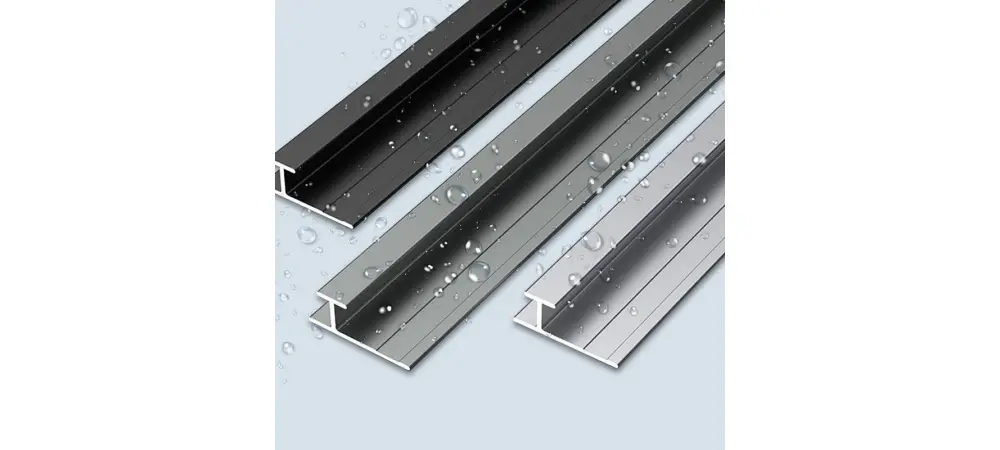
Every day, cleaning products, physical scuffs, and changes in temperature come into touch with the surfaces of decorative trim profiles. ASTM B117 salt spray testing guidelines say that anodized aluminum decorative trim can withstand salt spray for 240 to 480 hours without losing its surface [3]. This means that high-quality trim can really be used in bathrooms, kitchens, and commercial spaces near the coast where moisture is always present. The waterproof and crack-resistant design gets rid of the problems with warping that come with wood or PVC options, which tend to soak up water and grow.
Standard structural profiles can handle much tougher mechanical loads, like rolling loads on store floors and thermal expansion in curtain wall systems. However, their unfinished surfaces rust more quickly if they are left out in damp places without any extra protection. So, when it comes to obvious internal uses, the total cost of ownership figure favors aluminum decorative mouldings: less maintenance, longer finish life, and no replastering cycles.
Procurement Considerations for Aluminum Decorative Trim and Standard Profiles
To make smart purchases, you must first understand how the supply chains of these two groups of products are different.
Buyers who put a high value on detailed specifications and supplier flexibility will benefit from decorative trim sourcing. Here are the buying factors that always affect the results of sourcing:
- Specification coverage: Good ornamental trim suppliers offer cross-sections from 20 mm to 100 mm and typical lengths of 2.4 m to 4 m. Distributors who carry a wide range of goods can lower the stress on their stock by ordering in mixed batches across multiple types without having to meet high minimum order sizes.
- Sample verification: Before placing a large order, ask for actual samples. Reliable manufacturers send out samples within a few business days and allow installation simulation testing before shipping. Delta E verification is needed to match colors between runs; always make sure that your provider can do this [4].
- Lead time clarity: Decorative trim that is in stock usually ships within 7–10 days from a plant that is well-run. It takes 15–20 days for tooling and sample approval for custom OEM profiles with new color development or unique cross-sections. After that, there is a production wait time. Plan this into the schedule for the project.
- Certification documentation: CE and RoHS marks show that the product meets the standards of international markets. If a company has ISO 9001:2015 quality management certification, it means that they use systematic production controls instead of random inspections.
Standard structural profiles are sourced in a different way—alloy approval, mill test results, and dimensional tolerance paperwork are more important than how the product looks. It is important for procurement teams to not mix up suppliers. For example, a company that makes decorative trim that focuses on surface quality might not be the best source for load-bearing extrusions, and the same goes for the other way around.
Installation and Application Insights
Decorative Trim: Dust-Free Installation Advantage
The dust-free cutting design is a useful feature for decorative trim on busy job sites. When you put gypsum or plaster moldings, you have to wet-sand and plaster them again. But when you use a high-tooth carbide blade to cut aluminum trim, it cuts smoothly and doesn't need any surface preparation afterward. This gets rid of a full stage of work—no plastering, sanding, or curing time—which speeds up the completion of projects on both new and old construction sites [5].
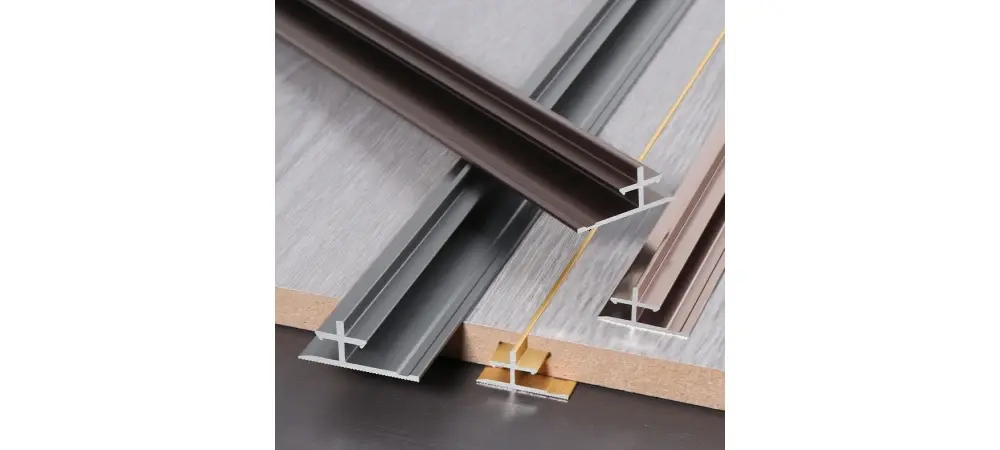
As soon as the panels are put up, the profiles cover the gaps at the corners and the raw edges of the panels. This makes the changes between the panels, the ceiling, and the lining look professional. Standard lengths of 2.4m to 4m cut down on waste on-site compared to lower shapes that need more joins.
Standard Profiles: Structural Applications
Standard aluminum decorative mouldings are put together as frame systems using bolts, welded joints, or mechanical fasteners. For load-bearing purposes, installation tolerances are tighter, and any damage to the surface that happens during installation usually needs to be fixed. It's harder to change the design because the outline shape is set by structural engineering, not by how the interior looks.
In real life, the obvious ceiling and baseboard changes in high-end hotels are made with decorative trim, while the standard structural extrusions are used for the hidden wall-clip frame system behind the panels. Both product groups work together on the same project, but they each do their own specific job.
Decision-Making Framework for Selecting Aluminum Trim or Profiles
By matching the product to the needs of the project, costly replacement mistakes can be avoided. The main picking factors are easy to understand:
When you need to meet requirements for visible surfaces, esthetic continuity, color customization, a dust-free work site, or compliance with interior finish specifications, choose aluminum decorative trim. With more than 200 finish options, trim profiles help OEM brands stand out and let distributors serve a wide range of design markets from a single supplier relationship.
If you need to move loads, use mechanical fasteners, hide the frame, or make things for industry, choose standard structural profiles. The choice is based on the alloy's strength data and its dimensional approval, not its surface quality.
Sustainability issues are affecting both groups more and more. Aluminum can be recycled over and over again without losing any of its quality, which helps with LEED certification [6]. Decorative trim with surface treatments that are RoHS-compliant and E0-level environmental ratings fits in with green building buying policies that are becoming more popular in business construction across North America.
Conclusion
It's not hard to tell the difference between aluminum decorative mouldings and normal aluminum profiles. Decorative trim solves problems with finishing, looks, and efficiency on-site; structural profiles solve problems with load, framing, and mechanical integrity. When procurement teams, wholesalers, and project managers know this difference, they can source more accurately, cut down on mistakes, and get better results from their projects. For distributors building a full-range stock, having a wide range of high-quality decorative trim in stock gives them a direct edge over their competitors.
FAQ
1. Can aluminum decorative trim be used in outdoor applications?
For long periods of time outside or near the coast, standard internal aluminum decorative trim needs a marine-grade finish, which is usually a 20–25μm anodized layer or PVDF coating. Interior-grade trim with ≥10μm anodizing works well in protected outdoor areas like covered entranceways. However, environments with direct UV light and high salt levels need better surface specifications.
2. How does aluminum trim compare to PVC or wood moulding in durability?
Aluminum lasts longer than both options in places with a lot of moisture and a lot of foot traffic. Long-term UV exposure makes PVC brittle, and wood expands and shrinks with water, breaking at the joints over time. When aluminum trim is properly anodized, it keeps its shape and surface structure for 12 to 16 years without needing to be replastered or painted.
3. What are typical lead times for custom bulk OEM orders?
It takes about 15–20 days for mold creation and initial samples for new cross-section tools. Five to ten days are added for custom color development and sample approval. Once the sealed sample is approved, bulk production and shipping usually end within 7–10 days for standard volumes. For fully custom OEM sales, it's best to add 4–6 weeks to the project timeline.
4. What minimum order quantities apply to mixed-batch orders?
Manufacturers of reputable decorative trim can handle mixed-batch orders for a variety of profiles and cross-sections, and their minimum order quantities are flexible to fit the needs of distributors who need to restock. Before you place trial orders, talk to your provider directly about their mixed-batch rules.
Partner With ZX for Reliable Aluminum Decorative Mouldings
ZX (Zhengzhou Zhongxiu Building Materials Co., Ltd.) links buyers around the world directly to central China's best aluminum decorative mouldings manufacturer. They offer more than 300 molds, more than 200 finish options, CE/RoHS certifications, and normal shipping in 7–10 days. Our team gets back to you within 24 hours whether you need ready-stock mixed amounts or large-scale OEM production. You can get samples or a custom quote right now by going to zhongxiudecor.com or emailing us at info@kangdishi.com. Leo
References
1. Aluminum Anodizers Council. (2021). Anodizing Reference Guide: Film Thickness and Corrosion Performance Standards. Aluminum Anodizers Council. https://www.anodizing.org/page/anodizing-reference-guide
2. The Aluminum Association. (2020). Aluminum Alloy Temper and Strength Data: 6061 and 6063 Series. The Aluminum Association. https://www.aluminum.org/sites/default/files/2021-05/Teal%20Sheets.pdf
3. ASTM International. (2019). ASTM B117-19: Standard Practice for Operating Salt Spray (Fog) Apparatus. ASTM International. https://www.astm.org/b0117-19.html
4. Pilkington, A., & Luo, J. (2022). Color Consistency in Architectural Aluminum Finishing: Delta E Measurement Protocols. Journal of Coatings Technology and Research, 19(3), 741–752. https://link.springer.com/article/10.1007/s11998-021-00558-3
5. National Association of Home Builders. (2022). Renovation Efficiency Report: Material Selection and On-Site Labor Reduction Strategies. NAHB Research Center. https://www.nahb.org/research/housing-economics/special-studies
6. U.S. Green Building Council. (2023). LEED v4.1 Material Credits: Recycled Content and Aluminum Specification Guidance. USGBC. https://www.usgbc.org/credits/new-construction/v41/mr-c3
Online Message