
Nov 25, 2026
What Materials Are Used in High-Quality Luxury Wood Slat Panels?
High-quality luxury wood slat panels are built from a carefully chosen combination of materials that serve both aesthetic and functional purposes. At their core, most premium decorative slat wall panels use engineered substrates such as WPC (wood-plastic composite) or PVC, finished with realistic wood-grain surface layers. These material systems are selected for their resistance to moisture, dimensional stability, and long service life. Unlike solid timber, which expands and contracts with humidity changes, engineered slat panels maintain consistent performance across commercial and residential environments — making material selection the single most important factor in panel quality.
Understanding Luxury Wood Slat Panels: Materials Overview
What Sets Premium Slat Panels Apart
Not every piece of wall slat for decoration is high-end. The differences are in how dense the material is, how accurate the surface is, and the rules for pollution. When formaldehyde emission ratings for good panels are E0, it means that the air inside is safe. Also, their laminated peel strength is ≥2.5N/mm, which keeps the surface from coming apart over time, which is a common way that cheaper options fail.
Core Substrate Materials in Common Use
A lot of the time, premium slat panels are made from WPC (wood-plastic composite), PVC, or MDF. A core that can't be damaged by water or bugs is made when thermoplastic resin is mixed with wood fiber. This doesn't need any chemical treatments. Plastic that is made of PVC always has the same stiffness and works best in damp places. MDF is good for putting veneer on because its surface is smooth and can be painted.
Eco-Friendly Standards and Certifications
It's getting more and more important for procurement teams to keep records. People who sell slat panels that you can trust will give you E0 emission test reports, ISO 9001:2015 certifications, and ASTM-compliant fire-resistance data. In North America, FSC-certified fiber material is becoming the norm for projects, and commercial-grade specs now call for low-VOC coatings on the surface.
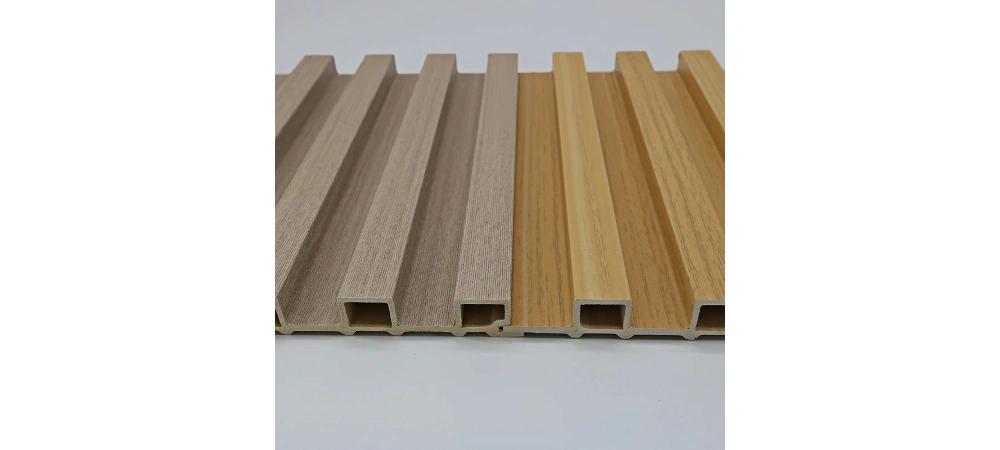
Popular Wood Species Used in Luxury Wood Slat Panels
Hardwoods: Oak, Walnut, and Teak
The most common natural woods for slat panels used in hotels and offices are American Walnut and European Oak. Oak and walnut both come in a range of colors, but oak has a steady, open-grain pattern that looks good with modern projects, including luxury wood slat panel designs. Outdoor furniture made of teak has been around for a long time. The natural oils in the wood keep water from getting into it. This trait works well in surface finishes made from WPC.
Softwoods and Cost-Effective Alternatives
Even when money is tight, oak and fir are still often used for front walls. They look good in Scandinavian and simple homes because of their lighter grain patterns. For high-traffic areas, softwood veneer, on the other hand, needs a thicker layer of protection to keep its surface in good shape. This means they look better in places with less traffic, like accent walls in bedrooms.
Specialty Species: Bamboo and Mahogany
Bamboo has grown a lot as a species that can live for a long time. After five to seven years, it's ready to be cut down. Most forests take twenty to eighty years. It's still very popular for high-end home projects, even though some places don't let you buy it because of rules about cutting it. Both species make a visual statement in the form of engineered panels that also follow modern rules for sourcing.
Engineered and Composite Materials in Luxury Wood Slat Panels
WPC and PVC composites now make up most of the commercial slat panel market, and for good reason. Wood wall cladding has had two problems for a long time: it doesn't stay the same size, and it costs a lot to keep up. These materials fix both of those issues. After being stretched out over 3 meters, a WPC core keeps its shape to within 0.5 to 1 mm. This is important if you want to put panels on long walls without any gaps.
This is the main kinds of material that are used to make slat wall systems:
- WPC (Wood-Plastic Composite): It is made of wood fiber and synthetic resin, and it looks like real wood. Panels don't need to be refinished or sealed after more than 15 years of use.
- PVC Composite: It stays dense and doesn't absorb moisture easily, making it perfect for bathrooms, lobbies, and other places where the temperature changes often.
- MDF/HDF Core with Laminate Surface: The inside is made of MDF or HDF, and the outside is laminated. It's the best base for any printed or pressed wood-grain finish. Because HDF is stronger, it is used in places where a lot of people walk by, like business areas.
- Acoustic Polyester Felt Backing: For places with a lot of noise, acoustic polyester felt backing is used. The backing is made of more than 1,500 g/m² thick PET fiber, which soaks up sounds. The slat surface creates a rhythm in the room.
So that claims about quality aren't based on bias, these mixes of materials give procurement managers performance standards they can check. The next important thing to decide is the finish layer after the substrates have been looked at.
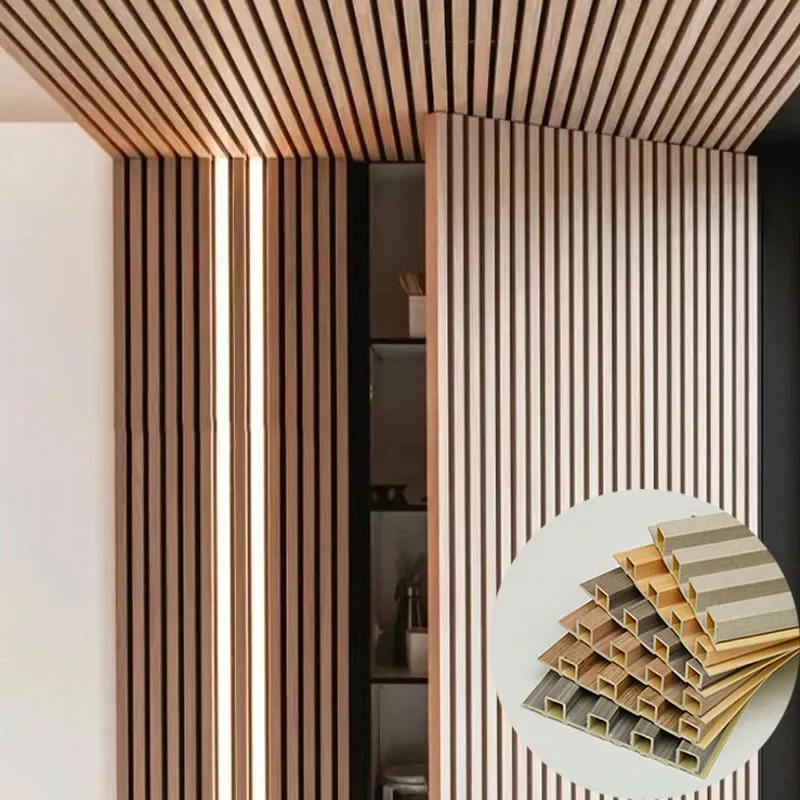
Material Finishes and Surface Treatments
Natural Oils and Wax Finishes
When you finish slat panels with oil, the wood grain feels warm, and the surface ages naturally. Because it has a natural look, this finish looks great on feature walls in homes and small hotels, including luxury wood slat panel designs. In return, it needs to be renewed every so often, usually every two to three years in places with a lot of light and air flow.
Lacquer and UV-Cured Coatings
Water, wear, and UV damage can't get through UV-cured polyurethane coats and lacquers because they form a shield. When used in business settings, these finishes are highly recommended because they are easy to clean with a damp cloth. It is also possible to measure how consistent the color is across production batches of UV-cured finishes. It's very important to do this for big hotel or office installations where the tone can vary from batch to batch.
Custom Color and Texture Options
There are more types of slat panels on the market today than just wood grain. They also have laminates with stone patterns and brushed metal effects, as well as matte solid-color finishes. It's easy for project designers to find veneers that fit almost any interior design idea because suppliers like Zhengzhou Zhongxiu Building Materials Co., Ltd. offer more than 200 different finish options. There are a lot of choices, which is great for OEM wholesalers who are making unique lines of products for home markets.
How Material Selection Impacts Panel Performance and Procurement Decisions?
The material you choose affects five measurable outcomes: how well it resists water and fire, how accurate your measurements are, how well it blocks out noise, and how much it costs in total over its lifetime. Wood that hasn't been treated doesn't look good by itself, but it doesn't hold up well against water or fire. When it comes to WPC and PVC composites, this is not the case. These materials are already treated, tried, and approved at the plant, which lowers the specification risk for project engineers.
If a procurement manager works in a hotel lobby or a business office, they need places that are fire resistant. They must have Class B1 flame-retardant scores and data that meets ASTM E84 standards when they are shipped. Documented certificates of Zhongxiu's panels' protection to fire and water can be provided upon request. Builders who have to follow strict building codes will find it easier to get things approved.
The supply chain's dependability is another important factor that is related. The installation takes longer than planned because of a panel that looks great on a sample but comes in different batches. This costs a lot of money. Factory settings that are controlled, like those with CNC-guided spacing checks, spectrophotometric color verification, and 5% random sampling before shipping, help companies make a lot of products that are all the same. There is a +0.5 to 1 mm range in the sizes of each 3-meter panel. This is what makes an installation clean or one that needs to be fixed on-site.
Conclusion
Decorative slat wall systems depend on the materials they are made of for everything, from how well they fit to how they look over time. Composites made of WPC and PVC have replaced solid wood in most commercial settings because they work consistently, don't catch fire or get wet, and don't need much maintenance. Three things should be checked by buying teams before they place an order: the surface finish, the core density, and the dimensional tolerance. People in business to business (B2B) who need a lot of things should work with a maker that offers full certification paperwork and pre-shipment review. This will make sure that projects go smoothly and customers are happy with luxury wood slat panel.
FAQ
What is the best core material for high-humidity environments?
Composites made of WPC and PVC can both be used in damp places. Both WPC and PVC work better in damp rooms. PVC is better in places that get wet more often, like hotel bathrooms or feature walls in basements.
How do I verify eco-friendly material claims from a supplier?
Ask for the E0 formaldehyde emission test report, the VOC content analysis, and any FSC certifications for fiber content. These papers are given to you before you buy from a reliable company, not after.
Are engineered slat panels durable enough for commercial use?
If the lamination peel strength is at least 2.5N/mm and the finish is UV-cured, then yes, WPC panels can handle a lot of foot traffic. Zhongxiu panels are made to last at least 15 years in normal business situations.
Does panel thickness affect acoustic performance?
Panels that are thicker and have cores with more dense material block sound better. A 22 mm WPC panel with a polyester felt backing keeps out noise better than a 14 mm panel that doesn't have a backing.
Can slat panels be customized for OEM distribution?
Yes. Some of the best companies that make luxury wood slat panels offer OEM and ODM services, like private labeling, custom dimensions, and developing new textures that are only available from those companies. These services help distributors make their products stand out.
Partner With ZX for Premium Luxury Wood Slat Panel Supply
ZX (Zhengzhou Zhongxiu Building Materials Co., Ltd.) makes decorative slat systems for businesses. They've been making them for over 30 years, have more than 300 production molds, and ship them every 10 days. If you need a reliable source of high-end luxury wood slat panel for a hotel makeover, a home feature wall project, or an OEM product line, our team can help you at every step of the approval process with approved materials and technical documentation. Feel free to email us at info@kangdishi.com or visit zhongxiudecor.com to get samples right away.
References
1. Forest Stewardship Council. FSC Certified Wood Products and Environmental Standards. FSC International, 2022.
2. American National Standards Institute. ANSI A208.1: Particleboard Standard. ANSI, 2021.
3. ASTM International. ASTM E84: Standard Test Method for Surface Burning Characteristics of Building Materials. ASTM, 2023.
4. U.S. Green Building Council. LEED v4.1 Building Design and Construction Reference Guide. USGBC, 2022.
5. Dunky, M. "Wood Adhesives and Binders." Wood Science and Technology, Springer, 2020.
6. Rowell, R. M. Handbook of Wood Chemistry and Wood Composites. CRC Press, 2nd Edition, 2012.
Online Message