
Oct 8, 2026
Why Choose Aluminum Decorative Mouldings for Stylish and Durable Interior Decoration?
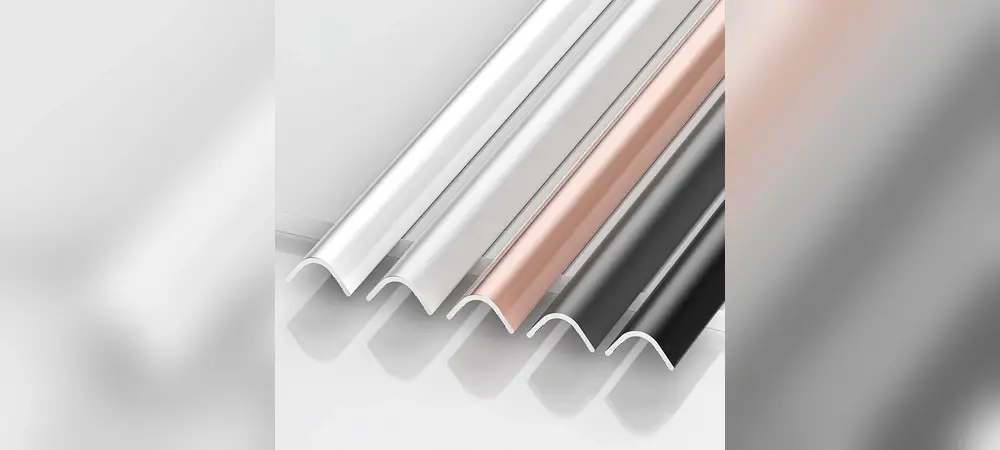
Aluminum decorative mouldings are one of the smartest material choices for modern interior finishing. Constructed from 6063-T5 alloy and certified to CE, RoHS, and ISO 9001:2015 standards, these profiles resist moisture, cracking, and warping across a 12–16 year service life. Whether you run a building materials distribution business, manage OEM product lines, or oversee fit-out projects, aluminum trim profiles offer consistent dimensions, dust-free installation, and 200+ finish options — making them a practical, long-lasting solution for both new construction and renovation work.
Understanding Aluminum Decorative Mouldings: Features and Benefits
Profiles made of aluminum metal are no longer just useful. Today's interior trim profiles are a great mix of engineering precision and a wide range of esthetic options. The benefits go beyond how they look on the surface.
Material Composition and Certifications
Our profiles are made from 6063-T5 aluminum alloy, which has a tensile strength of 160 MPa and is flexible enough to make complex cross-section profiles. There are CE, RoHS, and ISO 9001:2015 marks on every batch. The aluminum film is over 10μm thick, which is thicker than China's national norm. This ensures that the product will not rust for 12 to 16 years.
Design Flexibility Across Sizes and Finishes
Standard lengths are between 2.4m and 4m, and cross-section widths range from 20mm to 100mm. You can use custom dimensions. There are more than 200 finish library choices, such as wood grain, marble texture, brushed metal, solid matte, and more. This range lets distributors keep a wide range of SKUs in stock, and it lets OEM buyers make unique color palettes that are hard for competitors to copy.
Eco-Friendly and Recyclable Construction
All aluminum decorative mouldings can be recycled without losing any of their quality. When these profiles are installed, they don't give off any harmful chemicals, and the dust-free cutting process gets rid of the airborne particles that cause problems at the job site. For projects that want to get green building approvals, aluminum trim shapes help meet the low-VOC and recyclable material requirements. This is a really useful point to make when pitching to clients.
Aluminum Decorative Mouldings vs. Alternative Materials: Making the Right Choice
Picking the right trim material affects both the cost of the job and how well it works in the long run. This is how aluminum compares to some other common options.
Aluminum vs. Wood Trim
Wood is warm and has a traditional look, but it soaks up water, bugs, and temperature changes can make it warp in a noticeable way. Aluminum profiles keep their measurements even when the temperature changes, don't need to be painted, and don't pose a pest risk. For large-scale business projects, the difference in upkeep costs over 10 years is big.
Aluminum vs. PVC and Vinyl Profiles
PVC and vinyl are cheap at first, but they break when exposed to UV light or cold weather, and they also crack when hit by something hard. Aluminum's impact strength and surface hardness (8–12 HW on the Webster scale) make it last much longer than plastic alternatives in business areas with a lot of foot traffic, like hotel halls, store floors, and hospital hallways.
Aluminum vs. MDF and Polyurethane
MDF and polyurethane profiles are often used for residential crown molding, but they absorb water at the edges, swell, and need to be filled and painted every so often. Aluminum edge trim profiles are easier to install, don't need to be plastered, and don't change size in damp places like bathrooms and kitchens where MDF does.
Installation and Maintenance Guide for Aluminum Decorative Mouldings
One reason contractors like aluminum wall trim profiles is that they are easy to install. If you use the right method, you can protect both the surface and the base.
Step-by-Step Installation Overview
First, clean and dry the surface of the wall or ceiling for aluminum decorative mouldings. Mark your cut lines and measure them out. Then, use a carbide blade with a lot of teeth to cut the profiles to length. The dust-free cutting design means that there are no metal bits in the air, and there is no need to sand or plaster. Use the right adhesive or mechanical fasteners for each substrate type to keep the profiles in place. Use pre-made 90-degree internal or external corner links for corner joints to get a clean, gap-free finish.
Routine Cleaning and Care
Profiles should be cleaned every so often with a damp cloth and a pH-neutral cleaner. Do not use strong acids or bases on the anodised surface; they can etch it. In places with a lot of moisture, like bathrooms, a quick check twice a year makes sure that the sealant joints are still in good shape. In normal indoor settings, metal trim profiles don't need much more than a simple cleaning.
When to Replace vs. Repair
Scuffs on anodized profiles can often be fixed with touch-up anodize pens that are the same color as the original finish. If the structure changes, like when a heavy impact bends a profile, it should be replaced instead of fixed, because the original extrusion's dimensions can't be returned by hand. Keeping spare profiles from the same production batch makes sure that the color stays the same when replacements are made for small problems.
Procurement Insights: Sourcing Aluminum Decorative Mouldings for Your Business
When you're a distributor or OEM buyer, the reputation of your aluminum trim supplier has a direct effect on your own. Before you place an order, here are the most important things you should think about.
Evaluating Supplier Qualifications
Look for companies that have proof that they have ISO 9001:2015, CE, and RoHS certifications, not just promises. Tests for salt spray (ASTM B117) and coating binding (ISO 2409 ) should be normal parts of production quality control. At ZX, every batch goes through a six-step inspection process that includes checking the raw materials, the measurements of the extrusion process, the adhesion of the surface lamination, and a modeling of the installation before shipping.
MOQ, Lead Times, and Stock Availability
Distributors often have trouble when they have to choose between what customers want and what suppliers require as a minimum order quantity. Standard profiles are kept in stock by ZX so they can be shipped quickly. Shipping times are usually between 7 and 10 days. Custom mold creation (15–20 days for new molds), color samples, trial production, and batch shipping are all parts of a 4–8 week schedule for bulk OEM production orders. You can order in mixed batches, which frees up capital that would have been used to hold single-SKU inventory.
Custom OEM and Private Label Options
OEM buyers have access to more than 300 molds and more than 200 color libraries for aluminum decorative mouldings. It is possible to make a new mold when a specific cross-section is needed. Confidentiality agreements keep secret color schemes and designs that belong to only one person. This is important if your brand's trim profile is part of a line of products that are different from others. Delta E colorimeter testing makes sure that colors are consistent from batch to batch, so shipments of large orders look the same.
Design Inspiration and Practical Applications in Interior Decoration
A lot of different types of interiors use aluminum ceiling and wall trim shapes. One reason they keep replacing plaster and wood moldings in both home and business projects is that they look good with a lot of different styles.
The main situations where metal shapes always do a great job are listed below:
-- Feature walls and ceilings in homes Aluminum I-trims and edge trims make clean breaks between wall panels and ceilings in bedrooms and living rooms. Because the profiles cover corner gaps cleanly, you don't have to use caulk to finish. With choices for wood grain and marble texture finishes, the look is high-end without the upkeep that comes with natural materials.
- Residential Feature Walls and Ceilings: Aluminum I-trims and edge trims create crisp transitions between wall panels and ceiling surfaces in living rooms and bedrooms. The profiles cover corner gaps cleanly, eliminating the need for caulk-fill finishing. With wood grain and marble texture finish options, the visual result reads as premium without the maintenance demands of natural materials.
- Hotel and Hospitality Interiors: Shadow line profiles and recessed baseboards in hotel corridors protect wall corners from trolley and luggage cart impact while creating the minimalist linear aesthetic common in contemporary hospitality design. The 12–16 year service life reduces renovation frequency in high-traffic zones.
- Commercial and Retail Spaces: Heavy-duty aluminum transition strips between tile expanses in shopping malls accommodate thermal expansion and structural movement, preventing surface cracking under rolling loads and heavy foot traffic. These profiles meet the impact and hygiene requirements of food service and retail environments.
All of these apps lead to the same result: faster installation, fewer callbacks, and a finished product that clients like. The dust-free installation process and standard lengths that are already cut (2.4m–4m) cut down on the time and waste that project managers have to spend on-site.
Conclusion
Aluminum trim profiles are better than wood, vinyl, and MDF over the lifetime of a project because they last longer, come in more styles, and are easier to install. ZX aluminum decorative mouldings are good for distributors who need reliable stock, OEM buyers who need materials that work on time, and contractors who need materials that have a 12–16 year service life and are CE and RoHS certified. They also come in more than 200 finish options and are supplied directly from the factory in Zhengzhou. When it comes to interior projects of any size, metal decorative trim is a reliable choice because of its proven quality control, flexible order numbers, and normal shipping times of 7–10 days.
FAQ
1. What certifications do your aluminum trim profiles carry?
There are CE, RoHS, and ISO 9001:2015 marks on our profiles. Each batch also goes through the ASTM B117 salt spray test and the ISO 2409 covering sticking check. All standard profiles have anodized films that are at least 10μm thick.
2. What sizes are available?
Sizes range from 2.4m to 4m in length and from 20mm to 100mm in width across the cross-section. Custom widths and cross-section sizes can be made, and new shapes can have a mold development lead time of 15 to 20 days.
3. Can I order mixed specifications in one shipment?
Yes. Distributors can order in mixed batches, which helps them keep a wide range of SKUs without committing full amounts to a single standard. Please contact us to check the current minimums.
4. How long does OEM order fulfillment take?
Standard OEM production, which includes color samples, trial production, and batch delivery, usually takes 4 to 8 weeks, but this depends on how complicated the order is and whether a new mold needs to be made.
5. Are these profiles suitable for bathroom and kitchen installation?
Yes. These profiles are great for wet areas because they are waterproof and have an anodized surface that doesn't rust. To keep the finish on a surface for a long time, don't use cleaners that are highly acidic or alkaline.
Get Your Aluminum Decorative Mouldings Quote from ZX Today
ZX (Zhengzhou Zhongxiu Building Materials Co., Ltd.) is a manufacturer-direct supplier of metal decorative moldings for markets in North America and around the world. They have ready-to-ship products, can make custom products, and provide full export paperwork. We answer every question within 24 hours while having more than 300 molds, more than 200 finishes, and a six-stage quality control method. To get started, email info@kangdishi.com with your needs or go to zhongxiudecor.com to ask for a free sample.
References
1. Aluminum Association. Aluminum: The Element of Sustainability. The Aluminum Association, 2021.
2. American Architectural Manufacturers Association (AAMA). AAMA 2604: Voluntary Specification, Performance Requirements and Test Procedures for High Performance Organic Coatings on Aluminum Extrusions and Panels. AAMA, 2020.
3. ASTM International. ASTM B117: Standard Practice for Operating Salt Spray (Fog) Apparatus. ASTM International, 2019.
4. European Aluminium. Aluminium in Buildings: Sustainability and Circular Economy. European Aluminium, 2022.
5. International Organization for Standardization. ISO 2409: Paints and Varnishes — Cross-Cut Test. ISO, 2020.
6. U.S. Green Building Council. LEED v4 Reference Guide for Building Design and Construction. USGBC, 2019.
Online Message